Namibian filmmaker Zachary Batik is proving that compelling stories do not always need lengthy dialogue or elaborate sets.
His debut short film, Connection, instead relies on the country’s vast landscapes, striking visuals and subtle human interaction to tell a story about loneliness, technology and the connections that define us.
Written, directed and co-produced by Batik, the film has already received an overwhelmingly positive response.
The film has been selected for three international film festivals, with more festival submissions still awaiting results.
For Batik, the film began with a simple but ambitious creative challenge.
Shaped by Namibia
Rather than starting with characters or dialogue, the filmmaker wanted the landscape itself to become the heart of the story.
“The original question was how do you tell a story about the Namibian landscape without it being a nature documentary? This informed the fundamental creative decisions: the small cast, the lack of dialogue and the shooting outdoors,” Batik explained.
The result is a visually driven short film, where Namibia’s deserts, open spaces and rugged scenery become almost as important as the characters themselves.
Batik deliberately wrote the script around locations, allowing the country’s diverse terrain to influence both the story and the way it was filmed.
He said keeping the camera wide was essential to capturing both the harshness and beauty of Namibia while allowing audiences to experience the landscape rather than simply observe it.
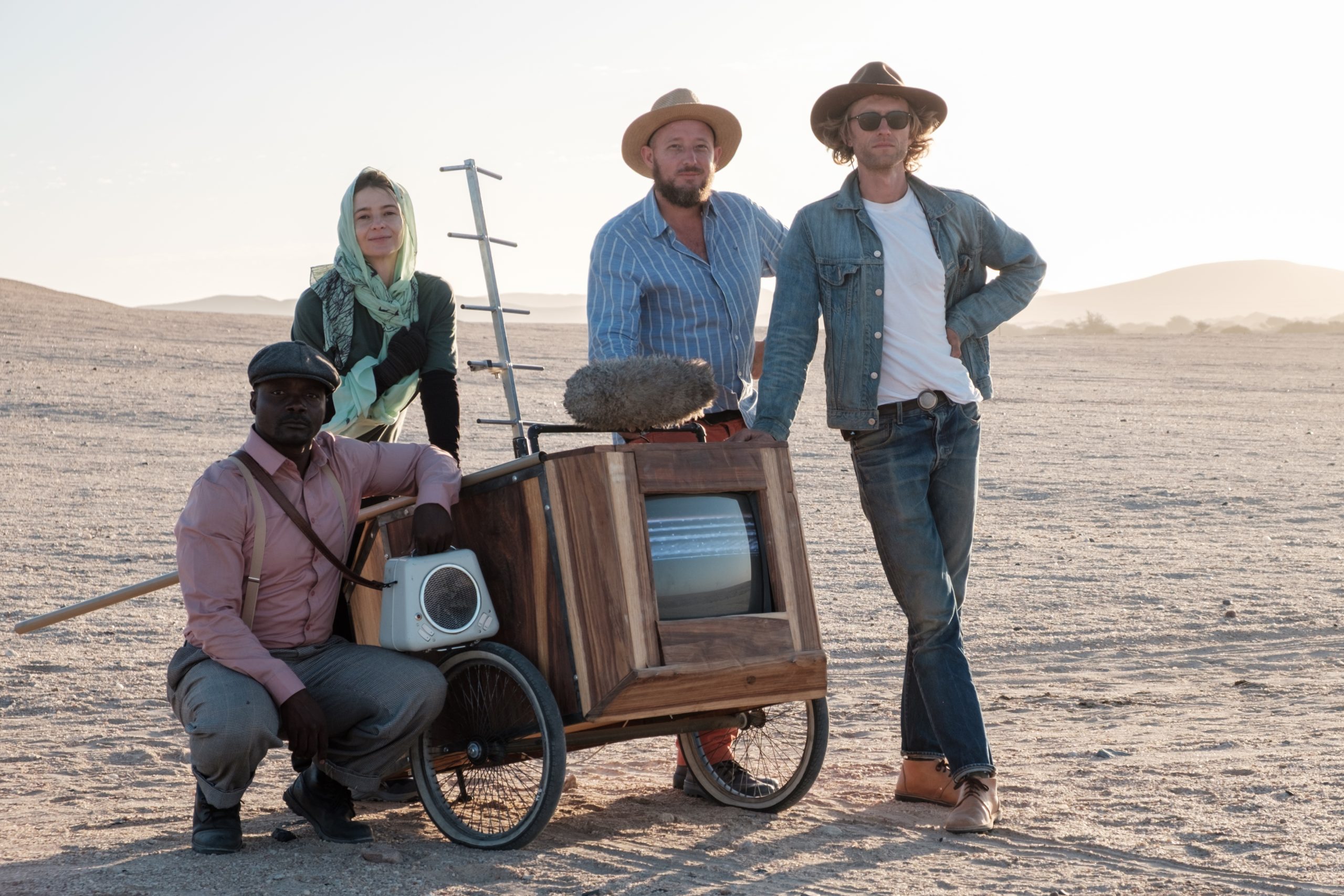
The film follows a protagonist searching for a television signal before unexpectedly discovering something far more meaningful.
At its core, Connection contrasts the one-way relationship people have with screens against the mutual connection found through genuine human interaction.
While the title initially refers to a television signal, it gradually takes on a deeper meaning as the story unfolds.
Experience through themes
Although the film explores themes of isolation, loneliness and humanity’s relationship with technology, Batik said he deliberately avoided creating a film that tells audiences what to think.
Instead, he wanted viewers to interpret the story in their own way.
“The film revolves around these themes of connection, isolation, loneliness and our relationship with technology, but it does not seek to make a specific point or push some particular view down the audience’s throat,” he said.
For him, the film is first and foremost an emotional experience rather than a social commentary.
His hope is that audiences leave the cinema smiling, feeling uplifted and having experienced something joyful.
He believes mature audiences do not need every message to be explicitly explained, preferring instead to leave room for individual interpretation.
Visual storytelling
With almost no dialogue, every emotion, relationship and turning point had to be communicated through visuals alone.
This made the writing process significantly different from conventional filmmaking.
Batik spent nearly a month writing and revising the screenplay, studying other dialogue-free scripts to understand how filmmakers convey emotion without spoken words.The entire production, from script development to post-production, was completed in just four months.
As a first-time filmmaker serving simultaneously as writer, director and co-producer, Batik said maintaining a clear creative vision was essential, even while encouraging collaboration from his team.
Crew members frequently contributed ideas that improved scenes, but ultimately, he carried the responsibility of making the final creative decisions.
He also credited cinematographers Philippa Muller and Willem Vrey for bringing the visual language of the film to life, saying the cinematography carried the emotional weight of the story.
Working outdoors, however, came with significant challenges.
Long days under the Namibian sun and coordinating travel across multiple landscapes required careful planning to maximise filming time while minimising time spent on the road.
Collaboration
Despite the demanding production schedule, Batik described the filmmaking process as one of the most rewarding creative experiences of his career.
From developing the story with the crew during pre-production to refining the emotional rhythm of the film with the composer during post-production, each stage offered a unique creative partnership.
He particularly enjoyed working with lead actor West Uarije, whose performances often exceeded expectations by bringing fresh ideas to scenes.
One sequence that held special meaning for Batik was the dance scene near the end of the film.
“In film these days, things are either turned into a joke or sexualised and having these two men dance beautifully in a way that is platonic, joyful and loving was important to me,” he said.
The scene reflects the film’s broader exploration of human connection without relying on dialogue or conventional storytelling techniques.
Nam’s film industry
Beyond Connection itself, Batik believes short films are essential to the future of Namibia’s film industry.
He sees them as a training ground where emerging filmmakers can develop their storytelling skills, experiment creatively and build experience before tackling feature-length productions.
He encouraged aspiring filmmakers to work within their available resources rather than writing stories they cannot realistically produce.
Instead of chasing expensive concepts, he advises creators to identify stories that match both their interests and their budgets.
For Connection, this meant prioritising the landscape, with much of the production budget allocated to travel and accommodation to capture Namibia’s unique scenery.
Looking ahead, Batik hopes audiences continue embracing locally made films.
As Connection grows a bigger audience, Batik continues to work on his other projects, including a documentary.
[email protected]