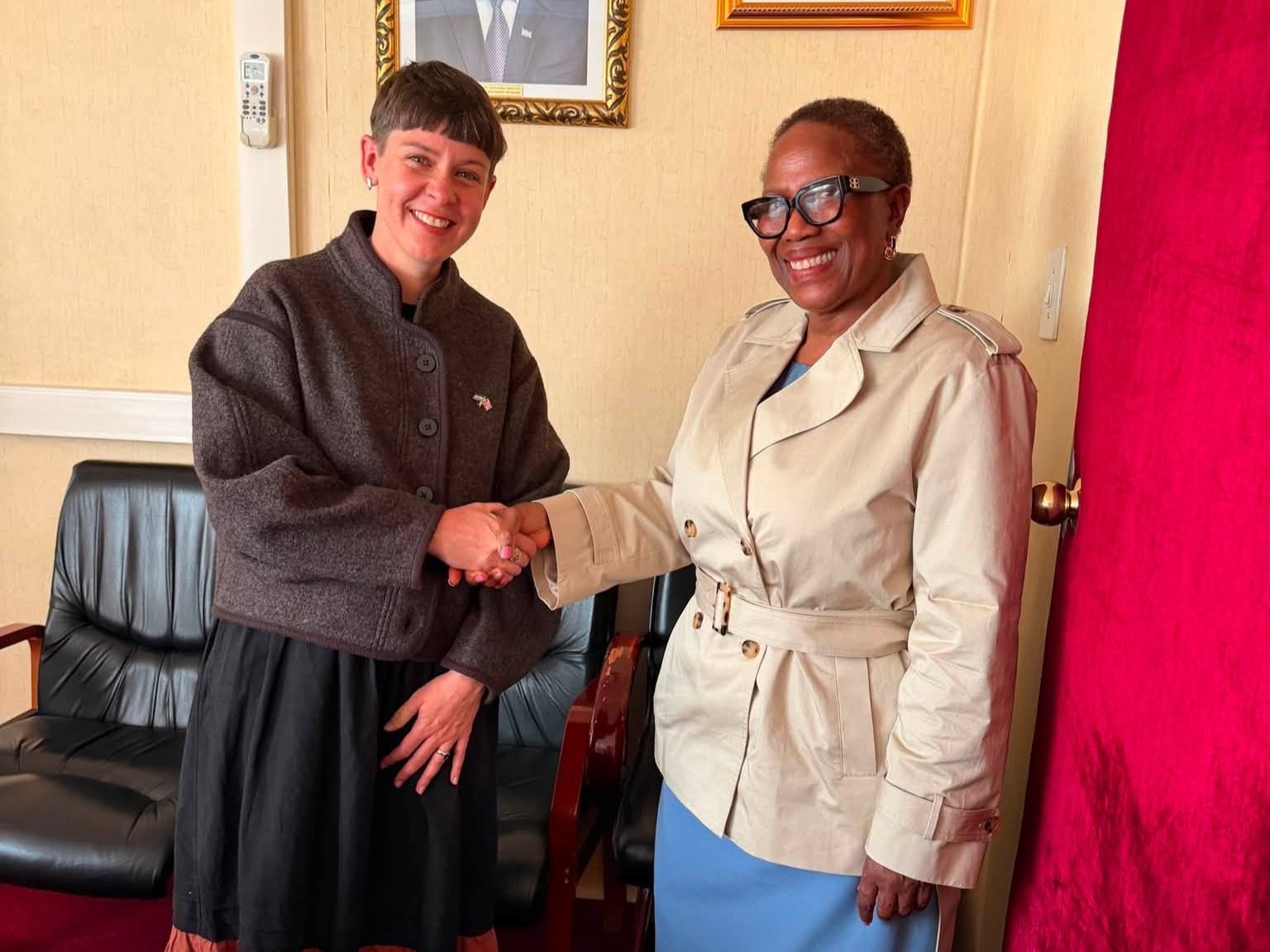
Lesotho is strengthening collaboration around poverty reduction, disaster preparedness and inclusive economic development following a meeting between High Commissioner H.E. Martine Sobey and the Minister at the Prime Minister’s Office, ‘M’e ‘Makatleho Motsoasele. The meeting provided an opportunity for both sides to discuss development priorities affecting vulnerable communities across the country. Their conversation focused on practical ways to strengthen resilience while ensuring that economic growth creates opportunities for people who face greater social and economic challenges. The discussions also highlighted the importance of strong leadership and accountability in supporting sustainable development. The engagement reflects a shared commitment to working together on solutions that can improve livelihoods and contribute to a more resilient Lesotho.
Poverty alleviation was among the key issues discussed during the meeting, highlighting the need for sustained efforts to improve the living conditions of vulnerable households. Poverty can limit access to employment, education, healthcare, food security and other essential services, making it difficult for families to improve their circumstances. Addressing these challenges requires more than short-term assistance because communities need opportunities that can provide stable and sustainable sources of income. Strengthening economic opportunities for vulnerable groups can help people become more financially secure and reduce their dependence on social support. Collaboration between government and development partners can play an important role in identifying programmes that address immediate needs while also creating pathways towards long-term economic independence.
Disaster preparedness was another important focus of the discussions, particularly because vulnerable communities can face significant setbacks when disasters occur. Effective preparedness allows communities and institutions to respond more quickly when emergencies affect livelihoods, infrastructure and access to essential services. Building resilience requires planning, resources, coordination and community participation before a crisis takes place. Strengthening disaster preparedness can also reduce the long-term economic impact of emergencies by helping communities recover more effectively. The discussions therefore emphasised the importance of developing systems that allow Lesotho to anticipate risks, respond to disasters and support affected communities during recovery.
The meeting also recognised the successful launch of the leadership and accountability summit as an important development. Strong leadership and accountability are essential for ensuring that development programmes deliver meaningful results for the people they are intended to serve. Effective institutions need clear responsibilities, transparent decision-making and mechanisms that encourage leaders and organisations to remain focused on agreed objectives. Leadership initiatives can help strengthen these principles by creating spaces for stakeholders to discuss challenges and identify practical solutions. Linking leadership and accountability with development priorities can contribute to better implementation and stronger public confidence in initiatives designed to improve people’s lives.
Economic inclusion was another central element of the discussion, with both sides recognising the importance of creating better opportunities for vulnerable groups. Economic growth does not automatically improve living conditions for everyone, particularly when disadvantaged communities face barriers to employment, finance, skills development and entrepreneurship. Inclusive development requires policies and programmes that give more people the opportunity to participate in economic activity and benefit from growth. Supporting vulnerable groups can include improving access to skills, employment, markets, financial services and income-generating opportunities. These measures can help communities build greater economic resilience while contributing to broader national development.
The emphasis on resilience is particularly important because vulnerable communities often experience the greatest impact when economic or environmental shocks occur. A household with limited income may struggle to recover after losing employment, property or productive assets during a crisis. Building resilience means helping people develop the resources, skills and support systems needed to withstand these challenges. It also means strengthening institutions so that assistance can reach communities quickly when difficulties arise. A coordinated approach to resilience can help reduce the risk that temporary setbacks become long-term obstacles to development.
Partnerships between government and international representatives can support these efforts by bringing together different forms of expertise, resources and experience. Government institutions understand the country’s development priorities and the challenges facing local communities, while international partners can contribute technical knowledge and additional support. Effective partnerships require clear communication and a shared understanding of the outcomes that programmes aim to achieve. They also benefit from regular engagement to assess progress and identify areas that require improvement. The meeting between H.E. Martine Sobey and ‘M’e ‘Makatleho Motsoasele demonstrates the value of continued dialogue in aligning development efforts with Lesotho’s national priorities.
The focus on sustainable solutions also highlights the need to consider the long-term impact of development initiatives. Programmes designed to address poverty and vulnerability should ideally help communities build lasting capacity rather than provide temporary relief alone. This can involve supporting livelihoods, strengthening local institutions, improving access to essential services and developing skills that allow people to participate more effectively in the economy. Sustainable development also requires communities to have a meaningful role in shaping solutions that affect them. When local knowledge and community participation form part of development planning, programmes can become more responsive to the realities faced by the people they aim to support.
The discussions also point to the importance of ensuring that economic growth reaches communities that have historically faced greater barriers to opportunity. Creating inclusive economic opportunities can strengthen household incomes while also expanding the country’s productive base. Entrepreneurs, workers and community organisations can all contribute to economic development when they have access to the right resources and support. Greater participation can also help communities become more resilient to future economic shocks. Ensuring that growth is inclusive should therefore remain an important part of Lesotho’s broader development agenda.
The meeting between High Commissioner H.E. Martine Sobey and ‘M’e ‘Makatleho Motsoasele demonstrates a continued commitment to addressing some of Lesotho’s most important development challenges. Their discussions on poverty alleviation, disaster preparedness, leadership and accountability and economic opportunities for vulnerable groups reflect a broad approach to building stronger communities. Continued cooperation can help turn these priorities into practical programmes that improve resilience and create more sustainable opportunities. The shared focus on inclusive growth also recognises that development is strongest when vulnerable communities have the tools and opportunities to participate in it. By strengthening partnerships and maintaining a focus on accountability, resilience and economic inclusion, Lesotho can continue working towards sustainable solutions that uplift communities and support a more secure future.
Lesotho News WhatsApp Channel | Lesotho News
Join ‘Lesotho News’ WhatsApp Channel
Get breaking Lesotho news — delivered directly to your WhatsApp.
CLICK HERE TO JOIN