Rio Times · Analysis
Key Facts
—The Hook ECLAC’s High-level Commission, co-chaired by Michelle Bachelet and Iván Duque, launched its flagship report, ‘Ruptures and Opportunities’, on navigating the new geopolitical era in Santiago on Tuesday 4 August.
—The Core Argument The report frames Latin America not as a passive bystander but as an actor capable of carving out agency amid the fragmentation of globalisation and intensifying US-China competition.
—Great-Power Context The proposals land just as the US seeks a geoeconomic reset via Venezuela, China deepens its Belt and Road footprint, and Europe rushes to sign stalled trade pacts like the EU-Mercosur deal.
—The Reputation Gap Recent polling shows China’s prestige in Latin America has risen six points while US favourability has plummeted by seventeen, giving China the edge as the preferred development model.
—Energy and Mineral Undercurrents The Commission’s work intersects with a historic moment where Latin America is being called the ‘energy answer’, with the centre of gravity of global oil production shifting towards Brazil, Guyana and Argentina.
—Political Calculus An unprecedented number of US-friendly governments enter 2026, yet most are quietly deepening commercial and digital infrastructure ties with Beijing, a dual dynamic the report addresses.
As ECLAC sets out its blueprint for a region caught between Washington’s hard power and Beijing’s economic magnetism, Latin America is being forced to mature from a passive ‘backyard’ into a swing region that can tip the global balance.
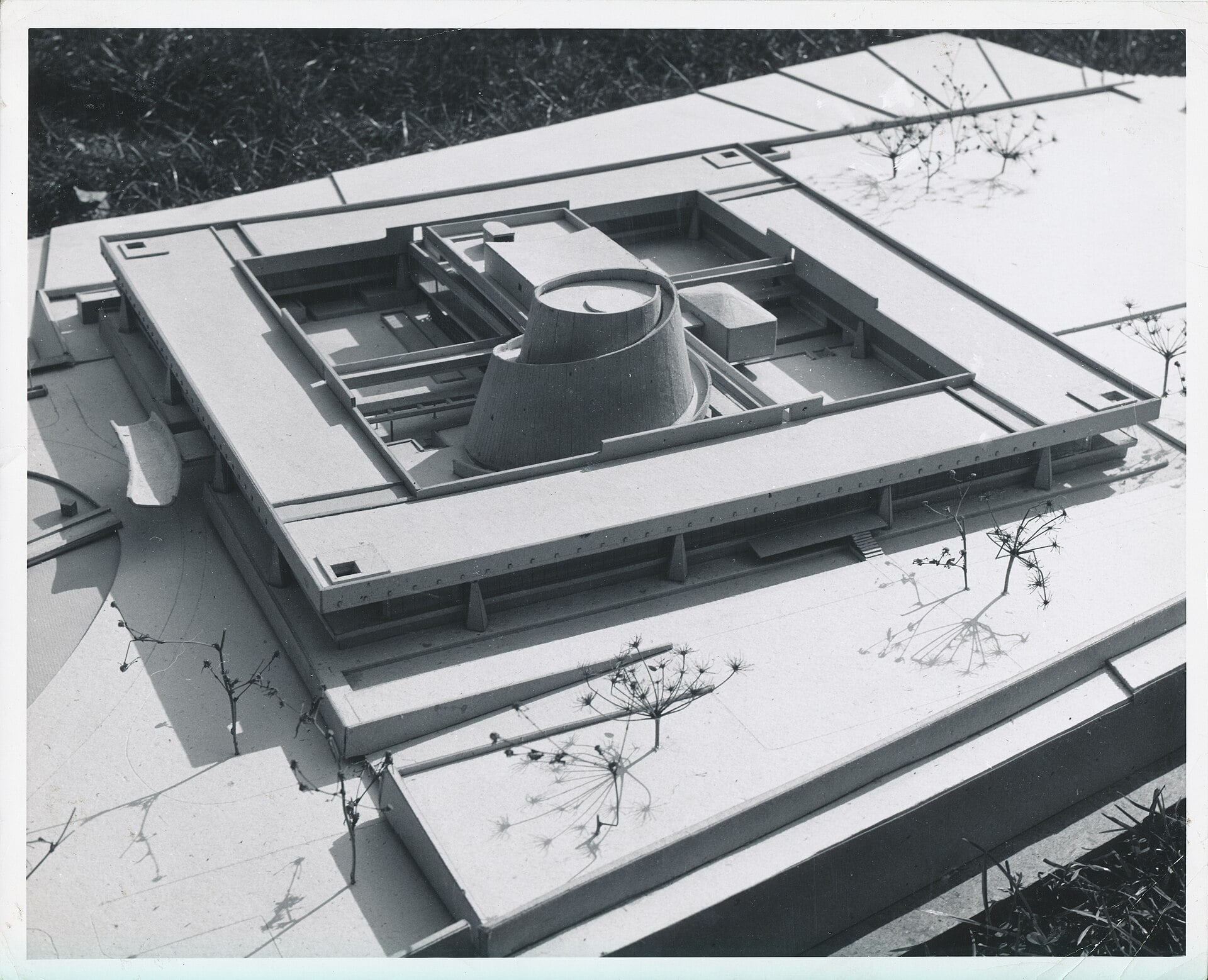
The ECLAC headquarters in Santiago, Chile, where the High-level Commission on Geopolitics, Globalisation and Development launched its landmark 2026 re (Photo internet reproduction)
One-stop reference
Company Intelligence
Every listed company in Latin America — financials, ownership and structure for 1,450+ companies across 26 exchanges, in one place.
Browse the directory →RTAsk Rio TimesCost of living, safety, visas across Latin America›
A Report Launched in the Shadow of Rupture
At precisely ten in the morning on Tuesday, at ECLAC’s Santiago headquarters, a document landed that attempts to make sense of a world that has stopped making sense. Co-chaired by former Chilean President Michelle Bachelet and former Colombian President Iván Duque, the High-level Commission on Geopolitics, Globalisation and Development presented its findings under a title that refuses false comfort: ‘Ruptures and opportunities’.
The venue itself is symbolic, named after the Argentine economist who spent his life arguing that the global economic structure was rigged against the periphery. That tension between a system designed elsewhere and a region seeking its own path is precisely what the Commission has spent months trying to navigate.
The report does not pretend that Latin America controls the weather of geopolitics, but it does insist that the region can choose how to build its shelter. It arrives at a moment when the three great powers—the United States, China, and a resurgent but anxious Europe—are all, for the first time in decades, intensively courting Latin America simultaneously, though often with contradictory goals.
The backdrop could hardly be more charged. A US military intervention in Venezuela has reopened old wounds about hemispheric sovereignty, while China’s Belt and Road Initiative now encompasses twenty-one Latin American and Caribbean nations with memoranda of understanding. Europe, meanwhile, has finally signed the EU-Mercosur agreement on 17 January 2026 after more than twenty-five years of deadlocked talks, framing the moment as a strategic embrace rather than a purely commercial one.
The Commission’s core bet is that fragmentation can be turned into leverage, that multiple suitors mean multiple options. But the report also carries warnings about the shallowness of this attention, the risk that Latin America once again becomes a stage for foreign contests rather than an architect of its own future.
The US Reassertion and Its Limits
No single act has reshaped the hemispheric dynamic in 2026 as dramatically as the removal of Nicolás Maduro in Venezuela, which Martin Vladimirov of the Center for the Study of Democracy, writing in a Reuters guest column, characterised as the ‘opening move in a Latin American geoeconomic reset’. The Trump administration has made no secret of its intent to reconfigure commodity flows and political alignments, treating the Western Hemisphere once again as a strategic backyard—or, in the president’s own phrase, a ‘front yard’.
Direct US foreign investment in Latin America stood at roughly $1.4 trillion at the end of 2023, dwarfing the combined six-hundred-and-ten billion from Russia and China. That financial gravity gives Washington tools its rivals cannot yet match, particularly in security cooperation and the dense cultural ties built over generations of migration and media.
Yet the reception has been far from uniform. Al Jazeera noted that the intervention in Venezuela revived deeply scarred memories of US interventionism. The AMLAT Radar 2026 survey, which polled 12,000 people across ten countries, found the United States’ positive image down seventeen points. The least-trusted leader in Latin America is Trump himself, at twenty-five percent, nearly double the distrust registered for Vladimir Putin.
The Gordon Institute at Florida International University points to a paradoxical 2026 landscape: an ‘unprecedented number of governments oriented to work with the US and support its policies’ coexists with most states quietly deepening engagement with the People’s Republic of China in transport, digital, electricity and financial infrastructure.
This quiet deepening of PRC influence happens precisely because it does not demand a political price, allowing governments to maintain pro-Washington postures while Chinese firms lay fibre-optic cables, modernise ports and sign long-term commodity contracts. The ECLAC report grapples with this subtle but profound reality: the US commands presence, but China builds presence.
The threat of US coercion—tariffs, sanctions, secondary penalties on firms dealing with Beijing—could accelerate rather than slow Latin America’s tilt toward China, a dynamic already visible in the expansion of free-trade agreements that lock in preferential access for Chilean, Peruvian, Ecuadorian and Costa Rican exports to the Chinese market.
China’s Quiet Ascent and the Development Model Question
Perhaps the most striking finding from the AMLAT Radar 2026 survey is not that China’s prestige has grown—it has, by six percentage points—but the reason why. Latin Americans do not view Beijing as a threat, but as a pragmatic option associated with education, science and technology, a development partner rather than a geopolitical predator.
When asked which country could serve as the best model for development, thirty-six percent of respondents chose China, a figure that has trended upward while the United States has plummeted seventeen points in favourability. Among young, urban, aspirational Latin Americans, the perception is increasingly that the future is being built not in Washington but in Shenzhen and Shanghai.
This soft power rests on a hard foundation: twenty-one BRI memoranda, hundreds of billions of dollars in annual trade, and five formal free-trade agreements — with Chile, Peru, Costa Rica, Ecuador and Nicaragua — that have turned China into the leading trading partner for most South American economies. The deals create domestic export constituencies—farmers, miners, logistics operators—whose livelihoods depend on stable Sino-Latin relations and who will resist any political disruption of those ties.
China’s shift into critical minerals, electric vehicle supply chains and digital infrastructure deepens the entanglement beyond the commodity-export model of the past. Lithium in Chile and Argentina, copper in Peru, niobium in Brazil—these are not just resources but strategic chokepoints for the global energy transition, and Beijing has been far more patient and less conditional than Washington in financing the extraction and export infrastructure around them.
The ECLAC Commission cannot ignore the contradiction this creates. Latin American governments may rhetorically align with the US-led international order, but their economic wiring is increasingly connected to a Chinese grid. The report favours functional, issue-by-issue cooperation over broad consensus, rather than leaving each country to negotiate alone with a superpower that has far more experience extracting concessions one-on-one than collectively.
What makes this moment different from the early 2000s commodity boom is the geopolitical framing. Then, China was a customer, now it is a systemic rival to the United States. Latin America’s mineral wealth is no longer just commercial inventory—it is strategic inventory, and the Commission recommends frameworks that prevent the region from becoming both the fuel source and the battlefield of a new Cold War.
Europe’s Atlantic Gamble and the Mercosur Prize
While Washington and Beijing compete for primacy, Brussels has been executing a quieter but determined pivot across the Atlantic. European Commission President Ursula von der Leyen has stated plainly that Europe aspires to be Latin America’s ‘preferred partner’, a phrase that carries weight after the long-stalled EU-Mercosur trade agreement was finally signed, creating the world’s largest free-trade zone by population covered.
The deal was not sealed by commercial logic alone. The revived EU-CELAC summits, after an eight-year hiatus, and the new preferential strategic agreement with Mexico are components of a European strategy to secure stable, diversified access to food, energy and critical minerals at a moment when dependence on Russian gas proved catastrophic and reliance on Chinese supply chains feels increasingly fragile.
Spain remains the European country with the highest positive mentions in Latin America, at about thirty-one percent, a legacy of language, culture and sustained corporate investment by firms like Telefónica, Santander and Iberdrola. For the ECLAC Commission, the Spanish-speaking bridge to Europe is a strategic asset that can be leveraged to avoid exclusive dependence on either the US or China.
Yet Europe’s embrace carries its own risks. The Mercosur agreement, after a quarter-century of negotiation, arrives with environmental and regulatory conditions that some Latin American governments and agricultural lobbies resent. The question is whether Europe can offer enough investment and market access to offset the perception that it is demanding standards it did not itself meet during its own industrialisation.
The Commission’s report lands amid this recalibration, and its recommendations urge Latin America to engage Europe not as a supplicant but as a partner that can be engaged through issue-specific coalitions on technology transfer, green investment and infrastructure financing. The European card is most powerful when played not instead of ties with China or the US, but alongside them, as a diversification tool.
The rise of India as a growing, often overlooked player adds another variable. With a population set to surpass China’s and an economy hungry for the same proteins, minerals and energy Latin America produces, the multipolar map is acquiring a fourth node. A regional strategy that treats Asia as a continent rather than a synonym for China is the logical corollary.
The Energy and Minerals Axis: Latin America as the World’s Engine Room
At the Arpel Conference in Buenos Aires earlier this year, the language was unusually direct for an industry gathering. Daniel Yergin, the celebrated energy historian, told delegates that the centre of gravity of global oil production is shifting toward Latin America, with Brazil, Guyana and Argentina playing increasingly prominent roles. Martín Terrado of GeoPark called the moment ‘poised to be Latin America’s decade’.
Bob Fryklund of S&P Global drove the point home with a line that has since echoed through investment committees from Houston to Riyadh: ‘The growth in global energy supply is coming out of Latin America.’ In a world where energy security has returned with force—where Europe has sworn off Russian gas and the Middle East is as volatile as ever—that statement is a geopolitical declaration, not just a market observation.
The Commission’s report arrives at a moment when this energy gravity converges with the critical-minerals race. Lithium in the Andean salt flats, copper in the Atacama, graphite and rare earths in Brazil—the inputs for batteries, semiconductors and renewable grids are disproportionately concentrated in Latin America. The region holds a commanding share on some of the minerals that will determine whether the global energy transition accelerates or stalls.
Venezuela’s upheaval adds another layer. The US sees a post-Maduro Venezuela as a chance to reconfigure oil flows and reduce Chinese and Russian leverage in Western Hemisphere commodity markets. But this initiative is delicate: moving too aggressively risks pushing other producers to accelerate their Chinese partnerships as a hedge against Washington’s demonstrated willingness to use force to reshape resource access.
Smaller economies like Guyana—which has gone from obscurity to one of the world’s fastest-growing oil producers in under a decade—are laboratories for what happens when energy windfalls meet weak institutional frameworks. The Commission’s recommendations will be scrutinised in Georgetown as closely as in Brasília, because getting resource governance right is the difference between Norway’s sovereign wealth fund and Nigeria’s lost decades.
The Reputation Gap and the Soft-Power War
Data from the AMLAT Radar 2026 survey tells a story that no ambassador’s cable can convey as starkly. The United States has lost seventeen points in favourability across Latin America in four years, a collapse in goodwill that spans nearly every demographic. Europe’s image, too, is declining, with Germany and France slipping notably. The only major power whose reputation has improved is China—and the margin is growing.
What Latin Americans say when they praise China is instructive. They are not expressing admiration for a political system, but recognising a pragmatic option associated with tangible things: new roads, functioning ports, affordable electric vehicles, scholarships for their children. The Chinese model, as perceived in the barrios and business schools of Lima and Bogotá, is about results, not ideology.
Spain remains the highest-ranked Western country, but its lead is thin, with about thirty-one percent positive mentions, closely followed by the United States and Germany. The European advantage—historical ties, democratic solidarity, cultural affinity—is eroding not because China’s propaganda is superior, but because Latin Americans increasingly ask what Europe has delivered for them lately.
The least-trusted leader figures are a blunt instrument but an important one. Trump leads at twenty-five percent, followed by Putin at twelve percent and Maduro at five percent, nearly tied with Xi Jinping. For the ECLAC Commission, these numbers are not peripheral; they define what is politically possible. No Latin American government can openly embrace Washington if its population loathes the American president, and no government can fully align with Beijing if it means endorsing a leader whose domestic approval is irrelevant but whose global image is mixed.
The soft-power war is not frivolous; it determines which investments are politically sustainable, which trade agreements can survive changes of government, and which alliances endure beyond the next election. The ECLAC document acknowledges that Latin America has been losing this war not because it lacks stories to tell, but because it has outsourced the telling to others.
The Political Map: US-Friendly Governments, Chinese-Friendly Wiring
One of the subtlest tensions the Commission has had to analyse is the unusual political alignment of 2026. An unprecedented number of Latin American governments entered the year oriented to work with the United States and support its policies, according to the Gordon Institute at FIU. The ideological wave that brought left-wing governments to power across much of South America in the early 2020s has crested and, in many places, receded.
Yet beneath this political surface, the plumbing of economic integration with China continues to expand. Transportation networks, digital infrastructure, electricity grids and financial settlement systems are being built with Chinese technology and Chinese loans, creating a physical architecture that will long outlast any particular government’s rhetoric.
This dual dynamic is not a contradiction to be resolved; it is the operating system of twenty-first-century Latin America. Governments provide political alignment to Washington—intelligence cooperation, votes in international forums, rhetorical solidarity—while their economies provide alignment to Beijing—commodity exports, infrastructure concessions, market access. Both superpowers get enough to stay engaged, and neither gets enough to be satisfied.
The Commission’s report navigates this reality without endorsing it as permanent or condemning it as hypocritical. The opportunity, on the Commission’s logic, is for Latin America to use its current favourable position—multiple suitors, unique resources, growing global centrality—to extract binding commitments on technology transfer, local content requirements and environmental standards that turn temporary leverage into lasting structural change.
Brazil’s presidential election in October 2026 hangs over all these calculations. As a BRICS founding member, a traditional US partner, the host of COP30, and the owner of vast lithium, niobium and agricultural capacity, Brazil embodies every tension the Commission is analysing. Its next leader will determine whether South America’s largest economy consolidates a multipolar strategy or tilts decisively toward one camp, potentially dragging the entire Mercosur bloc with it.
Mexico’s USMCA review talks are the northern counterpart to Brazil’s election. The outcome will signal whether North American economic integration can survive the tariff wars, or whether the logic that has bound Mexico to the US and Canada for three decades is fraying beyond repair. The Commission’s relevance depends on its ability to speak to these concrete, imminent decisions, not just to long-term trends.
Ruptures and Opportunities: The Commission’s Core Proposals
The report’s title—’Ruptures and opportunities’—is a deliberate choice. It does not pretend that the fragmentation of the post-Cold War order is a temporary glitch or that globalisation will snap back to its previous form. The ruptures are structural: a decoupling of technology ecosystems, a weaponisation of trade interdependence, a climate crisis that makes energy policy a matter of national survival.
The opportunities, the Commission argues, lie precisely in these ruptures. A world that is splitting into blocs is a world where middle powers and regional blocs can extract concessions for their allegiance and build supply chains that are more resilient because they are more local. Latin America’s geography—distant from the front lines of the Ukraine and Taiwan conflicts—becomes an asset rather than a liability.
The report instead asks governments to treat the region’s natural wealth as bargaining power rather than as cargo. It calls for stronger institutional frameworks for critical minerals and for what it terms active food diplomacy — using the region’s role as a food supplier as leverage. It stops short of proposing a cartel or a new regional fund, arguing that none of its ten proposals can work without effective governance, stronger state fiscal capacity and a serious answer to organised crime, which it treats as a governance problem rather than only a security one.
On trade, the Commission explicitly avoids proposing new institutions: its final recommendation is to prioritise functional cooperation over new bodies and to build issue-specific coalitions of variable geometry, rather than the bilateral deals that have historically allowed China to pick off individual countries with favourable terms. This is politically difficult, given historical rivalries and differing economic models, but the current great-power competition may provide the external pressure that internal solidarity requires.
Diplomatically, the report urges governments to avoid rigid alignments and to work through flexible, issue-by-issue coalitions. This is not neutrality — the Commission is clear that Latin American values align with democratic norms—but a refusal to be drawn into conflicts that do not serve regional interests, and an insistence on maintaining economic and diplomatic relations across geopolitical divides.
The hardest recommendation, and the one most likely to be ignored, concerns domestic political economy. The Commission argues that Latin America’s external leverage will remain limited as long as internal inequality, informality and weak state capacity persist. You cannot bargain with Beijing from a position of strength if your own tax system cannot fund basic public goods, and you cannot resist Washington’s pressures if your population is too desperate to care about sovereignty. This is the uncomfortable home truth at the heart of the report—and the one that will determine whether its proposals remain on paper or reshape the region’s future.
What This Means for the Rio Times Reader
For a reader watching from Rio, São Paulo, Buenos Aires or Mexico City, the ECLAC report is not an abstraction. It is the framework that will shape whether Brazil’s new president in 2027 faces open doors or closed markets, whether the lithium in Minas Gerais enriches communities or foreign shareholders, and whether the next pandemic finds the region with the pharmaceutical and digital capacity to respond or once again dependent on distant suppliers.
The convergence of Tuesday’s report with the broader trends—the US geoeconomic reset in Venezuela, China’s Belt and Road deepening, Europe’s Mercosur embrace, the energy-shift to Guyana and Brazil—makes this a genuine inflection point. The world is paying Latin America more attention than it has in a generation, but attention is not commitment. It can vanish the moment the geopolitical weather changes.
The Rio Times will continue to track how the Commission’s recommendations are received in capitals from Washington to Beijing, and more importantly, whether they are implemented in Brasília, Santiago and Lima. An institutional document is only as powerful as the political will behind it, and Latin America’s history is littered with visionary declarations that dissolved on contact with the region’s stubborn realities.
What makes this moment different is the external pressure. When the global order is being rewritten, staying still is not an option—it is a choice to be written over by others. The ECLAC Commission has offered a pen. It is now up to governments, businesses and citizens across the region to decide what they will write.
Frequently Asked Questions
What is the ECLAC High-level Commission report and why does it matter now?
Launched on 4 August 2026, the report ‘Ruptures and opportunities’ is a blueprint by former Presidents Bachelet and Duque for how Latin America can navigate a fractured global order. It matters because it arrives as the US, China and Europe are simultaneously competing for regional influence with unprecedented intensity.
How is China’s influence in Latin America changing compared to the United States?
China’s prestige has risen six points while US favourability has dropped seventeen. China is now the top trading partner for most South American economies and the preferred development model for 36% of Latin Americans, even as an unprecedented number of governments remain politically oriented toward Washington.
What role do energy and critical minerals play in Latin America’s geopolitical position?
Latin America is becoming the centre of gravity for global oil production growth and holds a 46% of global lithium reserves and 35% of copper essential for the energy transition. This makes it a contested supply hub where US, Chinese and European strategies converge.
Sources: aljazeera.com, internationalbanker.com
Connected Coverage
Explore the cluster: World · Asia
This article was produced by The Rio Times’ automated newsroom system. How we use AI · Report an error
Read More from The Rio Times
The Rio Times · Power Map
See who really holds power in Latin America
Click to open the Power Map →