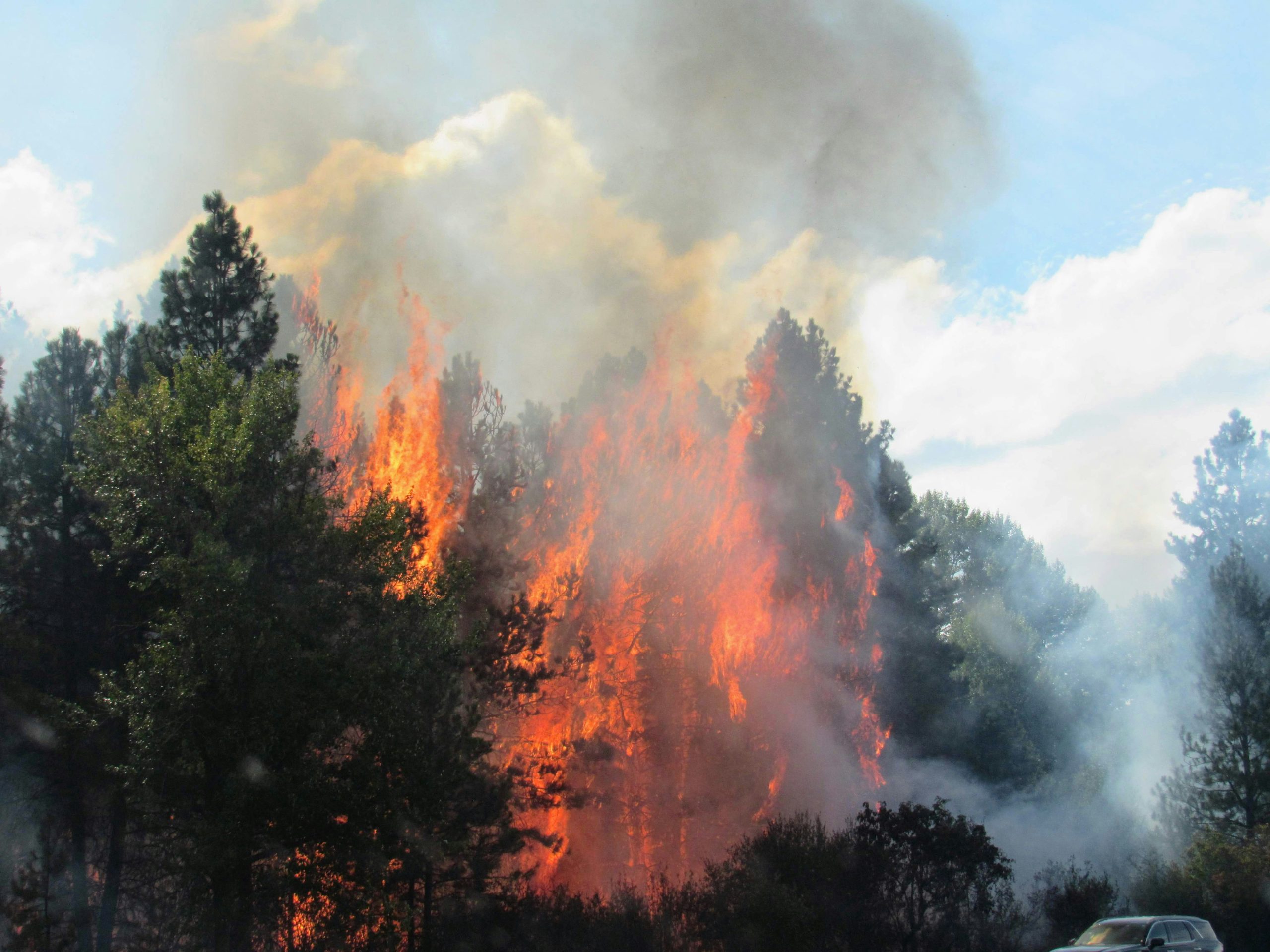
Hundreds of thousands of people have been evacuated in Spain, Portugal and France as wildfires ravage forests and countryside, and the dangerous battle with the flames is something people would gladly hand over to technology, writes the BBC.
Four firefighters have already lost their lives in France, and another 150 have been injured while battling the flames. Why are humans and 30-year-old planes still the main weapons in firefighting, and why can’t drones replace firefighters, as they have replaced soldiers in Ukraine?
Guillaume Millet, a firefighter with 24 years of experience, heads the Gironde fire service in the region hardest hit by forest fires this summer. He said that while technology for extinguishing fires has changed little, flame detection technology has advanced a lot. Millet said the big change is the cameras, which are connected to artificial intelligence, that watch the forests and see where fires are starting. In Gironde, cameras have replaced human posts, and where there used to be a person in every town throughout the summer months, there are now cameras. The observation posts were usually staffed by students, and the switch to cameras has reduced the number of false alarms. Millet said the camera, with the help of artificial intelligence, can almost perfectly distinguish smoke from a dust cloud created by the movement of a tractor.
The cameras also have a considerable range – they can detect flames up to 20 kilometers away.
The systems in Gironde were installed by Midgard, while elsewhere in France the cameras are being deployed by French startup FireTracking. Jean-Simon Chaudier, the company’s CEO, explained that as soon as the camera detects a fire, firefighters receive an alert on their phones, and can see what the camera sees and zoom in on the scene up to 40 times. In addition to the live video, there is also a map showing the exact location of the fire, the positions of nearby houses and a minute-by-minute simulation of how the fire could spread.
Chaudier said that every minute counts. Firefighters’ feedback from the last week of July showed that the company’s artificial intelligence solution detected seven fires 15 minutes before anyone called. For firefighters, the 15 minutes saved can help prevent a disaster.
FireTracking currently monitors millions of hectares of land, mostly in France. 11 systems have been installed in the Indre-et-Loire department, and it cost 1.2 million euros to cover 6,000 square kilometers. This is mainly agricultural land, and crop burning is a major and very expensive problem.
Fire detection with the help of artificial intelligence will become more accurate and effective in the coming years.
The French civil protection service has created the “Condor” program, which is testing drones equipped with solar panels and cameras and can carry out continuous patrols. There are also projects that are testing sensors placed among trees. The Spanish SenForFire measures gases that can spread in the environment before flames are visible.
Speaking of drones, Millet said that they are being tested in France for maritime rescue operations to drop buoys and rescue equipment, but such technology does not yet exist to extinguish fires. He pointed out that the application of this technology in firefighting is limited – they can be used to detect flames, but people are needed to pull water through the forest to stop the flames. Not even airplanes can replace that. When a Canadair drops 6,000 liters on a fire, it reduces its intensity, but firefighters on the ground still have to finish what they have started.
In France, people are also used to the sight of ammonium phosphate being scattered from airplanes in the form of an orange powder to slow down the burning of vegetation, but this cannot replace the water delivered by firefighters.
The French startup Daidelos is currently working on developing an internal combustion engine flying robot that could lift very heavy loads. If everything works out, it will be able to pour 1.2 tons of water over the flames. Other companies are working on flying robots that could throw a grenade with chemicals into the fire to stop the burning. However, these technologies are also being developed as rapid response methods that could be fast enough to put out a fire that has just started. When the flames are already raging over a large area, flying robots can no longer help.
Technology is already helping firefighters a lot, allowing them to respond more quickly. Firefighters’ work could soon become less dangerous, but Millet doubts that it will ever be possible to completely replace men on the ground.
Read also: Europe’s weapon in the fight against fires: goats
Follow us on Facebook and X!