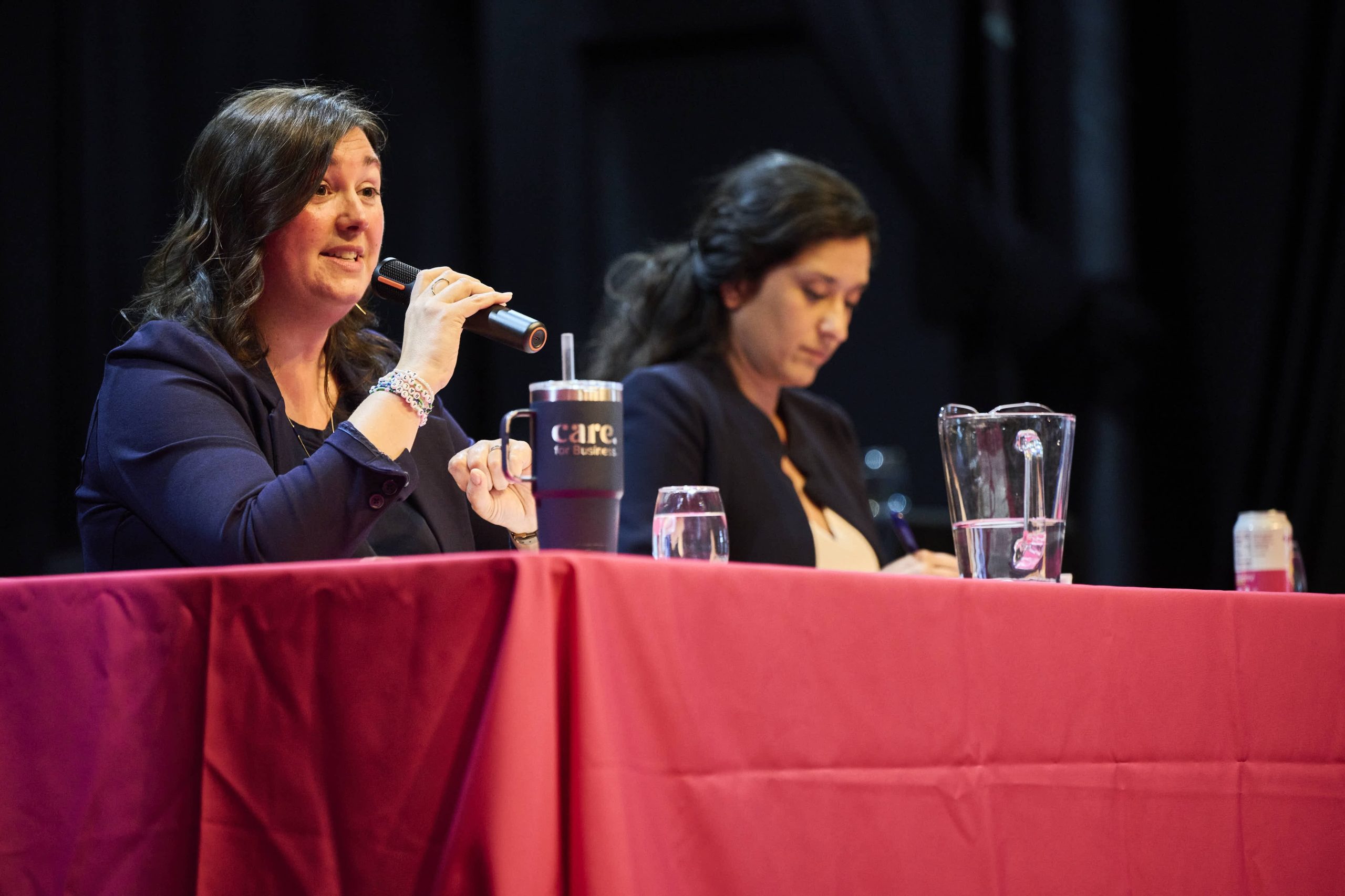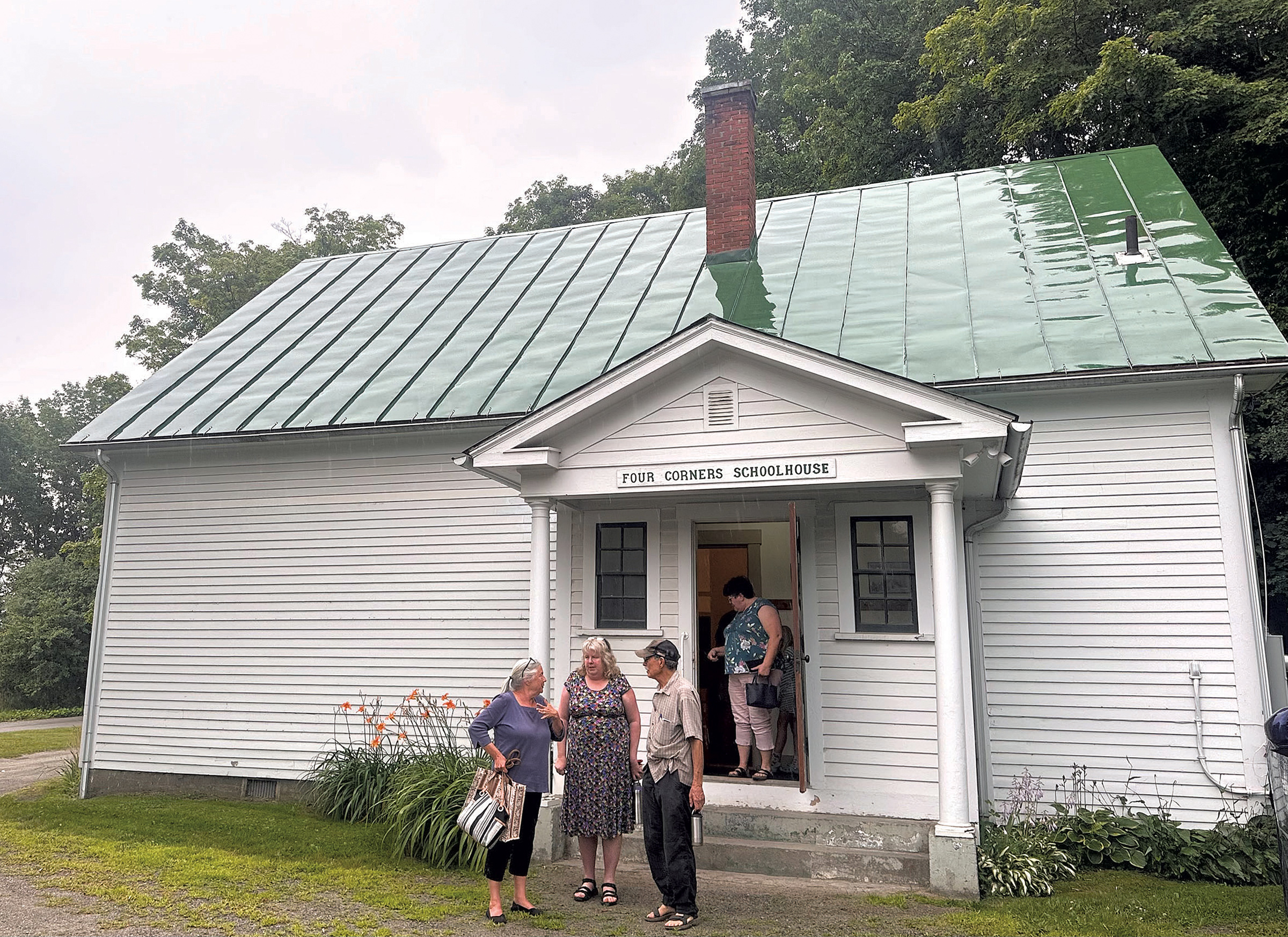
The tension was palpable on July 28 in a former one-room schoolhouse where two dozen people gathered to talk about the future of the Washington Central Unified Union School District.
The East Montpelier meeting, held in advance of a public vote this month that would make it easier to close schools in the district, is representative of the contentious and emotional conversations facing districts statewide. Under the new education-reform law meant to encourage voluntary consolidation, committees to discuss potential school mergers will form across Vermont this fall.
This meeting centered on whether the school district should change its articles of agreement, a legal document ratified in 2018 when Berlin, Calais, East Montpelier, Middlesex and Worcester merged into one district. Under the existing articles, closing a school requires a majority vote of the residents of the town where it’s located. But the proposal would give the electorate of all five towns a say in any future school-closure decisions. That change would take away the power of any one town to determine the fate of its local school.
The impending vote — on August 11 — is the latest development in what has proven to be an uneasy seven-year partnership between the five central Vermont towns, which the State Board of Education forced to merge under the 2015 school district consolidation law known as Act 46.
Washington Central has found itself in a difficult position largely because of its substantial decline in enrollment, which reflects a statewide trend. In the past decade, the size of the student body has declined by 14 percent, and the trajectory is expected to continue for the foreseeable future. School officials are scrambling to adapt.
In recent years, committees made up of school board and community members have debated how to deliver a quality education amid declining enrollment. The two smallest towns in the district, Calais and Worcester, have rejected overtures to close or change their schools. The latest threat came in February, after the Washington Central school board called for school-closure votes in the two towns.
Credit: File: Jeb Wallace-Brodeur
“By consolidating, we use the money saved from administrative and facility redundancies to invest directly in instruction,” then-superintendent Steven Dellinger-Pate wrote to community members ahead of the vote. “If we remain in a five-school model, those same dollars must instead be spent on maintaining underutilized buildings and redundant staffing, leaving less for the direct services our students need to thrive.”
Despite that warning, Calais and Worcester voters opted to keep their schools open. The outcome prompted the school district to announce this spring that Middlesex fifth and sixth graders would be bused to Worcester, while Worcester prekindergarten through second graders would go to Middlesex. The elementary schools, which are a 10-minute drive apart, would share a principal, nurse and school counselors.
Many considered the changes ill-conceived and abrupt. And the situation illustrated how the decisions of voters in one town can affect all the others in a district. In response, some parents formed a group called the Sustainable Schools Coalition, which aims to ensure the long-term strength and stability of the school district.
Representatives from that group presented a petition to Washington Central’s school board in June, calling for a change in the articles of agreement. Days before the petition was formally submitted, Dellinger-Pate, the superintendent, resigned abruptly, which he attributed to personal reasons. His last day was July 31; the district is currently looking for an interim replacement.
Those opposed to the petition, including some school board members, say that changing the articles of agreement would amount to breaking a promise made during the merger: that towns would control their own destinies. The school board initially hedged on whether to move forward. After consulting with an attorney and several town clerks, the board decided to hold the vote on August 11, the day of the state’s primary election. If approved, the change would be binding, though the board would still weigh in on any school closures.
Ahead of the vote, the Sustainable Schools Coalition has hosted community events to bring people with differing views together to discuss the implications.
Credit: File: Jeb Wallace-Brodeur
At one last week, a mix of young parents and older residents braved the stormy weather to attend the meeting at the Four Corners Schoolhouse, which was once a one-room school. There were plates of homemade cookies and brownies, and markers and a large roll of paper provided entertainment for the kids who tagged along. The sound of their playful banter served as a reminder of the gathering’s goal.
Sitting in folding chairs arranged in a circle, attendees introduced themselves and shared a question they had.
Sonja Andrews, a Calais native whose mother once taught at the one-room schoolhouse, came with her husband, Ross, who helps kids at Doty Memorial School in Worcester make lunch for local residents once a week. Andrews said she’d left Vermont for almost 40 years but recently moved back from Virginia. In that state, she homeschooled her children because she didn’t believe the “huge classrooms” in the public schools there were conducive to creating “healthy adults.”
Schools are supposed to provide kids with “a good basis to grow from, and small rural schools provide a much better setting than larger schools can,” Andrews said.
The Washington Central school board has said publicly that it has no plans to take immediate action on school closure based on the results of the vote. But Andrews said she believed that if it passed, the elementary schools in Calais and Worcester would end up on the chopping block.
If that happened, “what is in this for Calais and Worcester taxpayers and voters? What do we get back from the district?” Andrews asked. “How do you compensate them for giving away their right to self-determination?”
Cynthia Gardner-Morse, who said her family’s roots in Calais date back to 1852, said she was “furious” about the petition, which she believed “blindsided people” and ignored the will of Calais and Worcester residents.
“Our towns have a history of closing schools when we need to,” Gardner-Morse said but noted that those past decisions were “organic” and “grassroots.”
Parents with children in the district’s schools, on the other hand, said they worried about a drop in the quality of education they’d observed in the past few years — and that inaction would make it worse.
“It’s not like suddenly the schools are failing. It’s a gradual decline, and it’s easy for that gradual decline to continue … until we get to the place of, How did this happen?” said East Montpelier resident Emily Alfano, who has three young children. “I only have a limited amount of time to educate my kids, so it feels very urgent to me.”
Emilie Connor, who also lives in East Montpelier, agreed.
“I strongly believe we do not have enough kids to keep five elementary schools open at this point,” Connor said. “I’m concerned we are going to start to see a decline in how our school [district] is perceived across the state. It’s always been very desirable. That is starting to decline very quickly.”
All that the families want is stability.
katie Marshall
Middlesex resident Katie Marshall, who has two young children, said uncertainty about the district’s future was her main concern.
“All that families want is stability,” Marshall said. “We want to know where we’re going to be and what resources we’re going to have.” She urged those in the room to think about the collective well-being of the students in the district rather than look at things in a “town-by-town way.”
Andy Shapiro, an East Montpelier resident, said he was “agnostic” as to the best solution. But he was critical of the process that led to this point. Shapiro served on a school-district configuration committee last year and said he felt like district leaders had come in with the foregone conclusion that they needed to close schools.
“People in the community weren’t ever really listened to,” Shapiro said in an interview after the meeting. He believes that a lack of authentic engagement has sown distrust among residents that will linger regardless of what happens on August 11.
The tense mood in the schoolhouse last week lent credence to Shapiro’s assessment. As the meeting wrapped up, it was clear that the attendees were firmly entrenched in their camps and nobody had changed their mind.
Still, one attendee noted, they had shown up to have a face-to-face conversation at a time when such interactions are increasingly rare. That, they all seemed to agree, was worth something. ➆
The original print version of this article was headlined “Articles of Disagreement | Washington Central voters will decide whether to make it easier to close schools — a harbinger of the tough local choices ahead”
This article appears in August 5 • 2026.