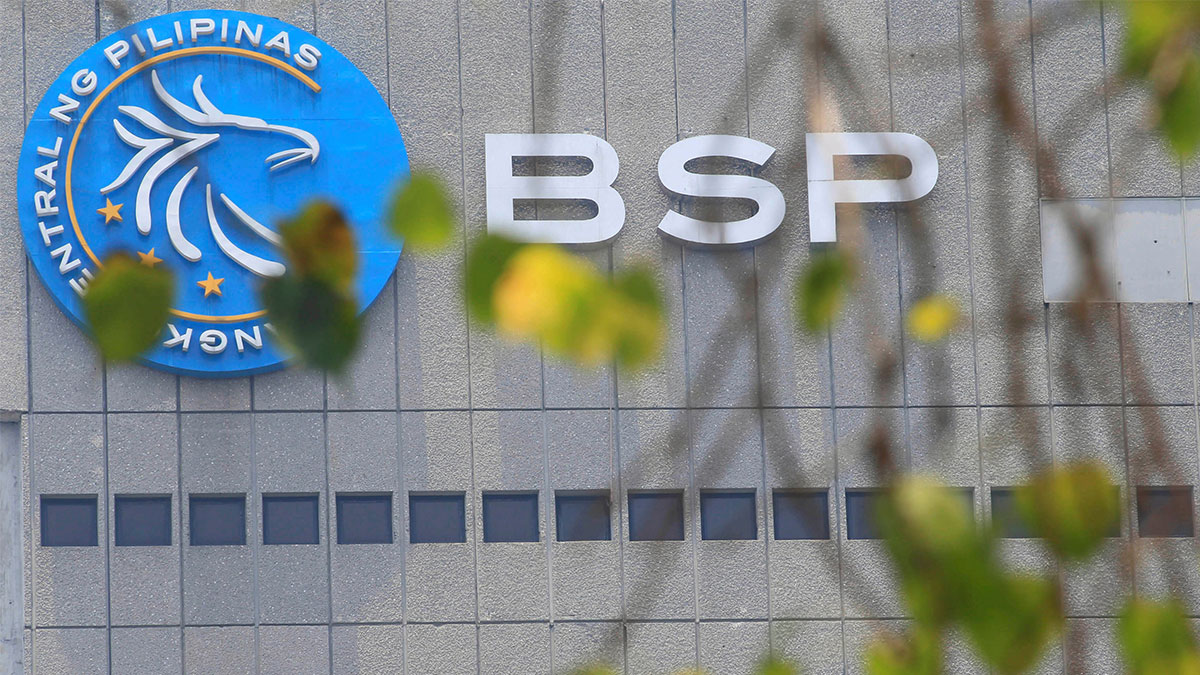
Bangko Sentral ng Pilipinas
MANILA, Philippines — Foreign investors remained buyers of Philippine government securities in June but sold local stocks at a faster pace, reflecting a flight to safer investments.
Data from the Bangko Sentral ng Pilipinas (BSP) showed foreign portfolio inflows (FPIs) surpassed outflows by $170 million in June, nearly 27 percent lower than the preceding month’s net inflow.
READ: Hot money returned to PH debt in May; stock selling slowed
Article continues after this advertisement
This brought the first-half figure to a net outflow of $4 billion, a reversal from nearly $2 billion in net gain seen in the same period last year.
Such investments, often referred to as “hot money,” are prone to swift reversals at the first sign of unfavorable conditions.
These funds—often invested in liquid instruments like stocks and bonds—are far more sensitive to shifts in domestic and global sentiment than foreign direct investments, which tend to stay for longer term and are more closely tied to job creation.
By type of instrument, government securities—including Treasury bonds and Treasury bills—posted a net inflow of $540 million in June, nearly 60-percent higher than the net inflow in the preceding month.
This, as the benchmark yield for 10-year bonds stayed above 7 percent during the month.
Article continues after this advertisement
Meanwhile, local equities saw a hot money net outflow of $370 million, 3.6 times larger than the $104-million net withdrawals seen in the prior month.
Jonathan Ravelas, senior adviser at Reyes Tacandong & Co. said concerns over global growth, trade uncertainties, geopolitical tensions and the path of monetary policy in the United States likely prompted investors to reduce their exposure to equities, resulting in wider stock market outflows.
Article continues after this advertisement
READ: Government to issue global bonds anew in 2026
“On the other hand, stronger inflows into government securities suggest a flight to safety, with investors attracted by relatively stable returns and expectations of further BSP rate cuts amid easing inflation,” Ravelas said.
“Moving forward, portfolio flows will likely remain volatile and heavily influenced by global developments. While the Philippines’ economic fundamentals remain supportive, investors may continue to favor fixed income over equities until external uncertainties ease and earnings prospects improve,” he added.
Looking ahead, the central bank now expects total FPIs—including transactions not registered with the BSP—to post a net inflow of $1.8 billion in 2026, far lower than its previous estimate of $3.7 billion. The BSP said portfolio flows were expected to remain volatile and sensitive to global risk sentiment and financial conditions.
Your subscription could not be saved. Please try again.
Your subscription has been successful.
Although some recovery is anticipated in 2027—supported by improving global conditions and structural catalysts such as bond index inclusion and sectoral investment pipelines—the central bank said the rebound in inflows was likely to be gradual and uneven. INQ