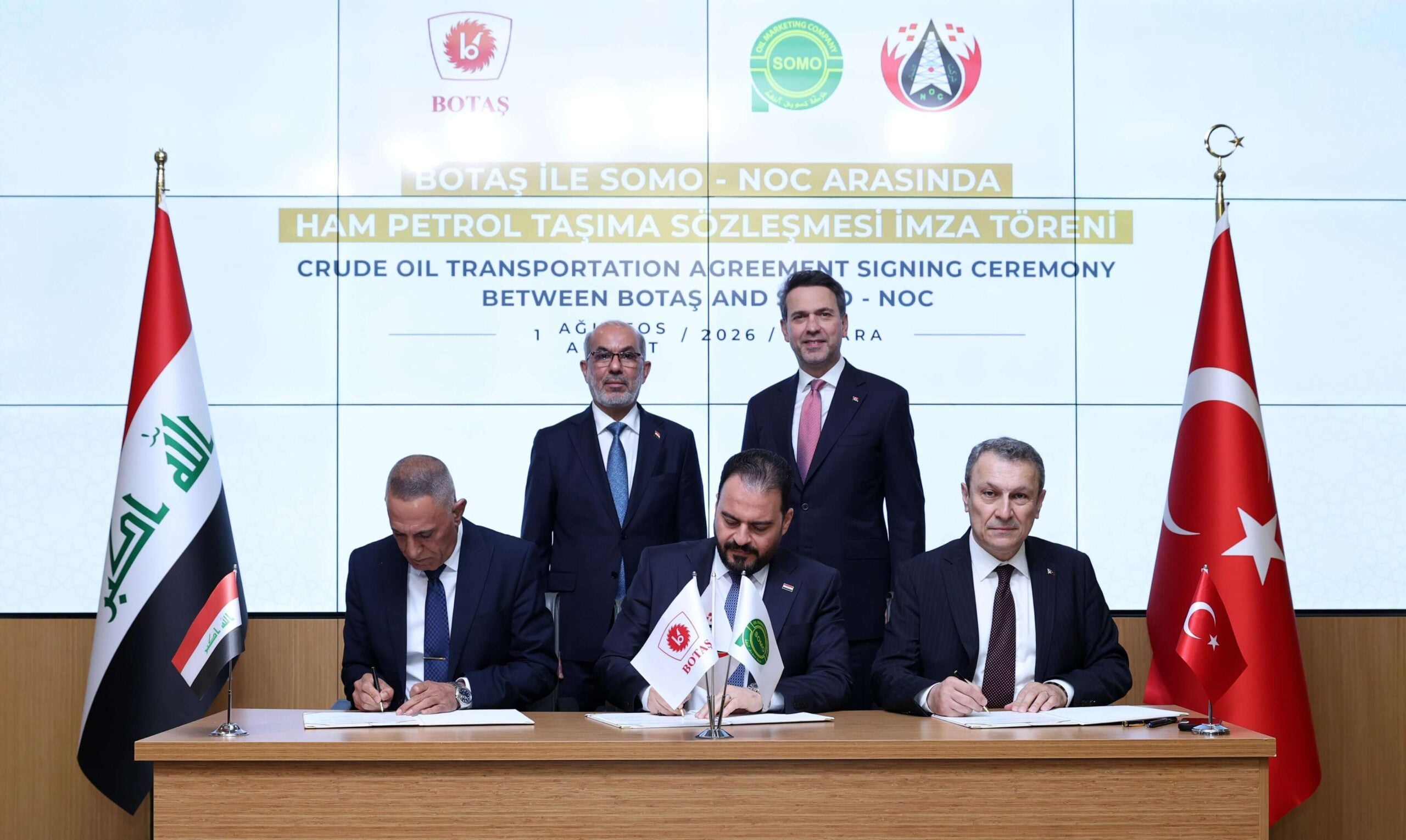
Turkey and Iraq have signed a one-year agreement covering the shipment of at least 750,000 barrels of Iraqi crude a day through a pipeline to Turkey’s Mediterranean port of Ceyhan while the two countries negotiate a broader energy deal.
The agreement was signed Saturday, days after Iraqi Prime Minister Ali al-Zaidi visited Ankara for talks with President Recep Tayyip Erdoğan and senior Turkish officials.
Turkish Energy Minister Alparslan Bayraktar said on X that the deal followed a “productive meeting” in Ankara with Iraqi Oil Minister Bassem Mohammed Khudair al-Abadi.
“While our efforts continue toward a new long-term agreement for this pipeline … we have implemented this transit arrangement covering a daily capacity of 750,000 barrels,” Bayraktar said.
Irak Petrol Bakanı Sayın Basim Muhammed Hüdeyir ve beraberindeki heyet ile Bakanlığımızda verimli bir görüşme gerçekleştirdik.
Görüşmemizin ardından, BOTAŞ ile Irak devlet petrol şirketleri SOMO ve NOC arasında Irak–Türkiye Ham Petrol Boru Hattı’nın etkin kullanımını sağlayacak… pic.twitter.com/aYk8rbo5Da
— Alparslan Bayraktar (@aBayraktar1) August 1, 2026
Al-Zaidi described the agreement as “an important strategic milestone” and said it provided for a minimum export volume of 750,000 barrels a day.
The decades-old agreement governing the Iraq-Turkey crude oil pipeline expired on July 27. The new arrangement will remain in force for one year while Ankara and Baghdad work on a comprehensive framework covering oil, electricity and water resources.
Al-Zaidi said Iraqi and Turkish companies would begin implementing the agreement as the two governments continued negotiations.
The pipeline carries crude from northern Iraq to the Turkish export terminal at Ceyhan, providing Baghdad with an alternative to routes through the Persian Gulf. That has become increasingly important amid disruptions to shipping through the Strait of Hormuz.
The pipeline has a technical capacity of approximately 1.5 million barrels a day on the Turkish side, although actual flows have remained well below that level in recent years, according to Turkey’s Energy Ministry.
Bayraktar traveled to Baghdad in early July for talks on oil and gas cooperation. During al-Zaidi’s visit to Ankara on Tuesday, the two governments said they wanted to make full use of existing energy infrastructure and explore an extension of the pipeline to the southern Iraqi oil hub of Basra.
Turkey has also said the pipeline’s capacity could eventually be increased and opened to crude from other producers in the Gulf region.
Agence France-Presse with additional reporting by Turkish Minute