- by croatiaweek
- August 1, 2026
-
in
News
(Photo: Varaždinska županija)
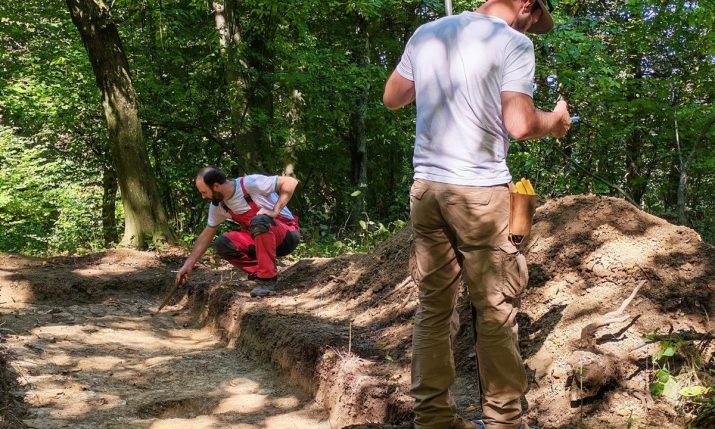
SLANJE, 1 August 2026 – Croatia’s largest known prehistoric hillfort has been presented to the public, with archaeologists confirming its exceptional importance and its connection to other major Iron Age sites in northern Croatia.
Located in a forested area between Vinogradi Ludbreški and Slanje on the northern slopes of Mount Kalnik, Slanje Stari Gradec covers around 12.5 hectares, making it the largest prehistoric hillfort of its kind discovered in Croatia.
The vast fortified settlement is surrounded by a system of ditches and massive earthen ramparts reaching up to 14 metres in height. Researchers say the scale of the site surprised even experienced archaeologists when they first examined it.
According to excavation leader Dr Saša Kovačević from the Institute of Archaeology, the hillfort’s size is comparable to the area of Knin Fortress, while Grebengrad, one of northwestern Croatia’s largest medieval fortresses, occupies only around half a hectare.
The site also includes an Early Iron Age tumulus cemetery, which archaeologists describe as one of the project’s greatest mysteries. Further research is expected to reveal when the settlement was built, how it functioned and who ruled it.
Researchers stressed that Slanje is not an isolated discovery. Together with important archaeological sites in Martijanec and Jalžabet, it forms a unique Early Iron Age cultural landscape in Varaždin County dating back to the 7th, 6th and 5th centuries BC.
(Photo: Varaždinska županija)
Excavations across the region have been ongoing since 2016, beginning with the discovery of the burial mound of a ruler from the Eastern Hallstatt culture in Jalžabet before expanding to Martijanec and now Slanje.
Archaeologists say their work extends beyond excavation. Alongside research, efforts are focused on protecting the site, preserving it for future generations and making it accessible to visitors.
Officials believe the discovery also offers significant opportunities for continental tourism. They say the concentration of monumental prehistoric sites within such a small area gives the region archaeological importance that extends beyond Croatia and could be recognised in a wider European context.
(Photo: Varaždinska županija)
Varaždin County has established its Centre for Cultural Heritage Management (CUKUR) to help conserve and present these sites, while nearby plans for the Slane Vode Interpretation Centre aim to connect the discoveries into a broader cultural and tourism attraction.
(Photo: Varaždinska županija)
Although many questions remain unanswered, archaeologists say one thing is already clear: the archaeological landscape formed by Slanje, Martijanec and Jalžabet is one of the most significant prehistoric heritage areas discovered in Croatia in recent years.