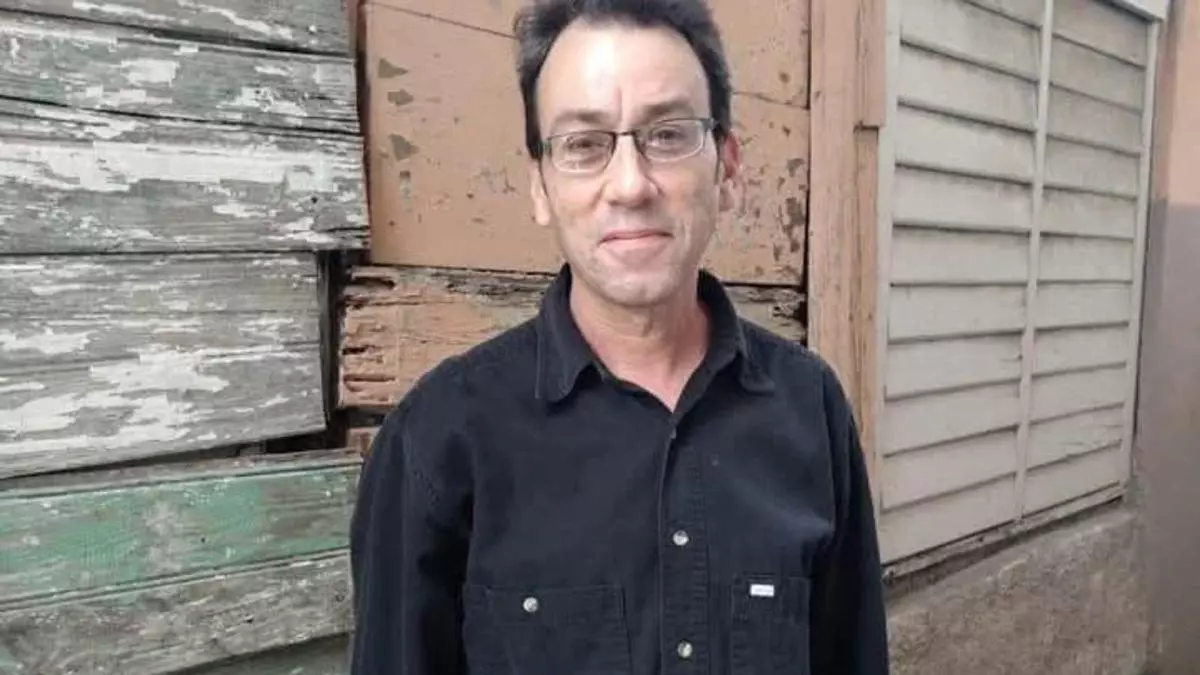
Independent Cuban journalist and political prisoner Jose Gabriel Barrenechea Chávez. / Observatory of Cuban Human Rights
The same ruling also upheld the convictions of three other defendants who took part in a 2024 demonstration in Villa Clara.
By 14ymedio
HAVANA TIMES – Cuba’s Supreme Court has upheld the six-year prison sentence imposed on writer and independent journalist Jose Gabriel Barrenechea, a Patmos Prize winner and contributor to
14ymedio. The independent organization “Justice 11J” confirmed the news after obtaining a copy of the
ruling, dated July 28, which declares final the decision issued by the Villa Clara Provincial Court on
January 15, thus closing the door on further appeals.
The same ruling confirmed the eight-year prison sentence for Yandri Torres; the seven-year
sentence for Rafael Javier Camacho, and the five-year sentence for Rodel Barbaro Rodriguez, on identical charges of “public disorder” as a result of their participation in a peaceful protest against the blackouts. The protest took place in November 2024 in the municipality of Encrucijada, Villa Clara.
The defense had filed an appeal to overturn the convictions, challenging the court’s evaluation of the evidence. In the cases of Barrenechea, Torres, and Rodriguez, the attorneys argued that the alleged conduct was protected by the rights to petition and freedom of expression. The Supreme Court rejected all of those arguments and upheld the convictions.
The provincial court’s ruling characterized the defendants as motivated by “an intention to
destabilize civic order and create insecurity among the population,” alleging that these elements justified the lengthy prison terms ultimately imposed. The lower court decision also included comments about the defendants’ conduct and personal relationships. In Barrenechea’s case, the prosecution alleged he “associated with people of poor morals and social conduct,” and that he “had no recognized employment,” despite the well-known fact that the writer and journalist worked independently.
The trial, held on September 24, 2025, was marked—according to relatives and independent
organizations—by numerous irregularities commonly seen in proceedings against critics of the
government, including vague charges, the rejection of exculpatory evidence, and an atmosphere clearly
intended to intimidate defense witnesses.
Barrenechea, a journalist, essayist, and contributor to 14ymedio, has for years been one of central Cuba’s most outspoken voices in debates on authoritarianism, economic stagnation, and the moral crisis of the Cuban political system. His liberal views, defense of pluralism, and ongoing analysis of civil society have made him the frequent target of police interrogations, summonses, and harassment. The online newspaper 14ymedio has been reporting on these abuses since at least 2016.
In November 2024, the writer was placed in pretrial detention at La Pendiente prison in Santa Clara. Since that time, he has endured the harsh conditions typical of Cuban prisons, including restrictions on family visits, obstacles to receiving medicine and food, and prolonged isolation that has affected his health.
During his imprisonment at La Pendiente, Barrenechea also suffered a particularly painful loss: his
mother died of cancer in May 2025, and authorities did not allow him to say goodbye to her. The Madrid-based Observatory of Cuban Human Rights described the prison authorities’ decision as part of a pattern of “systematic psychological pressure,” aimed at breaking the defendant and sending a warning to other intellectuals and activists.
The organization has repeatedly called for the acquittal of Barrenechea and his
co-defendants, stating: “This is a political case from beginning to end.” Johanna Cilano, Amnesty International’s researcher on Cuba, expressed a similar view, saying of the
case: “Protest is a right. No one should be imprisoned simply for exercising their human rights.”
Justice 11J denounced that in Cuba, “expressions of public discontent continue resulting in
prison sentences lasting years.” The organization demanded the release of those convicted and
emphasized: “The rights to peaceful assembly and freedom of expression protect demonstrations and
protests as forms of public participation. Any restrictions must be lawful, necessary, and proportionate,
and cannot be used to discourage the exercise of these rights, as has happened in this case.”
First published in Spanish by 14ymedio and translated and posted in English by Havana Times.
Read more from Cuba here on Havana Times.