by RJ Michaels
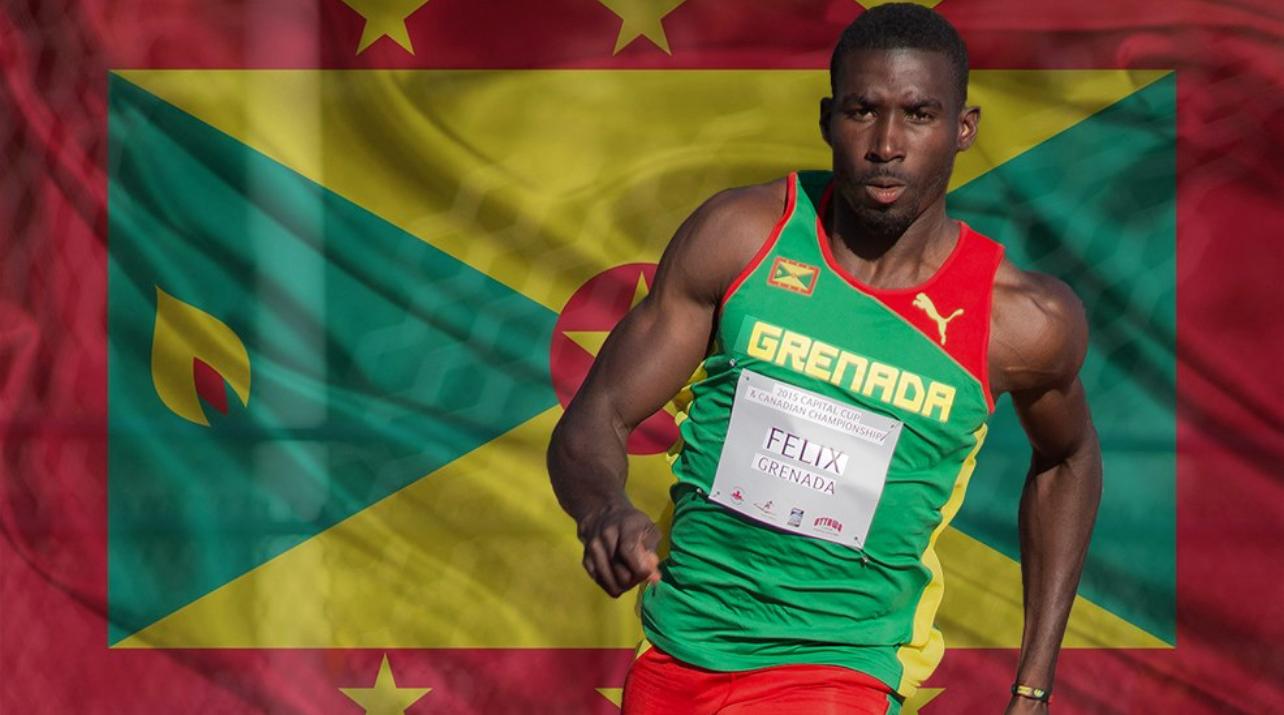
- Felix is former NCAA champion and 2-time Olympian
- Virtually only athlete carrying national flag in 10-event discipline
- Official multi-event coach for Team Grenada at Commonwealth Games
Twelve years ago, beneath a damp Scottish sky at Hampden Park, Kurt Felix crossed the finish line of a gruelling 1500-metrerace, wiped the sweat from his eyes, and looked up at the stadium scoreboard.
When the final tally flashed 8,070 points, it confirmed a historic bronze medal. It was Grenada’s first-ever international senior medal in the multi-events, proving that a nation famed for individual sprinters could produce a world-class decathlete.
“It represented pride,” Felix reflected, looking back at that podium moment. “It represented years of sacrifice, discipline, and resilience through one of the toughest events in athletics. The decathlon demands excellence across 10 different events over 2 gruelling days, and every point is earned through hard work. It was proof that as a small nation we can compete with the best in the world.”
Now, as the Commonwealth Games return to Glasgow, Felix is back on the Scottish track where his international career took off. The former NCAA champion and 2-time Olympian stands on the apron as the official multi-event coach for Team Grenada, ready to guide a new cohort of multi-eventers on the exact stage where he once made history.
The GBSS fun, the finger injury, and the multi-event pivot
Long before Grenada became a recognised powerhouse in combined events, the decathlon was virtually unmapped territory in the southern Caribbean. Local track culture revolved around explosive sprints, quarter-mile battles, and a strong reputation of success in throws, while the demanding 10-event challenge required a rare blend of speed, strength, technical endurance, and mental grit.
Felix’s journey into the discipline wasn’t calculated; it was born out of schoolboy camaraderie and unexpected adversity at the Grenada Boys’ Secondary School (GBSS). “During my tenure at the GBSS, it was more about fun with friends,” Felix recalled with a smile. “It was always who could run the fastest, jump the highest, throw the furthest. I actually used to hate running.”
His natural elasticity stood out immediately. At his CARIFTA Games debut in 2004 in Bermuda, like many Grenadians before him, he captured gold in the U17 Javelin Throw (50.29m) and later, bronze in the High Jump (1.80m). But a sudden finger injury forced a career-altering pivot to the multi-events to secure his place on the national team.
“The heptathlon medals came after a finger injury which led me to the multi,” Felix explained. “I felt like that could have gotten me on the team.” The strategic gamble paid off instantly: he claimed bronze in the U20 Heptathlon in Guadeloupe (2006) and gold in the U20 Heptathlon in Turks and Caicos (2007) with 4,675 points.
The lone pioneer: Central Arizona to NCAA Champion
Securing a scholarship to the United States transformed Felix’s raw athleticism into world-class technique. At Central Arizona College, he became a 2-time NJCAA National Champion in the decathlon while making his senior international decathlon debut at the 2008 Pan American Combined Events Championships in Santo Domingo (6,946 points).
Moving to Boise State University elevated his execution to elite Division I standards. On 7 June 2012, at the NCAA DI Outdoor Championships in Des Moines, Iowa, Felix put together a landmark performance. Backed by a 4.60m pole vault clearance and a 41.51m discus toss, he scored 8,062 points to win the NCAA National Decathlon Title, becoming the first Grenadian to conquer the NCAA multi-events.
Yet, for years as he transitioned to the professional ranks, Felix was virtually the only athlete carrying the national flag in the 10-event discipline. Being a lone pioneer brought a blend of isolation and quiet purpose.
“At the time, we were never known for the decathlon, so it took a while for people to understand the events, and it didn’t carry the hype as the sprinting events,” Felix said. “It drove me to want to show that as a small nation we can compete and stand out on the big stage. I felt like there were bigger talents than I was at the junior level that would have been great decathletes. We dominated on the CARIFTA level, so why not the world stage?”
Global podium stardom and the Rio Olympic brotherhood
Fresh off his NCAA triumph, Felix launched into an extraordinary multi-year run on the global stage:
- 2012 Olympic Games (London): Made his Olympic debut after capturing his NCAA title
- 2014 Commonwealth Games (Glasgow): Delivered his international breakthrough, capturing the bronze medal with 8,070 points
- 2015 Pan American Games (Toronto): Secured the silver medal with 8,269 points, posting personal bests in the 100m (10.91s) and shot put (15.23m)
- 2015 World Championships (Beijing): Finished 8th in the world with 8,302 points, setting a lifetime best of 14.58s in the 110m hurdles
- 2016 World Indoor Championships (Portland): Placed 6th in the world in the indoor heptathlon (5,986 points)
At the 2016 Rio Olympic Games, Felix delivered an impressive 9th-place finish with 8,323 points (highlighted by a 69.92m javelin throw). But the result was eclipsed by a historic milestone: competing alongside him in the very same stadium was his younger brother, Lindon Victor. Having two brothers from an island of 110,000 people contesting an Olympic decathlon side-by-side remains a rare family achievement in modern track history. It stood as living proof that his pioneer efforts to put Grenadian decathlon on the map were bearing tangible fruit.
Felix reached his career peak on 25 June 2017 at the prestigious Ratingen Mehrkampf-Meeting in Germany, scoring a personal best of 8,509 points and setting a meeting record in the javelin throw with a massive 72.80m effort. He followed it with a 7th-place finish (8,227 points) at the 2017 London World Championships, completing 5 World Championship appearances with multiple top-eight world finishes.
Passing the torch in 2026
Returning to Glasgow in 2026 as a member of Team Grenada’s coaching staff marks a profound psychological shift. For a man who controlled his own destiny across 10 events for 2 decades, stepping onto the track apron requires a new kind of discipline.
“The hardest part of transitioning from competing on the track to guiding from the sidelines has been learning that I no longer control the outcome,” Felix admitted candidly. “As an athlete, especially as a decathlete, I knew that every result came down to the work I put in the early mornings, the injuries, the countless hours mastering ten different events. Now I have to channel that into others to get them to buy into what it takes. Oftentimes we hear young ones talk about competing at the highest stage and don’t necessarily want to put in the work required.”
Felix brings the same unwavering dedication to mentorship that he brought to the blocks. If he could stand at the track edge today and look back at the young GBSS boy who first put on a national singlet at CARIFTA, his message would be simple:
“Don’t worry about disappointments along the way. Stay hungry and driven and focus on the process. The journey is its own reward. There will be ups and downs, but there are moments that make it all worth it.”
For Kurt Felix, the journey has come full circle; he now becomes the shoulders on which Grenada’s current and future decathlon giants stand. Though the lanes have changed, the goal stays the same, ensuring the door he unlocked for Grenadian decathletes remains wide open for generations to come.
NOW Grenada is not responsible for the opinions, statements or media content presented by contributors. In case of abuse, click here to report.