Your support helps us to tell the story
From reproductive rights to climate change to Big Tech, The Independent is on the ground when the story is developing. Whether it’s investigating the financials of Elon Musk’s pro-Trump PAC or producing our latest documentary, ‘The A Word’, which shines a light on the American women fighting for reproductive rights, we know how important it is to parse out the facts from the messaging.
At such a critical moment in US history, we need reporters on the ground. Your donation allows us to keep sending journalists to speak to both sides of the story.
The Independent is trusted by Americans across the entire political spectrum. And unlike many other quality news outlets, we choose not to lock Americans out of our reporting and analysis with paywalls. We believe quality journalism should be available to everyone, paid for by those who can afford it.
Your support makes all the difference.Read more
The death toll from the earthquake that struck south-western Japan on Tuesday has risen to 34, as rescuers raced to find survivors before the point at which hopes of pulling anyone out alive begin to fade.
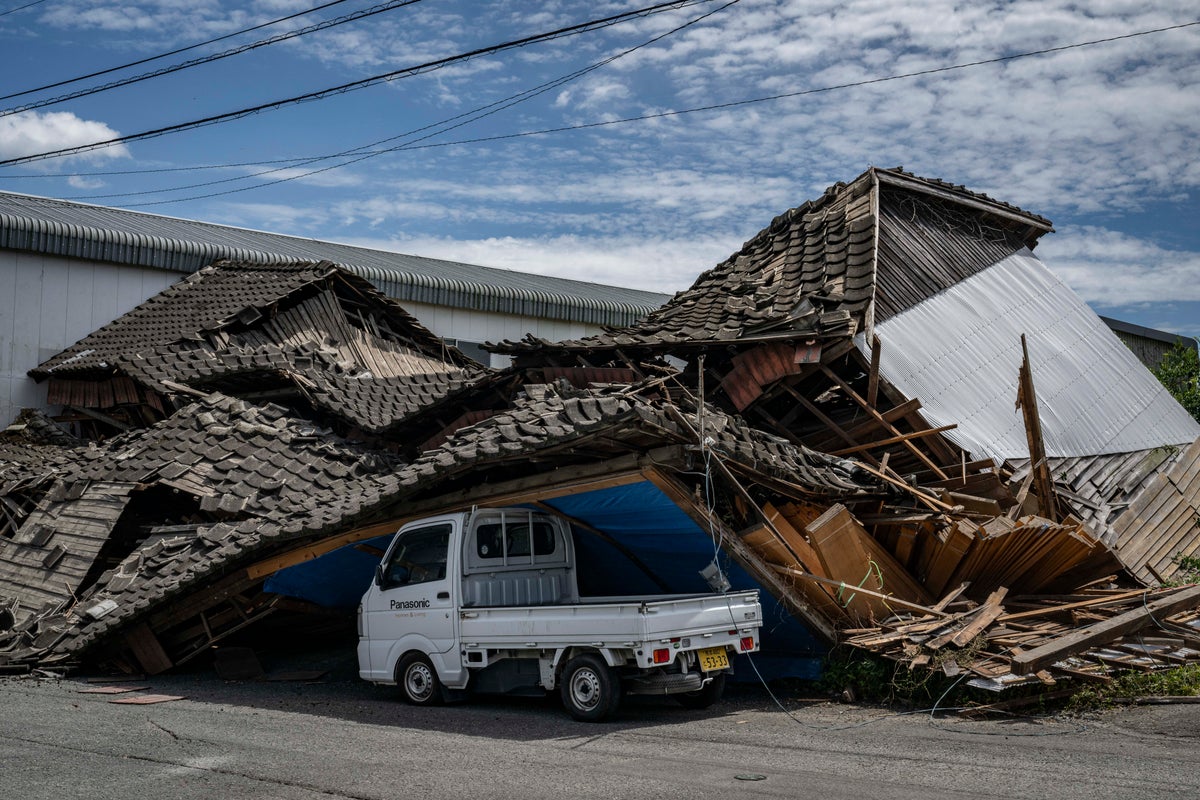
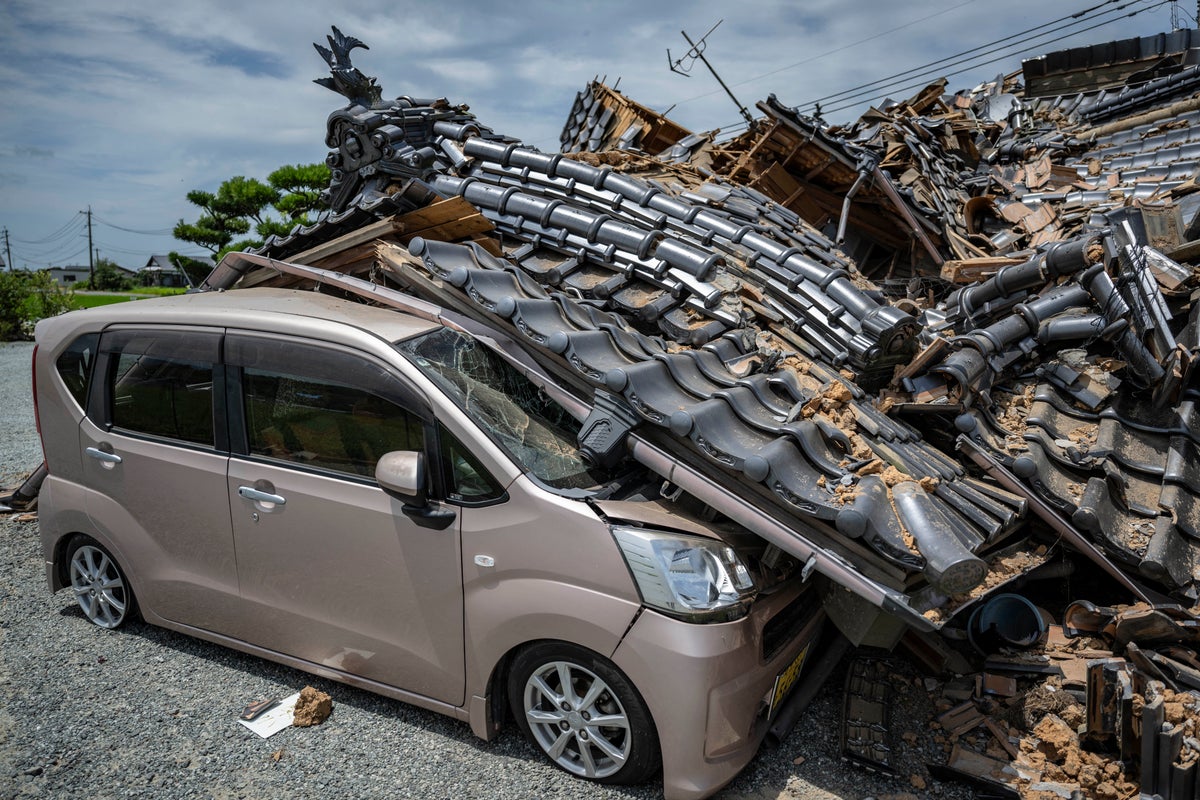
Crews were still searching the rubble on Thursday in the Kumamoto region, on the southern main island of Kyushu, two days after the magnitude-6.8 quake set off an explosion at a shopping mall, brought down a factory chimney and flattened homes.
At least 63 people were injured, five of them seriously and six in a critical condition, the Kumamoto prefectural government said. The number of people still missing was unclear.
Chief cabinet secretary Minoru Kihara said some of the deaths were still being assessed to confirm whether they were caused by the quake.
“Rescue efforts are a race against time,” he said, adding that police, firefighters and troops from Japan’s self-defence force would keep working to reach those trapped. Rescuers were pushing to search the wreckage before the 72-hour mark, after which the chances of finding survivors drop sharply.
The worst damage was at the Aeon Mall in the town of Kashima, which was crowded with thousands of shoppers when the quake struck in the late afternoon.
A man gazes at his collapsed home in Hikawa Town, Kumamoto Prefecture (AFP/Getty)
The mall’s operator said about 3,000 customers had been evacuated to a car park before an explosion tore through another part of the building, where some people were still working. The second floor then collapsed, trapping people inside.
Six of those killed died at the mall, among 11 people pulled from the debris, according to Kumamoto authorities.
Relatives of the missing gathered near the wrecked mall on Thursday, waiting for news in sweltering heat.
In the city of Yatsushiro, a chimney collapsed at a Nippon Paper Industries mill, killing eight people. Ten others were rescued and one remained missing, the prefectural government’s disaster team said.
Survivors described returning home to pull family members from the wreckage of collapsed houses, some suffering injuries themselves.
Although Japan enforces strict building codes because of how often quakes strike, many homes in the affected rural communities are older timber structures that offer less protection.
About 10,000 people spent Wednesday night in more than 400 evacuation centres set up in gymnasiums and other large halls. Some had homes without water or power; others were afraid to return. Around 23,000 households were still without electricity and about 74,800 without running water, authorities said.
The loss of power has left evacuees exposed to dangerous heat, with temperatures forecast to exceed 35C for the rest of the week. Officials warned people to guard against heatstroke, urging them to drink water before feeling thirsty and to stay in the shade, as evacuees queued at water trucks.
Many were sheltering from the heat in their cars, where air conditioning was still running. Authorities cautioned that sitting still for long periods raised the risk of deep vein thrombosis, a condition in which blood clots form in the legs, and advised people to move regularly and keep drinking water.
Prime minister Sanae Takaichi said the government would ensure enough fuel reached the area and that health workers would check on evacuees. About 3,300 portable air-conditioning units were being sent to the region.
The quake registered the highest level on Japan’s seismic intensity scale. It was the same prefecture struck by a pair of earthquakes in 2016 that killed more than 270 people and damaged Kumamoto Castle, whose stone walls were again brought down this week.