LIFE: Santiago de Chile
Key Facts
—Location. Barrio París-Londres sits steps from Universidad de Chile and Santa Lucía metro stations in central Santiago.
—Core Asset. Cobblestone streets, historic townhouses, old streetlamps, and tree-shaded plazas define its European-style heritage character.
—Programming. A monthly street market launches on the first weekend of each month, designed to build repeat foot traffic.
—Backers. The neighbourhood association, Santiago regional government, the municipality, and a regional development corporation all support the initiative.
—Goal. Organisers aim to strengthen cultural identity, promote local culture, and reactivate the local economy through a vibrant community space.
The Barrio París-Londres revival is being driven by a coordinated heritage-placemaking push that combines monthly street markets, tourism-friendly architecture, and multi-institution backing to turn a quiet central-Santiago enclave into a repeat-visit destination.
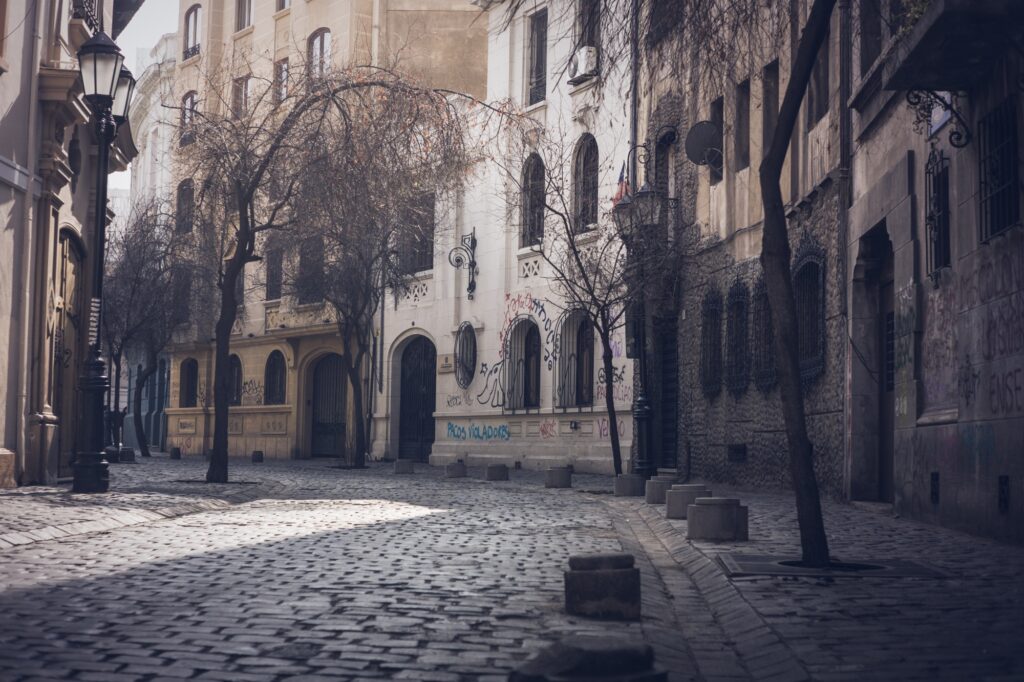
Calle Londres, one of the two winding streets that give the barrio its name. (Photo Wikimedia Commons, CC BY-SA)
One-stop reference
Company Intelligence
Every listed company in Latin America — financials, ownership and structure for 1,450+ companies across 26 exchanges, in one place.
Browse the directory →RTAsk Rio TimesCost of living, safety, visas in Latin America›RT
Ask Rio Times
Straight answers about living in Latin America, from our reporting.
×
Cost of livingIs it safe?VisasNeighborhoods
Open the full Ask Rio Times →
A Pocket of Europe in Central Santiago
Barrio París-Londres is one of Santiago’s smallest and most architecturally distinct quarters, tucked between Calle Londres and Calle París just south of the Alameda. Its cobblestone lanes, early-20th-century townhouses, wrought-iron details, and old streetlamps give it a European feel unmatched elsewhere in the Chilean capital.
The neighbourhood has long been a curiosity for visitors but has remained remarkably quiet, even sleepy, compared with nearby Lastarria or Bellavista. That underuse is precisely what the new revival effort aims to change.
The Monthly Market as an Economic Engine
At the heart of the Barrio París-Londres revival is a recurring street market scheduled for the first weekend of every month. The market is designed to bring life back to the streets, strengthen cultural identity, promote local culture, and reactivate the local economy through a vibrant community space.
Recurrence is the strategic key. A one-off festival generates a spike and fades; a fixed monthly date builds habit, word-of-mouth, and a reliable revenue stream for vendors, artisans, and nearby cafés.
Who Is Behind the Barrio París-Londres Revival
The initiative is not a single-investor play. It carries the backing of the neighbourhood association, the Santiago regional government, the municipality, and a regional development corporation.
That multi-institution coalition matters for longevity. Public-sector involvement reduces the risk of the project collapsing when a private sponsor pulls out, and it signals to property owners and small businesses that the activation is meant to last.
Connectivity and the Foot-Traffic Advantage
Barrio París-Londres sits within a five-minute walk of both Universidad de Chile and Santa Lucía metro stations, placing it on Santiago’s two busiest lines. It is also a short stroll from the Cerro Santa Lucía park, the historic centre, and the government district.
That pedestrian connectivity lowers the barrier to entry for casual visitors. Someone leaving the metro or finishing a Santa Lucía walk can detour into the neighbourhood without planning a dedicated trip.
What the Revival Means for Investors and Expats
Heritage-led placemaking has a track record of lifting residential and commercial property values in Latin American capitals, from Buenos Aires’ San Telmo to Mexico City’s Roma Norte. Barrio París-Londres is smaller and more concentrated, which can amplify the effect of even modest foot-traffic gains.
For expats and internationally minded professionals, the neighbourhood offers a rare combination: European-scale streetscapes, central-city convenience, and a cultural activation that promises more life without the noise of a full nightlife district. Early-stage attention to the area is worth tracking.
What to Watch Next
The first test is execution: whether the monthly market launches on schedule and draws consistent vendor and visitor numbers through 2026. A second signal will be any uptick in commercial leasing activity on Calle Londres and Calle París.
Longer term, the neighbourhood’s revival will depend on whether the coalition holds and whether programming expands beyond the monthly market to include evening events, heritage walks, or pop-up residencies. The bones are there; the activation is now the story.
Frequently Asked Questions
Where exactly is Barrio París-Londres in Santiago?
The neighbourhood occupies two short parallel streets, Calle Londres and Calle París, just south of the Alameda in central Santiago. It is a five-minute walk from both Universidad de Chile and Santa Lucía metro stations, and sits close to the Cerro Santa Lucía park and the historic government district.
What is driving the Barrio París-Londres revival in 2026?
The revival is being driven by a coordinated heritage-placemaking effort centred on a recurring monthly street market. The initiative is backed by the neighbourhood association, the Santiago regional government, the municipality, and a regional development corporation, and aims to strengthen cultural identity while reactivating the local economy.
Is Barrio París-Londres a good area for expats and investors?
The neighbourhood offers a rare combination of European-style architecture, central-city connectivity, and a cultural activation that promises more street life without the noise of a full nightlife district. Heritage-led placemaking has historically lifted property values in comparable Latin American quarters, making early-stage attention to the area worth tracking for both lifestyle and investment reasons.