Y2K and low-rise jeans. Some eras really do make a comeback, and Marketing Mix Modelling (MMM) is one of them.
MMM was thought to be left in the pre-digital world. Popular in the 1960s, this statistical-based method provided marketers quantitative representations of the impact of their marketing strategies.
Overall, this holistic model helps marketers understand how to best allocate their marketing budget through different channels, regions, and products.
What is MMM?
In the 1960s, Marketing Mix Modelling was created to provide businesses with a numerical interpretation of the success of their marketing strategies. By aggregating time-series data, it produces an extremely privacy-safe way to estimate the output of each channel.
As marketing progressed from the 1990s to the 2000s and 2010s, marketers moved away from the reliable MMM and towards instantaneous, pixel-based attribution models. Essentially, this method would involve a pixel being placed on a website (ex. LinkedIn Insights tag, Meta Pixel, etc.), and it sends data (such as timestamp, page visited, etc.) back to the ad platform. The platform then matches that visit with the specific campaign to map back results to the marketer.
However, as third-party cookies and cross-site tracking get further restricted due to privacy regulations such as Apple’s ATT framework and Safari’s ITP, the same pixel tracking has become more inconsistent and inaccurate. That’s where the comeback of MMM comes in.
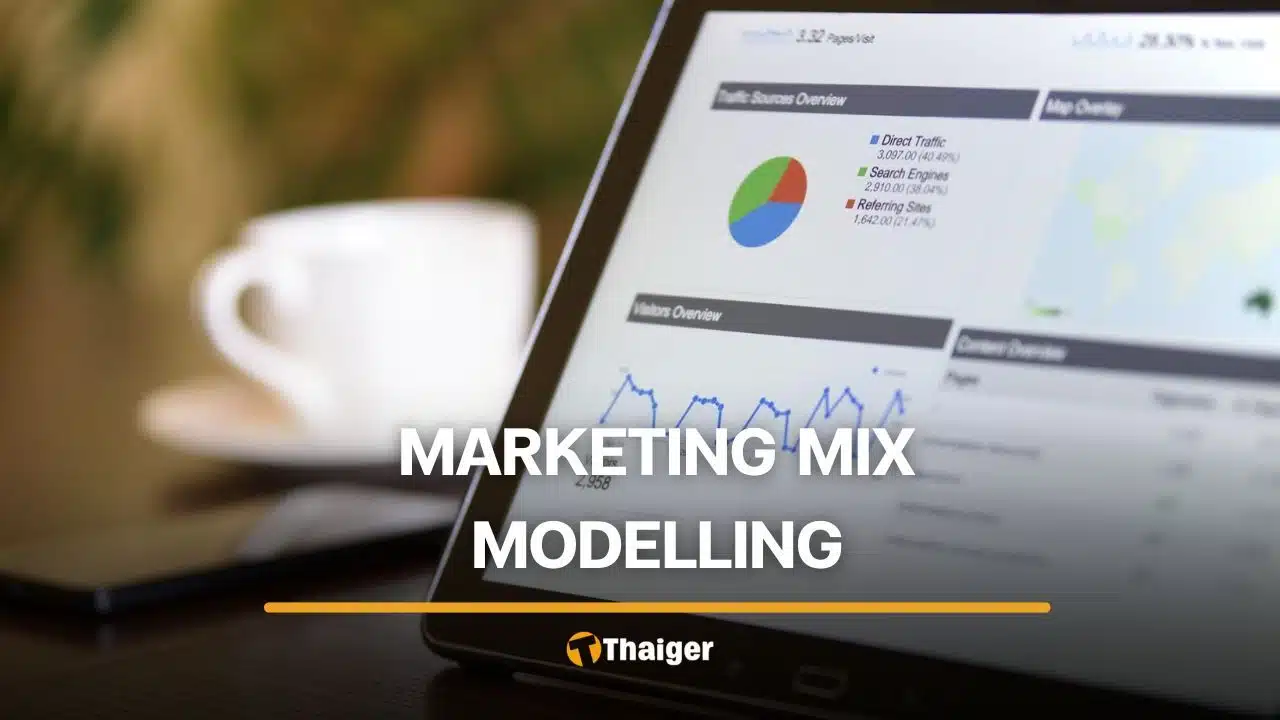
Photo by Kanchamachitkhamma from Canva
Effective MMM
To effectively implement MMM, there are a few key steps to follow:
1. Define your objectives
Whether you’re aiming to evaluate ROI, project sales, or look deeper into customer behaviour, most businesses are typically effective in starting their MMM through clearly defined objectives and goals.
2. Collect and prepare data
Collecting accurate data is a large part of the MMM process. Companies should go through great lengths to ensure data is accurate, complete, and representative. The data must then be cleaned and preprocessed for missing values, inconsistencies, and outliers. The data is normalised and standardised. Then, the analysts create custom data points by mathematically grouping raw data to measure how specific marketing tactics affect overall company performance.
3. Select models
Regression analysis, time series analysis, and machine learning algorithms are all popular Marketing Mix Models to use. It’s important to select the model that works best for your individual company’s needs and preferences.
4. Select variables
Business performance can be affected by marketing and non-marketing factors. Both should be considered in this step of the process, where marketing variables are included based on relevance to business objectives.
5. Develop and evaluate models
Using statistical techniques, the model is developed by estimating parameters of the model type selected earlier. The data between marketing inputs and outputs will then be quantified. Then, the model will be evaluated.
6. Implement, monitor, and iterate
Recommended changes will be implemented. The progress will be monitored, and the approach iterated if found beneficial.
Common Challenges
While MMM is a promising and relatively accurate method for businesses to evaluate the success and worthiness of their budget allocations, there are some common challenges in the process. If you choose to implement MMM, ensure your business knows how to mitigate them.
1. Data quality
Obtaining highly accurate data numbers may be difficult. Ensure you obtain your data from trusted sources and properly integrate various data types, as that can be challenging.
2. Model interpretation
Interpreting models may be difficult for non-technical stakeholders. Secure a team member who is able to evaluate your MMM results.
3. Privacy concerns
Dealing with customer data can prove challenging when ensuring all privacy regulations are met. Data must be securely stored and anonymised following the proper legal standard.
Real-World Applications
MMM can be applied across a wide range of fields, including consumer, retail, financial services, and beyond. It’s important to understand how it can best serve your company so you can achieve maximum ROI from your budget. Stay up to date and keep using evolving and existing data models and techniques to navigate the increasingly complex marketing world.
Sources:
• Marketing Mix Modelling: A Complete Guide – GeeksforGeeks
• The Current State of Marketing Mix Modeling – Ipsos MMA
• Decoding Marketing Mix Modeling: A Complete Guide | DataCamp
• Why Marketing Mix Modelling is Making a Comeback – STRAT7
• Marketing Mix Modeling Is Back — And This Time It’s Running the Business – Advertising Week
• Marketing Mix Modeling Is Coming Back | QRY
Latest Thailand News
Home/Guides/Digital Marketing/Search Engine Optimisation (SEO)/Spend smarter: the comeback of marketing mix modellingDigital MarketingSearch Engine Marketing (SEM)Search Engine Optimisation (SEO)