What is Fifa up to now?
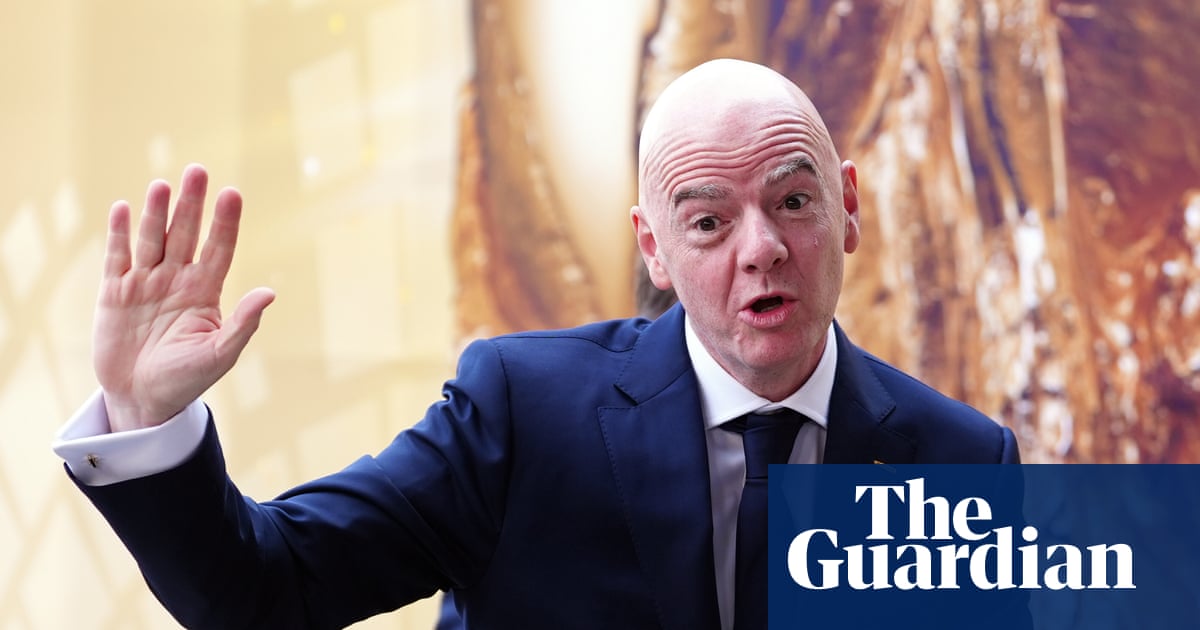
A week after the World Cup finished, Fifa has yet to announce whether Argentina will be punished for the violence seen on the pitch at the end of the final. What it has been able to do, however, is devise an entirely new way of running international football, which – in the words of its president, Gianni Infantino – “is about the democratisation of football worldwide”. It is also an idea to allow private investors take a stake in Fifa’s competitions and potentially make money from the World Cup.
Right. So how will this brave new idea work?
After reporting in the Times and the Financial Times broke the news on Tuesday afternoon, Fifa published a lengthy statement extolling the new venture. To be known as Fifa Forward Enterprise, or FFE, the new body would sell all of Fifa’s commercial rights – across broadcast, sponsorship, ticketing and licensing – and also take charge of “operational delivery” of Fifa tournaments. It would focus all Fifa’s money-making endeavours in one place and the governing body would “retain sole control of FFE”, but it would also “invite third parties to make minority, non-controlling investments”. These investors “would be selected against clear long-term, governance, and strategic criteria”.
So Fifa is taking the people’s game and selling it off?
Well, only a small “non-controlling” bit of it. But whose game is it anyway? And yes, Fifa confirmed to the Times that the proposed lead investor to take a stake in FFE would be Joshua Kushner, the brother of Donald Trump’s son-in-law Jared, but why should that matter? As Infantino pointed out on his 15-slide Instagram post on Monday, Fifa has been “on the front lines organising, working hard, and delivering the best show in the world”. Maybe give Fifa a break?
Fifa confirmed that the proposed lead investor to take a stake in FFE would be Joshua Kushner, the brother of Donald Trump’s son-in-law Jared. Photograph: Brendan McDermid/Reuters
Hmmm. What about all of Fifa’s member associations? Surely they won’t be happy to see money going out of the game?
Sources have told the Guardian that the FFE plans would not allow investors to take dividends from the scheme (though the investors could later sell their stake). The governing body’s messaging, meanwhile, is very much focused on the financial benefits the scheme would bring to its member associations. Fifa has promised that any external investment would deliver an “optional” $20m in extra funding to any nation that wants it. It has also promised an increase in annual disbursements and predicted a total of $10bn in extra funding would eventually be shared around. Fifa has said a majority of its 211 members must express an interest in taking the extra funding if the external investment is to be allowed. Many nations are already dependent on Fifa in order to run their operations, however, and earlier this year Infantino said that without the governing body “there would be no football in 150 countries in the world”. So he would seem likely to receive the necessary expressions of interest.
Infantino has previous in this regard, does he not?
Yes, he announced a deal with the Japanese bank Softbank to fund the development of the Club World Cup in 2018 until a backlash brought it down. Reports in the Times suggested Infantino could become the chief executive of the FFE once he leaves his role at Fifa – he is poised to win an unprecedented fourth term next year which would extend his stay as president until 2031. Fifa also insists that joint ventures are par for the course – Uefa has one such with the group known as European Football Clubs to sell the commercial rights to its competitions. Fifa said: “Many major sporting organisations have restructured their commercial operations in similar ways in recent years in pursuit of the same long-term goal – sustainable growth that can be reinvested in the sport itself.”
So what happens now?
The Guardian reported on Tuesday that the launch of the FFE – which has been planned since well before the World Cup – has caught the rest of football by surprise. Members of the key decision-making body, the Fifa council, were unaware of the scheme and not included in its development. Uefa, meanwhile, has released its second statement in a month warning of a Rubicon being crossed. There will probably be further expressions of discontent and questions will be asked as to the process that led to these events. But whether any football stakeholder will actually do anything to stop the plans is very much in doubt.