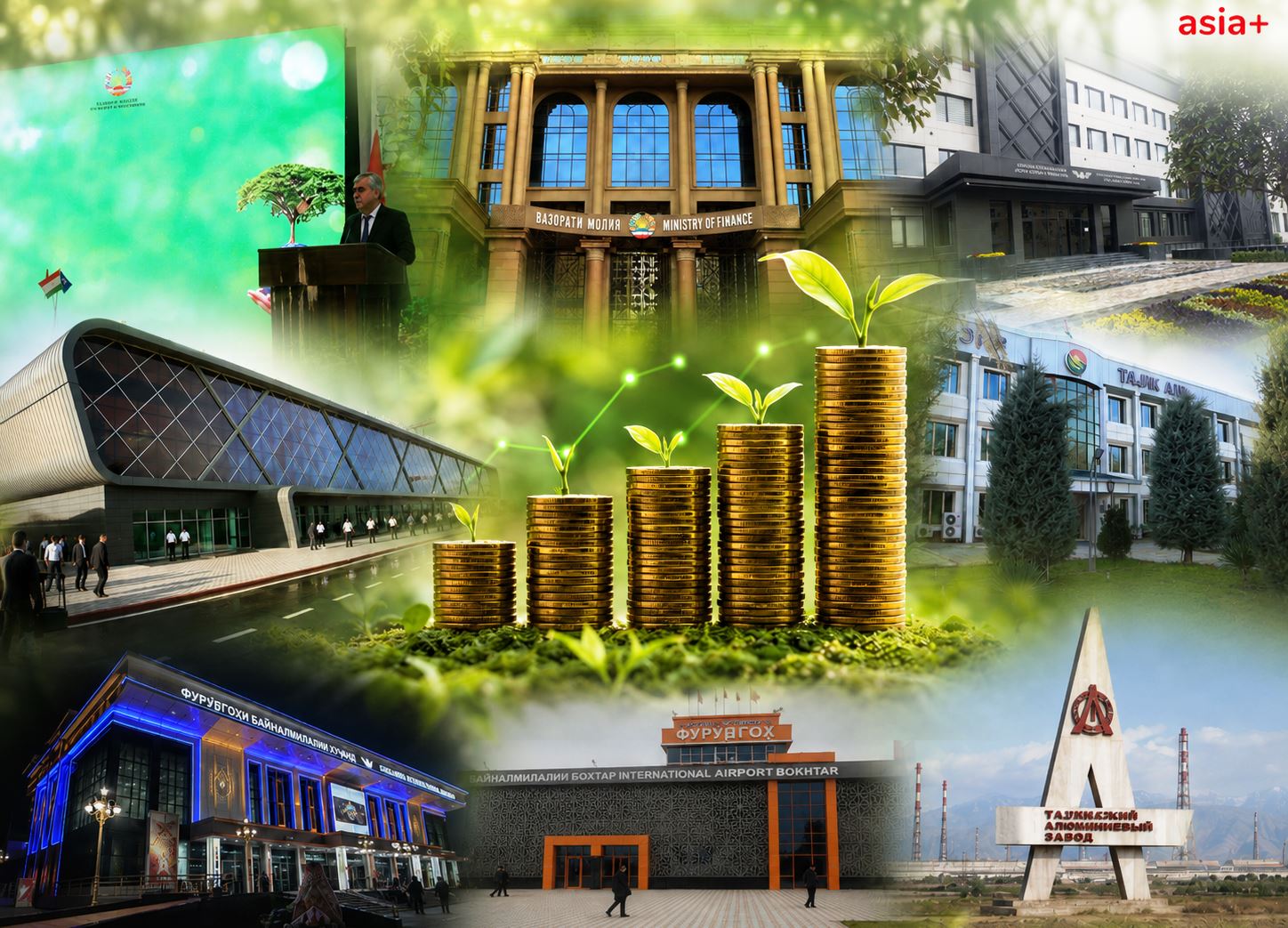
Tajikistan’s Ministry of Finance has begun assessing seven major state-owned and industrial enterprises for a possible green bond issuance.
According to the ministry, the companies selected for the initial assessment are:
- OJSC Tajik Aluminum Company;
- OJSC Dushanbe International Airport;
- OJSC Khujand International Airport;
- OJSC Bokhtar International Airport;
- OJSC Tajik Air;
- State Unitary Enterprise (SUE) Tajik Railways;
- OJSC Tajikkhimprom.
The assessment is being carried out in partnership with the Global Green Growth Institute, or GGGI.
International experts will examine the enterprises’ financial condition and determine whether they can meet the requirements for issuing green securities.
If bonds are issued, the companies could use the funds to modernize their operations, implement environmental projects and create new jobs.
Green bonds are debt instruments used to raise money for projects that deliver environmental or climate benefits.
They operate in much the same way as conventional bonds: investors lend money to the issuer, which pays interest and repays the principal when the bonds mature.
Tajikistan prepares first quasi-sovereign thematic bonds
The Ministry of Finance said the assessment forms part of a broader program to develop Tajikistan’s securities market.
In July, the ministry, the Agency for Securities and Special Registration, GGGI and the Office of the UN Resident Coordinator established an inter-agency working group to prepare the country’s first quasi-sovereign thematic bond issuance.
The UN statement describes the planned securities as thematic bonds, a broader category that can finance environmental, social and other sustainable development projects. Green bonds are one type of thematic bond.
Technical assistance is being provided through the Global Trust Fund for Sustainable Finance Instruments, financed by the Government of Luxembourg.
The authorities hope the new financing mechanism will attract investment not only to the energy sector and the Roghun Hydropower Plant, but also to transport, industry, agriculture and other areas of the economy.
However, no final decision on the issuance has been made.
Experts must first audit the selected enterprises, review their financial statements and risks, and identify projects that could qualify for green or sustainable financing.
Tajikistan has previous experience with green bonds
Tajikistan has already issued green securities.
In February 2024, Eskhata Bank became the first financial institution in the country to register corporate green bonds.
The funds were intended for renewable energy, energy efficiency, climate-resilient agriculture, water management and green construction projects.
According to research by the UN Economic and Social Commission for Asia and the Pacific, the inaugural issuance was worth $10 million.
In October 2025, Tajikistan’s Ministry of Finance placed the country’s first sovereign green bonds.
The issuance totaled 200 million somoni, with a five-year maturity and an annual yield of 13%. Investor demand reached 270 million somoni, exceeding the amount offered by 35%.
The proceeds were intended to finance renewable energy, sustainable water management and other environmental projects.
Green bond market remains underdeveloped
According to ESCAP, Tajikistan’s green bond market is still at an early stage.
Experts identify several obstacles, including a limited number of investors, low market liquidity, insufficient public information on transactions, currency risks, the absence of a developed environmental classification system and a shortage of investment-ready green projects.
The preliminary assessment is therefore expected to determine which enterprises are capable of raising money through the bond market, meeting their obligations to investors and ensuring transparent use of the proceeds.