Serbia and the United States recently signed a Memorandum of Understanding on energy infrastructure and regional energy security in Washington, as part of the first strategic dialogue between the two countries.
“The memorandum includes issues of energy infrastructure and regional energy security. It should certainly be interpreted in line with the broader European trend of moving away from Russian energy imports,” Dr Nevena Šekarić Stojanović, a research fellow at the Centre for Euro-Atlantic Studies, told Bloomberg Adria.
“Under this memorandum, Serbia has also agreed to the construction of gas interconnectors and the delivery of approximately 300 million cubic metres of American natural gas per year, which opens up scope for the purchase of American liquefied natural gas (LNG) as well,” Šekarić Stojanović emphasises.
The sale of the majority stake in the Petroleum Industry of Serbia (NIS) to Hungary’s MOL Group has entered its final phase. Following months of negotiations – which ensued after the US Office of Foreign Assets Control (OFAC) imposed sanctions on NIS due to its majority Russian ownership – all interested parties are on the verge of an agreement. The current operating licence expires on 31 July.
In April, Serbia extended its Russian gas supply contract, and the current arrangement expires at the end of September. “The contract has already been extended several times, and cooperation is expected to continue during the final quarter of the year so that Serbia can maintain continuity in gas supply under favourable terms,” the Minister of Mining and Energy, Dubravka Đedović Handanović, stated last weekend.
“Although Russian gas has traditionally been the cheapest for this part of Europe, over the last three or four years the situation has changed drastically in favour of other energy players, such as Azerbaijan and the US,” says Šekarić Stojanović. “This competition is spilling over to the micro level – specifically onto the NIS case itself. MOL has indeed received the green light to proceed with buying out the Russian stake, and a change in Serbia’s supply methods can very likely be expected if that process is finalised,” she assesses.
The change of government in Hungary and the recent departure of Viktor Orbán also favour opening up the region to purchases of American LNG. However, both Serbia and Hungary source the vast majority of their gas from Russia. In April, at the height of negotiations over the future of NIS, Serbia and Russia signed a three-month agreement to continue gas supplies.
Neither Belgrade nor Washington has so far published concrete plans regarding cooperation on gas supplies to Serbia. The first major energy project they plan is the construction of the Đerdap 3 Reversible Hydroelectric Power Plant (RHPP). This cooperation involves the participation of American companies in its construction, but it guarantees neither foreign loans nor financing. If realised as planned, Đerdap 3 will be the largest energy project in Serbia’s recent history and could attract new investment into data centres.
EU is turning off the tap: What does this mean for Serbia?
In October last year, the European Council instructed member states to end imports of Russian natural gas by 2027. That decision allows the transit of Russian gas through EU territory to third countries, such as Serbia. The decision was opposed by Slovakia and Hungary, with the latter having since changed government.
“Although Serbia has not joined the countries that imposed sanctions on Russia after 2022, we must not lose sight of our geographical position – we are a landlocked country surrounded by EU member states and candidate countries that largely follow EU foreign policy, including in the field of energy security,” Šekarić Stojanović points out.
Serbia is the main consumer of Russian gas arriving via Bulgaria, which terminated its short-term supply contracts with Russia on 1 January this year. Under the deadline set by the EU’s new regulations, Serbia will be able to receive Russian gas via transit through third countries until 1 January 2028. “The EU supports Serbia in diversifying all supply sources and integrating into EU energy networks,” European Commissioner for Enlargement, Marta Kos, previously stated.
Does the infrastructure for supplying Serbia with US gas exist?
Since last year, Serbia has been preparing projects to build gas interconnectors with North Macedonia and Romania, which will open up alternative energy supply routes. The joint pipeline with Romania is expected to be built by the end of 2028, and the one with North Macedonia by 2029.
Serbia is also a transit country, crucial for the supply of Bosnia and Herzegovina. BiH relies on a single entry point through Serbia near Zvornik, but has no gas storage facilities or alternative supply points.
“The previously announced project to build a gas pipeline towards North Macedonia enables further regional connectivity with terminals in Greece, which also allow for the receipt of American liquefied gas,” Šekarić Stojanović recalls.
As EU members, Romania and Greece represent significant players in the European energy market. Serbia currently covers three-quarters of its annual needs through Russian gas imports, with the remaining quarter covered by imports from Azerbaijan via the interconnector with Bulgaria.
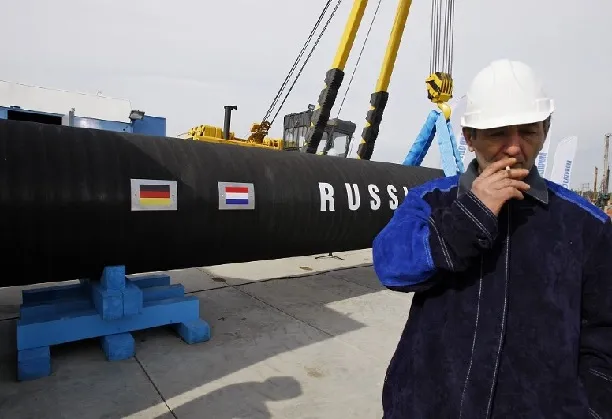
Since the beginning of the Russian invasion of Ukraine in February 2022, TurkStream has remained the only gas link between Europe and Russia, supplying Turkey, Hungary, Slovakia, and Serbia. “If the announced projects with Romania and North Macedonia are realised, gas from the Black Sea basin would also arrive in Serbia, alongside additional quantities of gas via the Southern Gas Corridor from Azerbaijan and the Caspian basin,” Šekarić Stojanović explains.
Serbia is not the only country in the region considering the procurement of US LNG. Albania recently took concrete steps in that direction. The company LNG USA and Albania’s Albgaz signed a 20-year agreement on the supply of liquefied natural gas with the US. “This reflects traditional Albanian foreign policy, in which the US represents one of the main pillars,” says Šekarić Stojanović.
As she recalls, America is one of the main investors in projects along the Adriatic-Ionian Corridor – specifically the Adriatic-Ionian Pipeline, which would connect Croatia, BiH, Montenegro, and Albania with the Trans Adriatic Pipeline (TAP). “In this context, US support for infrastructure projects in the Balkans is part of a broader strategy to strengthen energy infrastructure across Central and South-Eastern Europe, to boost regional capacity to import American liquefied gas,” she states.
“In this way, America is attempting to establish itself in this part of Europe as the sole reliable energy partner,” Šekarić Stojanović concludes.
(Bloomberg Adria, 24.07.2026)
https://rs.bloombergadria.com/ekonomija/srbija/109462/da-li-srbija-otvara-vrata-kupovini-americkog-gasa/news