Tajikistan has prepared a draft national solid waste management strategy through 2040, along with an action plan for 2026–2030, the Committee for Environmental Protection reported.
The documents were presented at a working session in Dushanbe on July 23, together with plans for a Regional Waste Management Center in the capital.
The meeting brought together representatives of the Asian Development Bank, the European Bank for Reconstruction and Development, the World Bank, the United Nations Development Program, the Japan International Cooperation Agency, government agencies and the Dushanbe city administration.
According to the Committee, Tajikistan generated approximately 1.6 million cubic meters of waste in 2025, equivalent to about 150 kilograms per person. Officials said the volume of waste was continuing to grow each year.
Committee Chairman Bahodour Sheralizoda recalled that President Emomali Rahmon instructed officials in September 2025 to develop waste-processing enterprises by attracting domestic and foreign investment.
Landfills, recycling and waste-to-energy projects
The draft strategy and action plan call for legislation to be updated in line with the principles of the circular economy and extended producer responsibility.
The proposed measures also include modernizing landfills, developing waste-to-energy technologies and improving the safe handling of hazardous, medical, electronic and construction waste.
The documents envisage the introduction of digital monitoring systems and greater transparency in the waste management sector.
Participants said the strategy was consistent with Tajikistan’s commitments under the Basel, Stockholm and Rotterdam conventions, the Paris Agreement and the United Nations Sustainable Development Goals.
Government agencies and international organizations also discussed further cooperation on implementing the proposed measures.
Dushanbe waste-processing plant remains unfinished
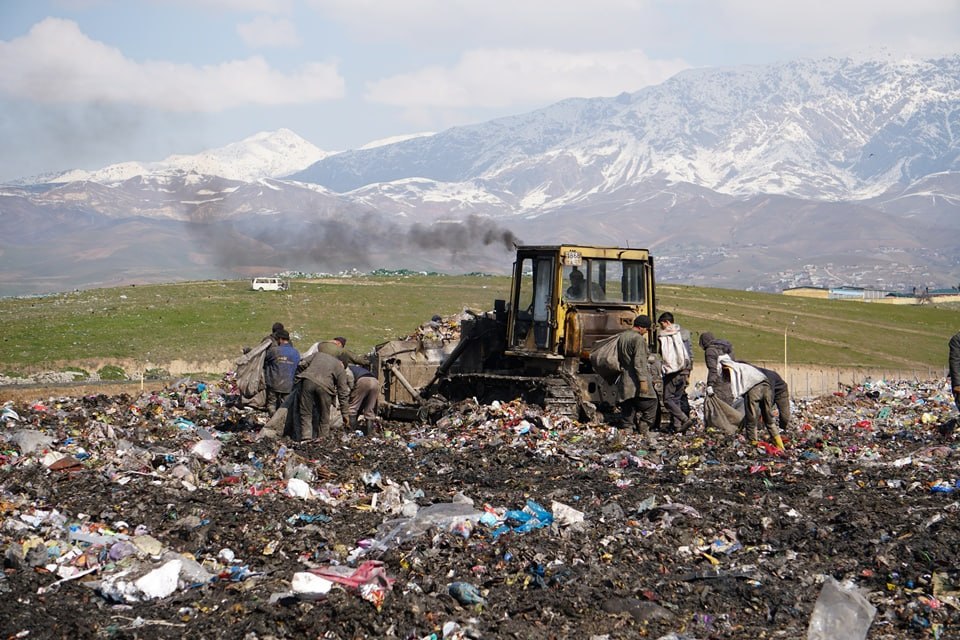
Asia-Plus previously reported that Tajikistan’s largest landfill is located about 11 kilometres from Dushanbe and has been operating for approximately 40 years.
A prolonged fire broke out at the site in autumn 2024, prompting the authorities to again announce plans to build a waste-processing plant there.
The Dushanbe administration had first announced the project in 2020. At the time, officials said the plant would be built with support from international financial institutions and opened by the end of that year.
The project was not completed within the announced timeframe.