OpenAI is developing a new data center campus in Effingham County, projected to launch in 2028.
PUBLIC MEETING
- Effingham County residents can meet engineers and ask questions about the project at an open house from 6 p.m. to 8 p.m. Thursday at the Effingham College & Career Academy, 2940 GA 21 in Rincon.
- Feedback and input will culminate into a “Georgia Community Compact” to solidify community priorities, accountability measures and commitments. Project updates and communication can be found at EffinghamGateway.com.
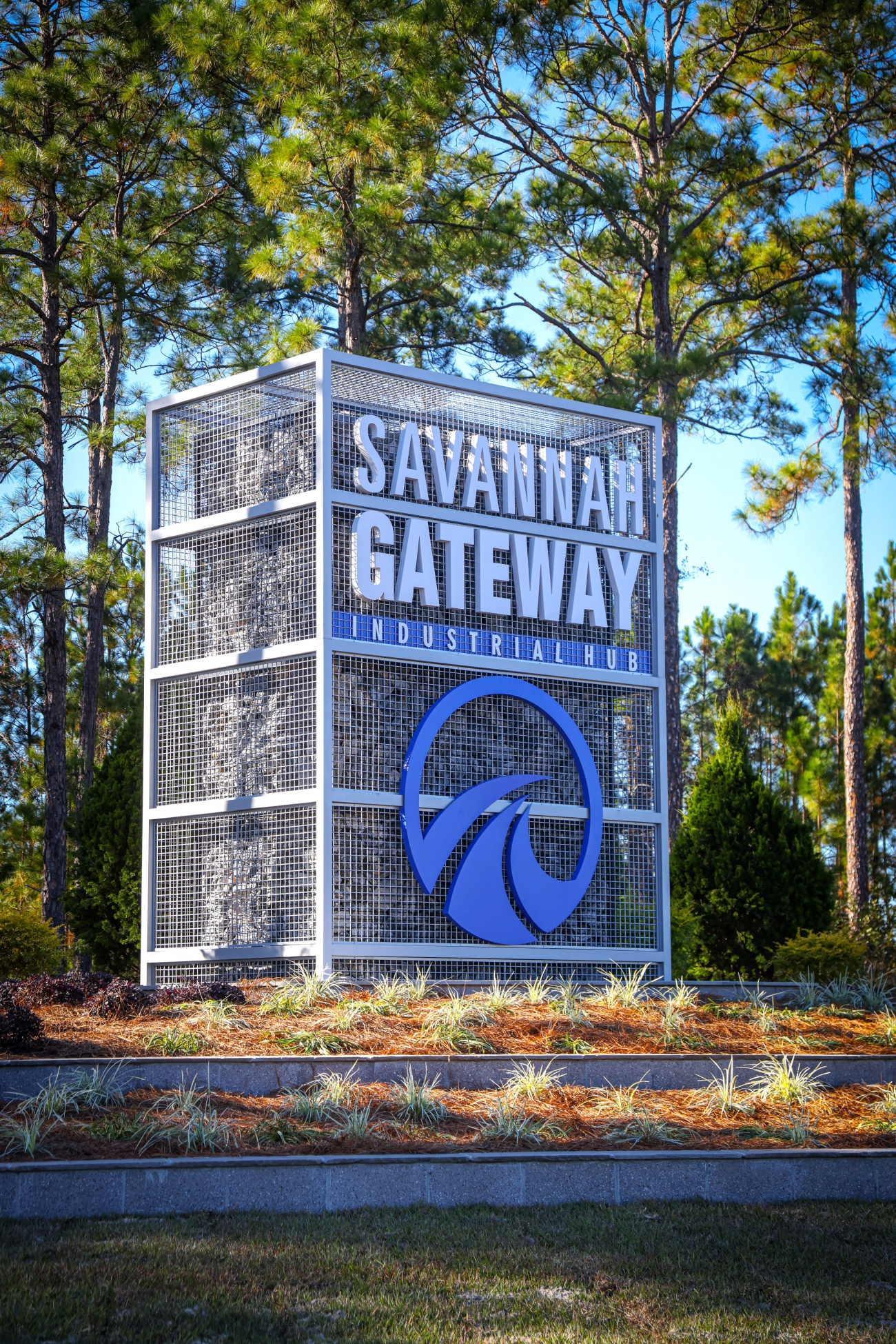
The privately funded $20 billion “Project Camellia” will comprise of four buildings at the Savannah Gateway Industrial Hub, a 2,600-acre campus located just outside of Rincon. Georgia Power will provide the data center with 3.2 gigawatts of energy — enough to power over 2 million homes — to be delivered in phases from 2028 to 2032.
With the center, OpenAI — the company behind popular generative-AI chatbot ChatGPT — will receive a 50% property tax abatement for 15 years, The Atlanta Journal-Constitution reported. Even with the tax reduction, OpenAI is expected to become the county’s largest taxpayer. Part of the generated tax revenue from the data center could fund “Project Zero,” the county’s plan to eliminate homestead property taxes. Effingham County Manager Tim Callanan said the county may be able to reduce the average homeowner’s property rate by 40% by early next year.
Janis Saturday, a longtime resident of Effingham County who lives approximately a mile away from the industrial site, voiced her disapproval upon receiving the news about the planned data center, believing that it will not be beneficial to the local community.
“I would like to see corporations pay their fair share of taxes,” Saturday said.
In May, Republican Gov. Brian Kemp met with OpenAI and Georgia Power representatives to discuss OpenAI’s activity in Georgia, with no mentions of data center construction on its briefing memo. Company representatives included senior leaders in site readiness and development, economic development and power projects, but it was unclear at the time what specific plans OpenAI had in Georgia.
Jeff Beauvais from environmental group One Hundred Miles said the lack of transparency from all parties remains a top concern.
“Obviously a lot of these details and decisions have already been made, and we’re playing catch up,” Beauvais said. “That’s not a particularly good and open and transparent and neighborly way of going about this process.”
He cited a recent Effingham County zoning change buried within a 771-page document that added data centers to the list of approved building uses. A Board of Commissioners meeting was held on July 21 to discuss amendments — a day before the announcement of the OpenAI data center — but the topic of data centers was not included in the meeting agenda or summary of changes in ordinances.
“This is a huge national issue, and for that not to be very clear and obvious to people who are scanning the agenda to decide if they wanted to show up last night is a problem,” Beauvais said.
The site, process
Around the proposed site are neighborhoods and apartment complexes, as well as a shopping center. Various schools are in the surrounding region, including Blandford Elementary School, which is less than a mile from the site — as of 2025, 941 children attended the public school.
When The Current GA spoke with residents who live near the Savannah Gateway Industrial Hub, most were still unaware of the plans to build the facility just a few miles away; those who learned of the project Wednesday voiced frustration at a lack of community input. Frank Durton, who has lived in Effingham County for 50 years, said he was unhappy the county “kept it under wraps for so long, denied anything about it and then all of a sudden announced it to the masses.”
Before data center construction can begin, the project must be approved through Georgia’s Development of Regional Impact evaluation process. The state classifies DRIs as large-scale developments likely to have impacts beyond their municipalities; a DRI form for Project Camella was submitted on Wednesday by Effingham County Senior Planner Kimberly Barlett.
The submitted form describes four data center buildings encompassing about 101 acres. The project’s developer is listed as “Octans GA LLC c/o Butler Snow,” based in Macon, but the site itself is owned by the Effingham County Industrial Development Authority. The form did not provide further information about the data center’s economic impacts, water supply or surrounding environment.
The community impact
Project development and county leaders say the data center will work to support local communities while advancing infrastructure to support new AI technology. These commitments will be audited annually by an independent firm and the findings, according to the OpenAI press release, will be made publicly available. The statement does not specify when or where these audit findings will be shared.
Water in Effingham County
The Effingham County industrial park where OpenAI plans its data center sits in the water use “Red Zone” south of GA 119, where permitted withdrawals from the Floridan aquifer have been reduced to protect it from contamination with salt water.
The state is already working on infrastructure to carry Savannah River water to the Hyundai Metaplant and other area users.
“Economic development is about attracting companies that create lasting value for the Community,” Brandt Herndon, the chief executive officer of the Effingham County Industrial Development Authority, said in an Effingham County press release. “This project represents a major private investment that will generate substantial new tax revenue, bring hundreds of high-paying jobs, and create new opportunities for local businesses, contractors, suppliers, and our future workforce.”
Project Camellia is expected to produce thousands of construction and on-site jobs prioritizing local contractors and businesses, the OpenAI release said. The county press release describes an initial 400 “long-term, high-quality” jobs for local residents. OpenAI also plans to contribute up to an additional $71 million in credits for Codex, the company’s coding software, to encourage students at Georgia colleges, community colleges and technical schools to develop projects with the AI tool.
Among the proposed benefits, officials say Project Camellia is not expected to increase electricity rates for Georgia residents. OpenAI will finance the infrastructure and electric service costs, as well as allocating $80 million in “community benefits” toward local education, public safety, healthcare and small business resources.
The OpenAI press release said the data center’s water use will be “minimal” and will not divert water sources from local communities and workplaces due to using a “closed-loop water system” that will recycle water. The project’s website states it is not expected to cause temperature increases around the site and has substantial buffers in place to preserve existing vegetation.
Maddie Greer, a homeowner in Effingham County who lives near the Ogeechee River, voiced her own doubts about claims of minimal water usage.
“I’ve seen what these data centers have done to other communities in terms of not only water pollution, but noise, loss of tree coverage and just more disruption to the natural landscape,” said Greer.
Georgia Power has a 25-year-agreement with OpenAI and the software company will provide up to a gigawatt of “flexible demand response,” according to Georgia Power spokesman Joshua Peacock. The agreement allows Georgia Power to reduce energy delivery to the data center to ensure stability across the region’s electric grid. He encouraged those interested to follow the transmission progress online.
“The specific plans and routing for serving this site in particular are still under development,” Peacock said in an email. “As we do with all of our projects, we follow a process that is designed to be transparent and allow for community input and questions along the way.”
Community concerns
Still, some residents remain wary of the data center’s environmental and economic promises. Durton noted light pollution, use of electricity and water as factors of significant concern.
“[There are] just so many unknowns about data centers,” he said. “A lot of communities are banning them, taking in-depth studies of them. Our county doesn’t appear to have done a whole lot — or hadn’t published anything about it.”
Many Effingham residents have taken to social media to voice their anger regarding the project. Similar debates have grown across the country; the Michigan community of Saline Township revolted against the data center that is set to house part of Project Stargate, a chain of data centers planned by software companies OpenAI and Oracle.
After angry residents packed meetings with concerns about water use, power use and noise, the township board denied zoning for a data center back in 2025. Then the developer sued alleging unfair exclusionary zoning. The township board relented and signed a settlement allowing the data center.
Only later was it revealed to be a Project Stargate site. Backed by Democratic Governor Gretchen Whitmer, workers broke ground on the site in June.
President Donald Trump announced Project Stargate on the day after his 2025 inauguration, at a White House speech, standing beside leaders from OpenAI, Oracle and financier SoftBank. The OpenAI press release compares Project Camellia with the flagship $500 billion Stargate center in Abilene, Texas; the Texas center has recently been the subject of multiple worker safety concerns.
MORE INFO ON DATA CENTERS
There are estimates of over 200 operational data centers in Georgia today, many of which are in the Atlanta area. Two other data center DRI forms were filed on Wednesday — one in Clayton County and another in Troup County — but all three evaluations must be completed before projects can advance.
Some coastal Georgia communities have hit the brakes on data center zoning, as public opposition builds to the water- and power-hungry developments. Garden City and Camden County have set up moratoriums. Glynn County, in contrast, rejected residents’ calls for a pause.
Effingham County residents can meet OpenAI team members to ask questions about the project at an open house on Thursday from 6 to 8 p.m. at the Effingham College & Career Academy. Feedback and input will culminate into a “Georgia Community Compact” to solidify community priorities, accountability measures and commitments. Project updates and communication can be found at EffinghamGateway.com.
Data reporter Maggie Lee contributed to this report.
Support Our Work
Nonprofit, independent journalism needs YOUR support to survive and thrive. Help us achieve our mission of creating a more informed world by making a one-time or recurring donation today.