As many as three extraordinary resolutions on a candidate country from the European Parliament! Europe is indeed paying very special attention to Serbia. Whether that is down to official Brussels or official Belgrade is another question – though the answer is clear.
It is definitively down to the Serbian authorities, who greeted the beginning of July with disappointment following a fresh delay to the opening of Cluster 3 (Competitiveness and Inclusive Growth), despite the European Commission’s recommendation. But let us take things in order.
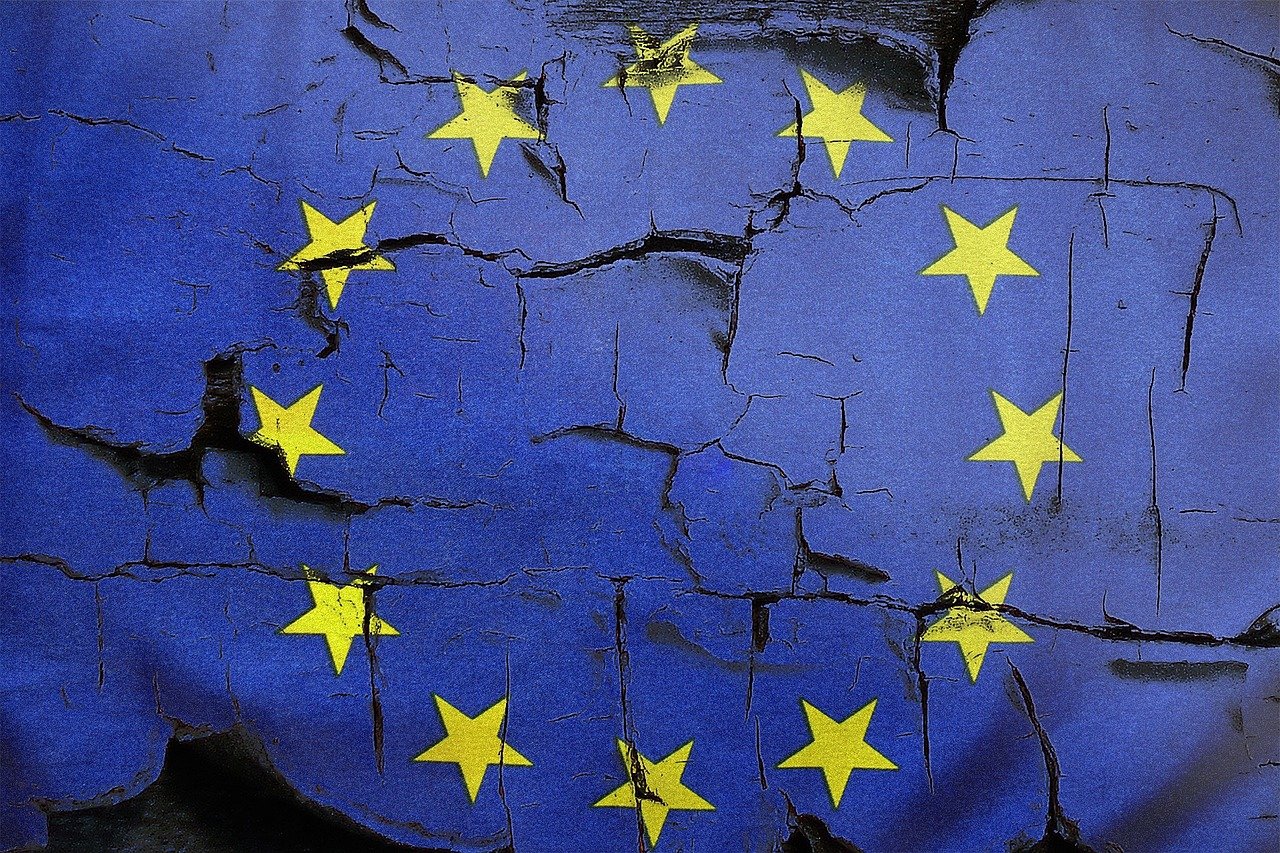
The EP resolution noted limited to no progress in most negotiating chapters, as well as backsliding on the rule of law and media freedoms. It is the most critical resolution regarding Serbia’s EU integration to date, even if – as everyone, and official Belgrade first and foremost, will point out – the document is not legally binding. Even so, it does carry practical weight. It would not be passed for nothing.
To begin with, every EP report serves as a new baseline for further parliamentary debates on the candidate country’s status. This means the next round of deliberations on Serbia in Strasbourg and Brussels will start from the recent sharp criticisms leveled by the EP’s Standing Rapporteur for Serbia, Tonino Picula, who went so far as to propose suspending Serbia’s funding under the Growth Plan for the Western Balkans. The document will be forwarded to the European Council and the presidents, prime ministers, and foreign ministers of EU member states represented there. Ultimately, it will land on the desk of Ursula von der Leyen, President of the EC, and will significantly shape the EC’s own progress report on Serbia, traditionally issued towards the end of the year. That document is not legally binding either, but its contents hold undeniable sway over EU decisions regarding the fate of candidate countries.
Tonino Picula, EP’s Standing Rapporteur for Serbia
“Serb-hater Picula repeated a series of criticisms against Serbia and its leadership,” reported TV Informer during a tailored broadcast segment. The Croatian MEP from the Socialists and Democrats is no stranger to tabloid mudslinging – it is hardly his first rodeo. This time, however, greater efforts were made to acquaint the Serbian public with the process of drafting and adopting the report.
As the author of the draft, the Standing Rapporteur conducts field visits and speaks with representatives of the government, opposition, media, and civil society. The draft then undergoes deliberations before the EP Foreign Affairs Committee, where corrections and amendments are made. According to Picula, a record 70 per cent of MEPs backed the final version of the report, which ultimately translated into the vote.
A total of 468 MEPs voted in favour of its adoption, 116 voted against, while 79 abstained. In short, this was not “Picula’s report”, but a report endorsed by the European Parliament as a whole.
Dissonant tones
On the other hand, almost simultaneously, the EC recommended that Serbia open Cluster 3 (eight negotiating chapters covering competitiveness and inclusive growth), for which technical requirements have been met for several years. For the first time since late 2021, official Belgrade would have found itself in a position where the EU integration process was not at a standstill. One of the justifications offered was that opening a new cluster would provide a positive impulse to the Serbian authorities to press ahead with reforms. Picula expressed scepticism that this would be the case, pointing out that doing so would reward rather than curb a years-long trend of eroding legal predictability and democracy.
Among the proponents of opening the cluster was Neighbourhood and Enlargement Commissioner Marta Kos, who noted certain positive developments in reforms compared to late 2025 – primarily in judicial legislation reform and the implementation of ODIHR recommendations to improve electoral conditions.
This time, representatives of eight countries (Belgium, the Netherlands, Sweden, Finland, Bulgaria, Croatia, Lithuania, and Estonia) explicitly opposed opening Cluster 3, while their counterparts from Luxembourg, Denmark, and Latvia stated they were unconvinced that Cluster 3 should be opened. Their reasons aligned remarkably closely with the conclusions of the EP report on Serbia: EU integration has stagnated, democratic capacity is lower than before, and alongside failing to align with sanctions against Russia over its aggression in Ukraine, Serbia has now begun cozying up to the EU’s geostrategic rival, the Chinese Communist Party.
If the authorities lie, the Ministry’s data does not
According to Vladimir Međak, Vice-President of the European Movement in Serbia, the rift between the EP and the EC represents pure geopolitics at work – something he says he does not support, but analyses and understands.
“Just two days ago, Montenegro closed two chapters, Albania closed its first three, and Moldova and Ukraine opened Cluster 6 – the second cluster they have opened in full. Geopolitically speaking, from a European perspective, it would be prudent to somehow squeeze Serbia into that group, because you would then have five candidates knocking on the EU’s door. Realistically speaking, that is impossible, because Aleksandar Vučić’s regime is drifting further and further away from them. France and Germany asked the EC at the recent EU-Western Balkans Summit in Tivat to open Cluster 3, albeit with the possibility of reversing integration. The now-famous non-paper contains snippets of reality that present Serbia’s position in a positive light, whereas the overall reality is deeply negative and captured in the EP resolution. It is like pulling out the one slice of cake you like and claiming the whole cake is like that, when it clearly isn’t,” Međak explains to Radar.
Although the Serbian authorities insist on their commitment to the European path, even data from the relevant Ministry of European Integration suggests otherwise. Of the sixty regulations the Serbian Government was scheduled to adopt in the first three months of the current year, only ten were adopted; of nine laws, just one was passed; and of five bylaws, only a single one was enacted.
If there were any lingering doubts about the usefulness of the “operational team for EU accession” formed in January – whose task on paper was “coordinating the accelerated implementation of all obligations on Serbia’s European path” – they seem to have evaporated. Otherwise, the past six months would have been used differently, the EP resolution would have been more favourable, and not a single member state would have voted against opening Cluster 3. Or at least fewer than eight.
“Opening Cluster 3 would have been presented in Serbia as a show of support for the regime, which in the medium to long term would have had a very negative impact on pro-European sentiment within Serbia itself,” our interviewee adds.
Empty negotiations
Yet there were warning signs that things were amiss. For instance, in November 2025, Sweden suspended financial assistance to Serbian state institutions over the country’s drift away from the EU. In other member states, too, questions have been raised for some time about why taxpayers’ money is being used to assist a state making no headway towards membership.
Times like these are fertile ground for conspiracy theories, and questions soon emerged as to why France and Germany pressed through the EC for the opening of Cluster 3 when they could have anticipated it would be rejected by the very same countries that refused it previously.
Again, for our interviewee, this is simply a reflection of internal European dynamics.
“An assumption is one thing, negotiations are another, and Europe functions on the basis of continuous bargaining that sometimes succeeds and sometimes fails. For example, Germany was opposed to opening Cluster 3 a year ago, but changed its stance in the meantime. Tito was a communist and had Goli Otok, yet when he aligned with NATO, he received US financial aid. Geopolitics can achieve a great deal, but it cannot force a country into the EU. Quite simply, Serbia cannot be this corrupt; it must maintain a basic level of the rule of law and institutional independence to even get close to the EU,” says Međak.
Predictably enough, the Serbian President did not dwell overmuch on the flaws and vulnerabilities of Serbian democracy during his appearance on the public broadcaster. Instead, he made haste to declare that it was now clear the EU does not decide on opening clusters based on a candidate country’s merits. He also noted that he saw “nothing new or unexpected from our Croatian neighbours”, given that they “like to see Serbia on its knees – a weak Serbia, a poor Serbia, a humiliated Serbia.” Why he did not direct similar remarks at any of the other nations blocking Cluster 3 – such as the Netherlands or Finland – remains an open question, though it must be said that tabloids under his control did flare up last week, if only briefly, with knee-jerk headlines invoking alleged Bulgarian treachery, hidden daggers, and Serbia’s upright back.
Who has the regime’s back?
Regrettably, any analysis of relations between Serbia and the EU must factor in the specific relationship between the EC and its anchor party, the European People’s Party (EPP) – to which Von der Leyen belongs – as well as between Vučić and the EPP, of which his Serbian Progressive Party (SNS) is an associate member. On the one hand, the EPP does not want to repeat the mistakes it made with Viktor Orbán; on the other, it seems reluctant to wash its hands entirely of Progressive-led Serbia as its own project…
Viktor Orbán and Aleksandar Vucic
It is noteworthy that EP debates on draft reports for candidate countries were allotted varying amounts of time. One hour each was set aside for Moldova and Ukraine, whereas Serbia was allocated a modest thirty minutes. According to previous remarks by Nemanja Todorović Štiplija, editor of the European Western Balkans portal, the EPP sought to minimise the opportunity for forensic scrutiny, having earlier attempted to block deliberations altogether and put the draft straight to a vote…
“It has been clear for some time that the EPP lacks a clear moral compass when it comes to the rule of law. They cultivate what one might call a laissez-faire approach to issues like the fight against corruption, as we heard during Davor Ivo Stier’s address in the EP. In short, they do not agree with how the situation in Serbia is developing, but they have no grand desire to deal with it either. Generally speaking, they are increasingly voting alongside the right or conservatives rather than centrist blocs like the Socialists and Liberals. But just as there would have been no grace period in Europe’s relationship with the Serbian authorities without their influence, the opening of Cluster 3 would not be a point of contention in the EU if the Serbian government truly wanted to join,” Međak concludes.
(Radar, 22.07.2026)
https://radar.nova.rs/politika/rezolucija-ep-o-srbiji-ek-srbija-vucic/