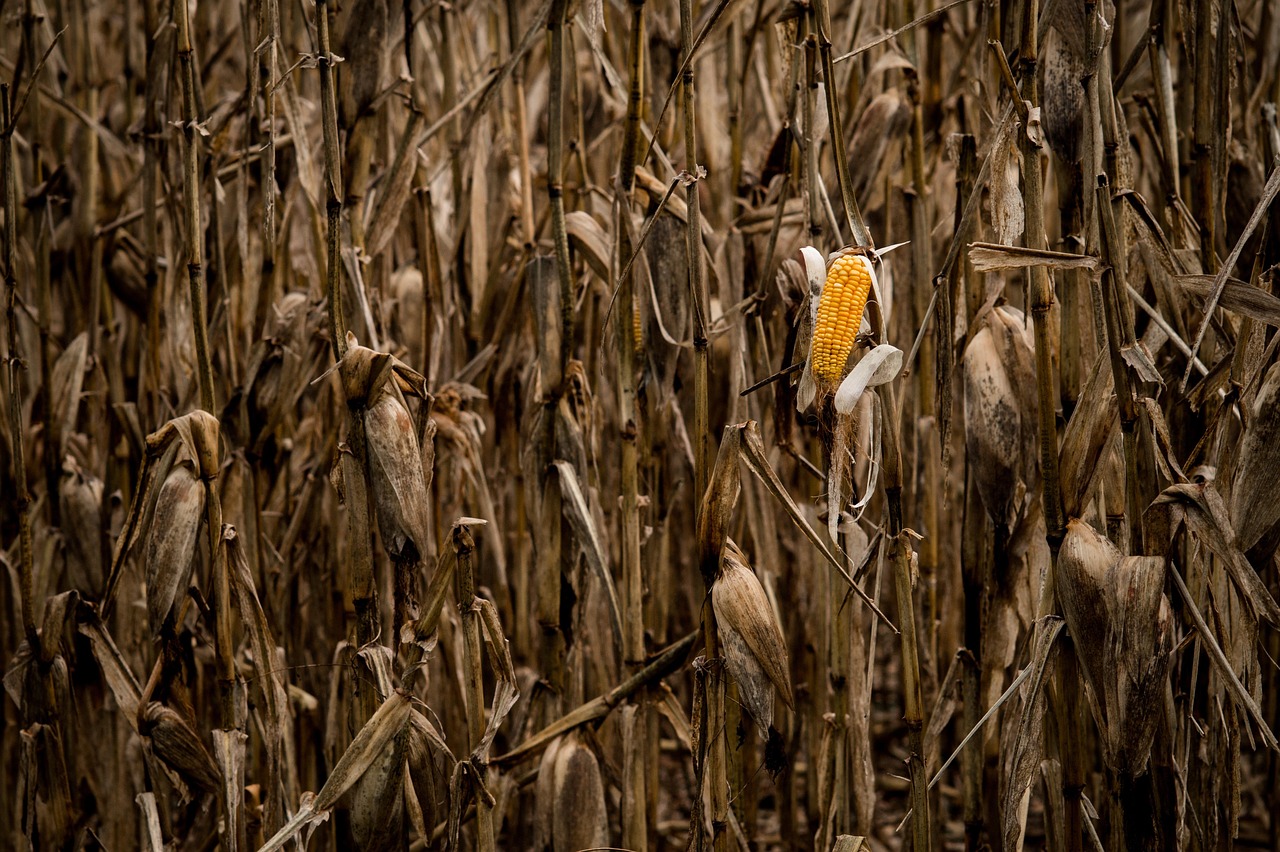
A hot summer and extreme drought are putting Hungarian farmers under severe pressure. While maize and sunflower crops are suffering from water shortages, the hoped-for price compensation on the market has failed to materialize. The crisis could soon also affect the country’s livestock farmers.
Despite isolated showers and thunderstorms in recent days, the agricultural crisis in Hungary is worsening dramatically. The rainfall has only provided localized relief — in many areas, damage to summer row crops, especially maize and sunflowers, is already irreversible. In addition to historically poor yields, farmers are also struggling with low profitability, as crop losses are not being offset by higher purchasing prices.
The Hungarian weather service HungaroMet reported that dated July 20, rainfall totals over the past 30 days are 20 to 60 millimeters below the long-term average. The situation looks even more dramatic when examining the past 90 days: across large parts of the country, there is a rainfall deficit of 70 to 120 millimeters.
The maize crop has been hit particularly hard. Non-irrigated maize fields are in a very poor condition. Only in the far south of Transdanubia do crops still appear somewhat more resilient.
Satellite-based vegetation indices show that, on average nationwide, crop conditions are worse than during the same period of the historic drought year of 2022.
The timing of the drought was especially damaging: water shortages began in spring and peaked during maize flowering and pollination, the crop’s most sensitive stage.
For optimal development, maize would have needed around 100 millimeters of rainfall in July. So far, only a fraction of that amount has arrived. Rainfall that begins now would come too late for many fields. Where pollination failed or no ears developed, yield losses are final.
The supposedly more drought-resistant sunflower crop offers little better news. Most fields have finished flowering, but satellite measurements show that green biomass levels are very low — in some cases even lower than in 2022. The plants entered the seed-forming stage with insufficient leaf area and weak head development.
Photo: Pixabay
Plants are responding to the stress through a biological “rush to maturity.” The calculated heat accumulation since April is significantly above the long-term average. This accelerated development, combined with water shortages, is causing premature ripening. The grains can no longer fully develop, further reducing harvestable weight.
Normally, limited supply leads to rising prices — but that is not happening this year, reports Világgazdaság.
At the end of June, the producer price for feed maize in Hungary averaged 73,300 forints (€202.34) per ton, representing a 12 percent decline compared with the previous year.
Although deep-sea exports from Russia and Ukraine have practically come to a standstill due to the ongoing conflicts in the Black Sea, the overall export supply from the Black Sea region (including Romania) is still putting downward pressure on Hungarian prices. Farmers therefore cannot currently compensate for their revenue losses through the market.
The consequences of the drought extend far beyond crop production. The European Commission warns in its short-term agricultural outlook for the second half of 2026 of significant risks for Hungary.
The weak maize harvest will reduce domestic feed supplies, increasing raw material costs for livestock farmers.
At the same time, Hungarian export volumes are declining. Combined with already high energy and fertilizer costs, the sector is under considerable pressure.
A quick turnaround is not expected. Weather models do forecast isolated showers, but widespread, heavy rainfall remains unlikely. The drought is expected to continue worsening across most of Hungary.
Related article
Persistent Drought Takes Its Toll as No Widespread Rain in Sight
Soil moisture has reached critically low levels across most of the country.Continue reading
Via met.hu, Világgazdaság, Featured image: Pixabay