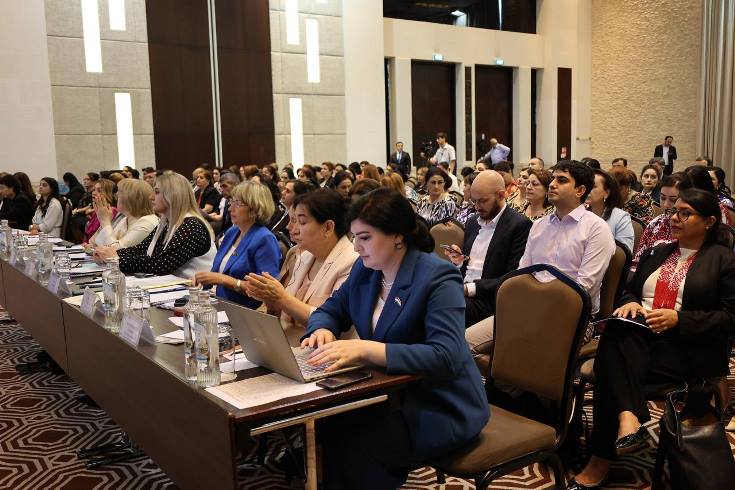
Judicial representatives from across the region gathered in Dushanbe to explore how gender equality and innovation can strengthen more inclusive justice systems.
“Women in the Justice System: Dialogue, Development and Justice” — Dushanbe hosted an international conference that gathered judicial representatives from Tajikistan and neighbouring countries, including Azerbaijan, Belarus, China, Kazakhstan, Kyrgyzstan, Russia, Turkmenistan, and Uzbekistan, as well as international development partners, to exchange experiences and discuss ways to advance gender-responsive justice systems.
“Around the world and in Tajikistan, UNDP helps governments place gender equality at the core of political, economic and environmental decisions, to expand development choices that work for all” — Lazima Onta-Bhatta, UNDP Deputy Resident Representative, said in her opening remarks addressing the participants of the conference, jointly organised by the Supreme Court of the Republic of Tajikistan, UNDP, and partners.
The conference provided a regional platform for judicial representatives and experts to exchange experiences and discuss common challenges in advancing gender equality within justice systems. Bringing together countries with shared socio-political histories and similar legal traditions allowed participants to compare approaches, learn from different experiences, and explore solutions that can strengthen justice systems and make them more accessible to the needs of people, particularly women.
The discussions focused on developing gender-responsive justice systems that are inclusive, representative, and accessible to all. Participants examined how legal frameworks, institutional practices, and judicial processes can work together to reduce barriers to justice and ensure that women and vulnerable groups can effectively exercise their rights and seek protection when needed.
In Tajikistan, women’s participation in the judiciary continues to grow. As of February 2026, 97 women judges serve in the country’s judicial system, representing 23.9% of all judges. Among them, five serve as judges of the Supreme Court, eight are court presidents, five are first deputy court presidents, four are deputy court presidents, and 75 serve as judges. In addition, women account for 25.4% of public servants working in the judicial system, with 15 women holding leadership positions as heads or deputy heads of departments and divisions within the court system.
The discussion provided a unique opportunity to analyse data on women’s service in the judiciary in the multiple countries that were represented during the conference, and to reflect on persistent challenges to reaching equal gender representation in the judiciary, especially in decision-making leadership roles.
The conference also explored the opportunities and challenges linked to the digital transformation of justice systems. As countries increasingly introduce digital solutions in judicial services, including the use of AI, participants shared experiences on how technology can improve access, efficiency, and transparency, while also addressing emerging challenges such as technology-facilitated gender-based violence.
The role of the judiciary in combating discrimination and protecting human rights was another key focus of the discussions. Participants highlighted how judicial institutions can improve responses to discrimination and contribute to building greater trust in justice systems.
During the conference, Lazima Onta-Bhatta also reaffirmed UNDP’s long-standing partnership with the Supreme Court to strengthen the rule of law, promote gender equality in the justice sector, and expand access to justice through innovation and digitalisation. She highlighted UNDP’s support for empowering young women legal professionals and addressing emerging challenges, including technology-facilitated gender-based violence.
UNDP’s support for the conference was made possible under the Rule of Law project funded by the Ministry of Foreign Affairs of Finland.