BY SIFISO NHLABATSI
MBABANE – Eswatini has secured approval for more than E1.06 billion in World Bank financing for its Digital Eswatini Project, while Government is already utilising an additional E32.7 million preparation grant to lay the groundwork for implementation.
Using the current exchange rate of about E16.37 to US$1, the total investment of US$67 million translates to approximately E1.1 billion, making it one of the country’s biggest digital infrastructure investments in recent years.
The investment was highlighted by Minister of Information, Communications and Technology Savannah Maziya in the ministry’s First Quarter Performance Report for the 2026/27 financial year, where she said the initiative would expand affordable broadband connectivity, strengthen digital public infrastructure and accelerate the delivery of inclusive e-government services across the Kingdom.
“The report reflects how these efforts are laying the foundations for a knowledge-based and digitally inclusive economy in line with national development priorities,” Maziya said.
According to the report, the Digital Eswatini Project is being implemented by the Ministry of ICT with support from the World Bank through an International Bank for Reconstruction and Development (IBRD) loan and an International Development Association (IDA) credit. The project also aligns with the COMESA Inclusive Digital Economic Advancement (IDEA) Programme.
Of the US$65 million (about E1.06 billion) project funding, US$36 million (about E589 million) has been allocated to expanding affordable broadband infrastructure. This component will support the financial stabilisation and reform of the Eswatini Posts and Telecommunications Corporation (EPTC), extend the national broadband backbone to schools, health centres and Tinkhundla centres, and strengthen the country’s ICT legal and regulatory environment.
A further US$25 million (about E409 million) will finance the “Government in Your Hand” programme, which seeks to establish a national digital identity system, enhance cybersecurity, improve data governance, introduce a whole-of-government electronic payment gateway and digitalise more than 50 priority government services in sectors including health, education, home affairs and commerce.
The same component also aims to equip 200,000 citizens, particularly women and young people, with digital skills to improve participation in the digital economy.
The remaining US$4 million (about E65.5 million) has been earmarked for programme management, monitoring and evaluation, environmental and social safeguards, fiduciary management and strengthening the capacity of the Project Implementation Unit (PIU).
Government is currently utilising a US$2 million (about E32.7 million) World Bank Project Preparation Grant, which is expected to close in December 2026, to establish the institutional, technical and fiduciary systems required before the main financing becomes fully effective.
The report says a major milestone was achieved during the first half of 2026 when World Bank grant negotiations were successfully concluded on May 18, followed by loan approval in June, effectively clearing the way for the finalisation of the financing agreements.
Preparatory work is already underway across the three project components.
Under broadband expansion, Government has commenced commercial, legal and financial due diligence on EPTC, alongside an infrastructure assessment that will guide future broadband investments across the country.
For digital government services, procurement is nearing completion for a Digital Transformation Roadmap that will identify and classify more than 50 government services for digitalisation. Assessments of the Royal Science and Technology Park (RSTP) Data Centre and IT service delivery model are also progressing.
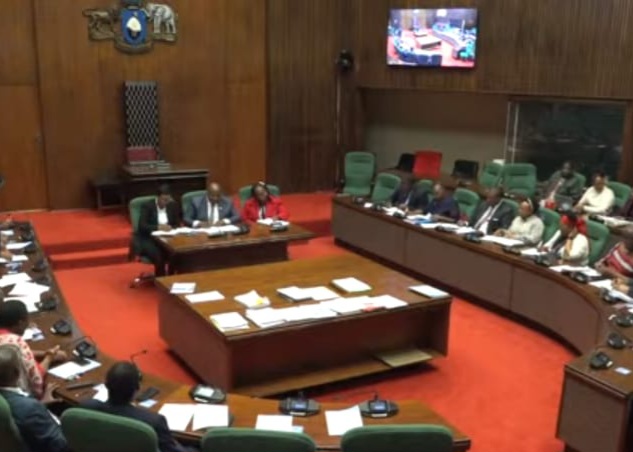
The report further notes that Parliament’s Portfolio Committee has already been briefed on the project, with legislators calling for stronger cybersecurity measures and better protection of children and elderly citizens as Government rolls out digital services.
Meanwhile, the ministry has established a fully operational six-member Project Implementation Unit responsible for procurement, financial management, environmental and social safeguards, digital infrastructure, change management and overall project coordination.
Despite the progress, the ministry identified several challenges that could affect implementation, including compatibility issues between Government’s Integrated Financial Management System and World Bank reporting requirements, capacity constraints within the PIU and the tight timeline before the preparation grant expires at the end of December.
The ministry says close monitoring of implementation milestones will be critical to ensure the project transitions smoothly from the preparation phase into full implementation.
#DigitalEswatini #ICT #WorldBank #Broadband #DigitalTransformation #EGovernment #Eswatini #Technology #Infrastructure #EconomicDevelopment
Post Views: 150