The US vice president says some members of Israel’s government are seeking to influence American public opinion and derail efforts to end the war with Iran. His comments came as Washington and Tehran exchanged attacks for a sixth consecutive night.
US Vice President JD Vance has accused some members of the Israeli government of attempting to influence American public opinion to undermine the Trump administration’s diplomatic efforts with Iran and prolong the military conflict.
Speaking in an interview with US podcaster Joe Rogan that aired on July 15, Vance said there was evidence of a discreet and well-funded campaign aimed at derailing negotiations, according to the BBC’s Russian Service.
Vance said he was certain that some Israeli officials were trying to move Washington away from a diplomatic settlement because they wanted the military campaign to continue. He also claimed that the influence campaign had personally targeted him over his involvement in negotiations with Tehran.
The Israeli government did not immediately comment on his allegations.
Vance’s comments represent an unusually public criticism of Israel by a senior US administration official and come amid signs of growing disagreement in Washington over continued military and political support for the Israeli government.
House vote exposes divisions over aid to Israel
The US House of Representatives on July 15 rejected an amendment that would have blocked $3.3 billion in annual US security assistance to Israel.
The measure was defeated by 314 votes to 104. However, it received the support of 103 Democrats and Republican Representative Thomas Massie, who introduced the amendment.
Another 98 Democrats voted against it, while 10 voted “present.”
Although the proposal failed, the vote marked a significant departure from previous years, when measures supporting US assistance to Israel generally received overwhelming bipartisan backing.
US strikes Iran for sixth consecutive night
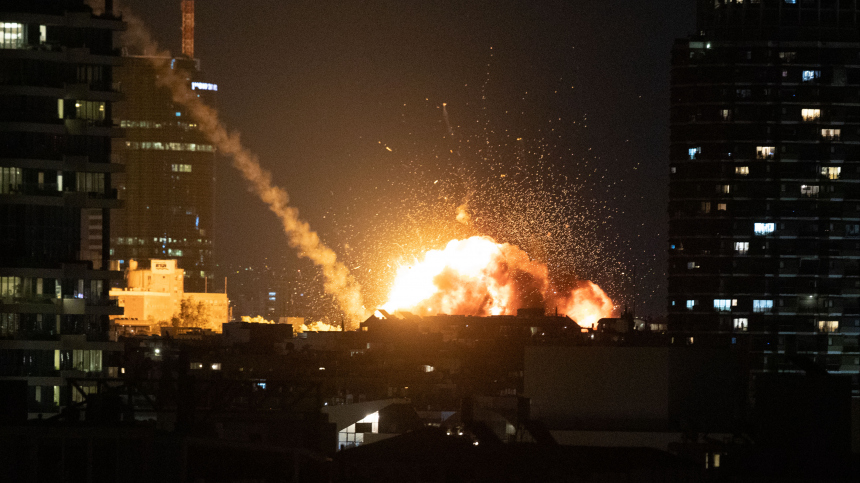
Meanwhile, the US military said it had completed another wave of strikes against Iran early on July 17, marking the sixth consecutive night of American attacks.
US Central Command said dozens of targets were struck during the latest operation. The attacks included bridges in Iran’s southern Hormozgan province and infrastructure near Bandar Abbas, the country’s main commercial port and an important naval center.
Iran’s state-run news agency IRNA reported that strikes on highway and railway bridges in Bandar Khamir killed at least seven people.
The attacks appeared intended to disrupt transport routes connecting Bandar Abbas with central Iran and Tehran.
A tower at the port of Chabahar on the Gulf of Oman also collapsed following a strike. US Defense Secretary Pete Hegseth later shared an image of the damaged structure, describing it as a surveillance tower.
Iranian state media said the tower was used to monitor commercial shipping. The Islamic Revolutionary Guard Corps also maintains a presence at Iranian ports.
According to Iran’s Health Ministry, the latest series of US strikes had killed at least 38 people and wounded more than 400 as of Friday morning.
Iran launches retaliatory attacks
Iran responded with further missile and drone attacks against US allies and military positions in the region.
Qatar twice warned residents to take shelter as Iranian missiles approached the country. Falling debris from intercepted missiles reportedly injured a child.
Iran also targeted Bahrain and Kuwait, while Jordan’s military said it had intercepted three missiles launched from Iranian territory.
Explosions were also reported in the cities of Erbil and Sulaymaniyah in Iraq’s autonomous Kurdistan region as air-defense systems engaged incoming fire. Iran did not immediately claim responsibility for those attacks.
The latest exchange confirms the collapse of the interim ceasefire reached between Washington and Tehran in June. The two countries have resumed daily attacks amid a dispute over control of the Strait of Hormuz, one of the world’s most important routes for oil and gas shipments.
Despite the escalation, regional mediators, including Qatar and Pakistan, continue to explore the possibility of restarting negotiations between Washington and Tehran.