HANOVER — A minor subdivision project approved one year ago by the Planning Board continues to face backlash over concerns for protected wetlands, with a lawsuit against the town trudging forward.
The board denied a petition by neighbors earlier this month to revoke the prior approval, citing a lack of a mechanism under state law to take away permission. The petitioner, however, claims the original decision violated both local ordinance and federal law, warranting action.
Back in July 2025, the Hanover Planning Board held a public hearing on an application to divide the 18-acre property at 325 Dogford Road in Etna into three lots.
The owners, Phillip James and Celena Robles, requested permission to split the parcel into three lots, of approximately 10 acres, 5 acres and 3 acres. The land, located in a rural residential district, currently hosts one home, but the Robles are looking to add two more, plus a shared driveway.
The petitioners are fighting the drainage plan, not the subdivision itself. “It just has to be responsibly done in terms of protecting the water resources in the town. That’s all,” said Janice Benson, whose family owns the abutting land under the Sabky Trust.
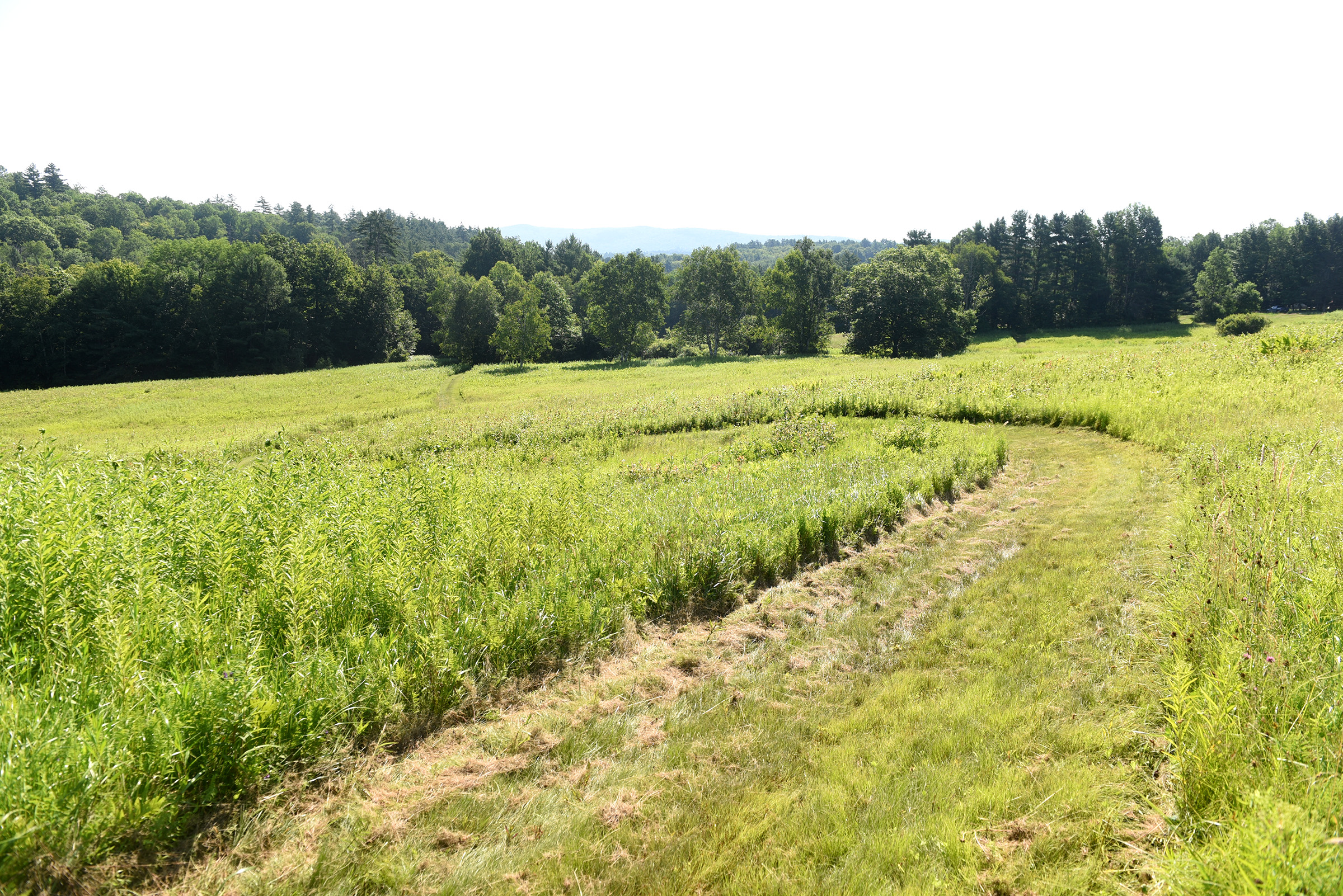
Across the street sits Moister Meadow, which protects the waters of Slade Brook. Its property owners, along with the Hanover Conservancy, worry that disturbing the flow of water between properties will harshly impact the wetlands.
“All of the neighbor’s water drains into these wetlands,” said Benson, who added that about one-third of the water in Slade Brook runs through her family’s property.
When presenting the project last year, Brenton Cole of civil engineering firm Granite Engineering insisted that their storm water management system uniting the three culverts that normally flow between the properties, will trickle water through a vegetated buffer with no negative impact to the water quality.
“Moister Meadow will be no worse, no better than it is today,” said Cole.
The project proposed a detention pond and bioretention system where stormwater runoff from the roofs and driveways can be treated before discharging back into existing wetlands, the application stated.
Moister Meadow is protected by a 2013 conservation easement. Adair Mulligan, executive director of the Hanover Conservancy at the time, expressed at the July 2025 hearing that redirecting the storm water will pose an “extraordinary disturbance” to the wetlands, adding that the system would require strict maintenance to keep drainage features functioning.
Once the contractor completes the project, there may not be oversight of the continued responsibility to inspect and maintain the system, Mulligan said.
Cole disagreed, adding that the project boils down to a simple clearing to establish the driveway and individual lots, all while limiting impacted areas. While there is no frequent monitoring once the system is built, there will be required maintenance and annual inspections by the New Hampshire Department of Environmental Services, he said.
Jamal Sabky, a Trustee of the Moister Meadow property, shared his concern over the accuracy of wetlands reports and how those reports influence the drainage plan.
Cole responded that the land was surveyed by Promised Land Survey, and evaluated by a wetland scientist at Hurley Environmental and Land Planning.
In terms of requiring another opinion or additional maintenance, Board Member Matt Stover said he wanted to be careful about adding mandates outside the town’s established rules.
Stover moved to accept the proposal with a stipulation that there’s a shared maintenance agreement for the driveways and stormwater system for all three lots. Additionally, there was a condition that the annual Department of Environmental Services report be available to abutters. All Board members voted in favor.
“When they approved it, everybody was kind of shocked,” said Benson.
In a petition to the board to revoke approval considered July 7, the Sabky Trust claimed several violations in the application. Primarily, that the approved drainage plan will harm the three receiving wetlands, causing hydrological damage and water quality degradation.
Wetlands scientist Michael Simpson provided a report on the impacts of activity that intercepts or redirects water flow, noting that doing so can fundamentally alter the wetland condition. “Protecting the wetland itself often requires protecting the upland areas that contribute water to it,” Simpson wrote of the connection with nearby waterways.
Simpson outlined several consequences, such as impacts to soil conditions, wildlife habitats, vegetation patterns and water quality, as well as an increased vulnerability to climate change.
“Because many of these impacts occur gradually, they may go unnoticed until significant ecological changes have already occurred,” Simpson wrote.
Still, the zoning board voted unanimously to deny the petition to revoke, and did not provide an opportunity for public testimony during the meeting.
But efforts to prevent this drainage plan are not over. The Sabky Trust filed a complaint in August of last year in Grafton Superior Court against the town, hoping for a Planning Board appeal, where they want the approval to be overruled. There is currently a pause on the project pending a final decision.
Benson hopes the town will adjust its zoning ordinance to better reflect Hanover’s goal to maintain water quality included in the 2024 Master Plan.
For future projects that involve wetlands, Benson suggests the town adopt a mandatory third-party review by a watershed expert, a report of subsurface flow, and a site visit by the board.
In this case, Benson hopes the court will direct the planning board to appeal their decision, and that the applicant submits a new design that works around the current flow of water. “Just let the water run as it has for hundreds of years,” said Benson.