A diplomatic row erupted between Uzbekistan and Afghanistan this week after a senior Taliban official was reported to have said that Islam in Uzbekistan exists only in name. After the remarks were widely covered by Uzbek and Afghan media, officials on both sides rejected the reports, although questions remain over whether excerpts of the speech were published and later deleted by the Taliban ministry itself.
The dispute is sensitive because Uzbekistan has built close working relations with the Taliban administration on trade, transport, energy, and border security, while remaining wary of religious extremism and stopping short of formally recognizing its government. Public criticism of Uzbekistan’s religious policies by a senior Taliban figure could therefore strain a relationship both sides have worked carefully to preserve.
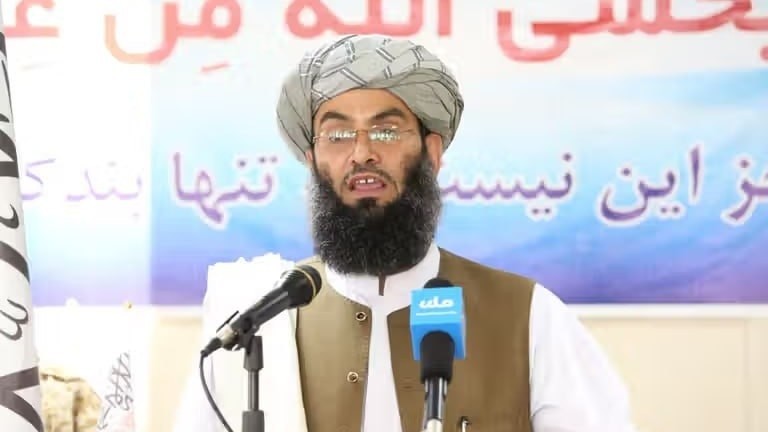
The controversy centers on Sheikh Mohammad Khalid Hanafi, the Taliban’s acting minister for the Propagation of Virtue and Prevention of Vice.
Afghanistan International reported that Hanafi referred to Samarkand, Bukhara, and Termez, Uzbek cities associated with prominent Islamic scholars including Imam al-Bukhari and Imam al-Tirmidhi.
He was quoted as saying that Islam in the cities remained “only on people’s lips,” and blaming religious scholars for leaving the enforcement of Islamic rules to the government. Some regional media paraphrased the remark as a claim that “only the name of Islam remains” in Uzbekistan.
The comments were reportedly made during a speech in Afghanistan’s Paktia Province. Afghanistan International said Hanafi’s ministry published several excerpts from the address. Reports cited by Uzbek media said the passage concerning Uzbekistan also appeared on a ministry spokesman’s account on X before being removed.
The reports attracted widespread attention in Uzbekistan, prompting the country’s embassy in Kabul to seek an explanation.
On July 16, the embassy said it had received a letter from the Taliban’s Ministry for the Propagation of Virtue and Prevention of Vice rejecting what it described as distorted reporting intended to damage relations between the neighboring countries.
The letter praised Uzbekistan as the homeland of major Islamic scholars, including Imam al-Bukhari, and stressed the countries’ shared religious, historical, and cultural ties.
It said statements presented as criticism of Uzbekistan “do not correspond to the truth” and described the reports as a distortion of the facts. However, the letter did not explicitly state that Hanafi had never made the remarks or explain why the passage was reportedly removed.
Uzbekistan’s Ministry of Foreign Affairs issued a stronger denial. Speaking to Portal24.uz, ministry spokesperson Omonulla Fayziyev described the claims as “completely unfounded” and “disinformation.”
Fayziyev said no such statement had been officially issued or published by Afghan state media. He added that Uzbekistan’s ambassador had discussed the controversy directly with the Taliban authorities.
That explanation leaves the central question unresolved. The Uzbek and Taliban statements reject the reporting, yet neither directly addresses Afghanistan International’s account that the ministry itself released excerpts from Hanafi’s speech.
Uzbekistan has emerged as one of the Central Asian countries most actively engaged with the Taliban since its return to power in 2021. The two sides are expanding trade and electricity cooperation, while Tashkent is promoting transport projects through Afghanistan, including a proposed railway connecting Central Asia with Pakistan.
The rapid exchange of denials suggests that neither side wants the dispute to interfere with those broader ties. Uzbekistan has nevertheless continued to withhold formal recognition of the Taliban government.