Author: Nyagyeth Onyoti | Published: 11 hours ago
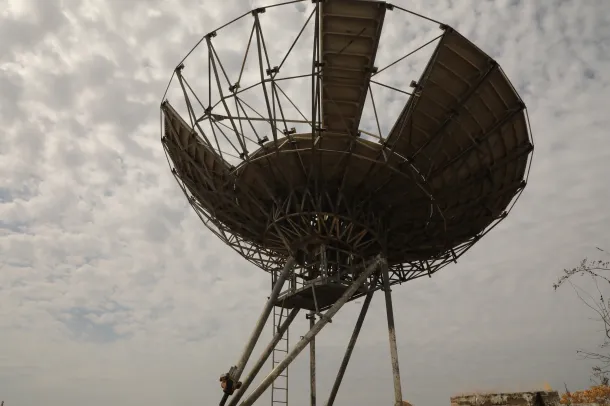
Malakal Radio station’s satellite dish. The station is expected to return on air by November. Photo: UNESCO.
The government of Upper Nile State says preparations are underway to reopen a government-operated radio station in Malakal by November, restoring public broadcasting services that have been off air since 2013.
The State Minister of Information, Peter Ngwojo Akwiny, said construction of the station and other facilities resumed last week after delays caused by shortages of construction materials.
Ngwojo said the building is expected to be handed over to the state government in September, after which installation of broadcasting equipment will begin.
“So, they say they need to two months up to September. Then they hand over the building to us and then the issue of installation of also will start. So let me assure you that by… By November, I think we will be having a radio station owned by government for the first time since 2013 crisis,” he said.
Ngwojo said the station is expected to become operational by November, making it the first government-owned radio station in Upper Nile since the 2013 conflict.
He said the station will support civic education and public awareness ahead of the anticipated elections and contribute to community transformation.
The minister said the station will broadcast in English, Arabic, and five local languages spoken in Upper Nile State to ensure information reaches a wider audience.
“Actually, the station when it was operating, we were using local languages. The five local languages of Upper Nile State, Shilluk Language, Dinka, Nuer, Maban and Kong having no problems. Also, these languages beside English and Arabic,” he added.
Ngwojo added that the government plans to connect the station to all 13 counties through a network of repeaters to expand coverage across Upper Nile State.
Malakal Radio, which was part of the South Sudan Broadcasting Corporation, was damaged during the 2013 civil conflict, forcing it off air.
Previous Post
WFP supports Budi, Kapoeta North families with drought cash transfers