On an island where electricity disappears for days at a time, the line between sanity and madness is no longer clear. / 14ymedio
Amid banging pots and pans, plumes of smoke, and outages, the Cuban electricity crisis seems to have turned madness into a widespread state.
By Yoani Sanchez (14ymedio)
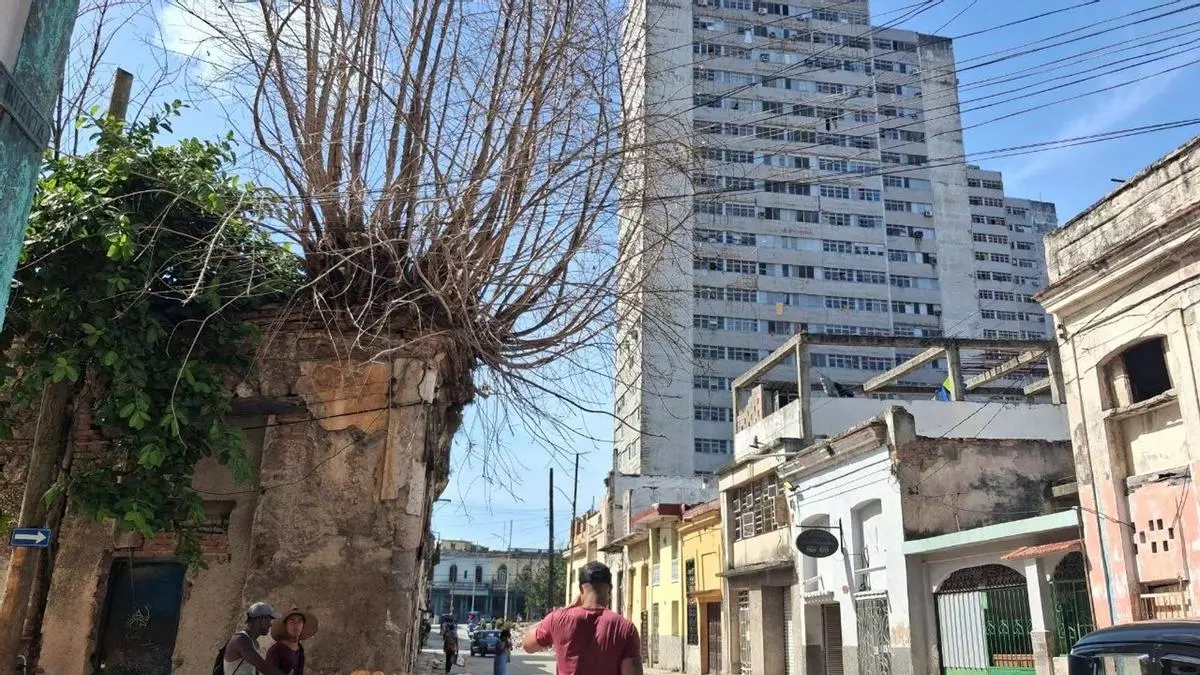
HAVANA TIMES – The day after a power outage, everything moves much more slowly. This Tuesday, I spent long minutes trying to flag down an electric tricycle on Calzada del Cerro to take me to Fraternidad Park, but yesterday, with the total collapse of the National Power System, most drivers couldn’t recharge their vehicles’ batteries. So I had to walk. I was also walking at half speed because of lack of sleep, dragging my feet with the weariness of a nearly sleepless night.
From inside some homes and businesses along the avenue, a stench rises from the humidity and spoiled food. This Monday, when many were waiting for the end of the blackout that had kept them sweating all night, the dreaded total disconnection of Cuba’s dilapidated electrical grid arrived. Those who had put away a piece of chicken, hoping the refrigerator would hum again, saw their hopes turn into a foul-smelling drip escaping from the freezer.
A neighbor says they’ve authorized banging pots and pans. She tells me this with such conviction that, for a moment, I think I’ve missed some important official announcement. But no. The woman claims that Miguel Díaz-Canel stated that we have to bang our pots and pans for our neighbors to the north, who are the ones causing this blackout. The conclusion was immediate: “Well, we’ll have to bang them harder and every night, so that it can be heard outside the island too,” the woman adds mischievously.
Everyone has their favorite thing to bang on during power outages. A friend of mine has acquired an old saucepan which his mother, now dead, used to roast coffee beans. “It sounds best with a hammer; it sounds like a cathedral bell.” In another building in my neighborhood, there’s a family that even has a well-rehearsed orchestra. When one of them starts banging on the pan, the others join in a furious, desperate conga line.
Further on, a retiree takes out his frustration on an empty oxygen cylinder he keeps in his backyard. It belonged to his father, who died during the pandemic, precisely when getting a tank of that vital gas was a life-or-death race won by only a few. Since then, the man uses the old metal tank to vent his anger. When the water doesn’t come to the neighborhood for several days, rattatat. If the electricity goes out for long hours, it rattatatatat. If the price of bread goes up again or the manufactured gas supply is cut off, it rattatatatatats again. The cylinder responds with a metallic echo that has become part of the soundscape of this area.
At night, flares continue to appear on the horizon, only to turn into plumes of smoke the next day. I’ve taken to reading science fiction again. When I see the glow of the burning garbage mountains across from my balcony, I’m reminded of “Nightfall,” the famous short story Isaac Asimov published in 1941. The story describes Kalgash, a planet with six suns where it never gets dark. Every 2,049 years, a total eclipse occurs; the arrival of darkness triggers a collective frenzy, and people end up setting everything ablaze.
We’re all a little crazy on this island. My greatest fear has always been losing my mind. I’ve never been afraid of spiders, or the dark, and much less of the restless agents of the political police. However, the thought of getting lost in that world of distorted reflections that is dementia terrifies me. That’s why I’m very attentive to every sign of delirium and especially sensitive to noticing when alienation is taking hold in others. I have, for madness, the keen nose of those of us who believe ourselves to be potentially deranged.
Yesterday I saw a man at the traffic light at Belascoaín and Reina. He was dressed in rags and trying to direct traffic because the power outage had knocked out the lights that were supposed to indicate when to go and when to stop. With his arms outstretched, he was performing a strange choreography that, if followed to the letter, would have caused drivers to end up going around in circles, doing somersaults, and even crashing into each other. From some car windows, people were throwing insults at him, and a teenager riding by on a bicycle spat at him without stopping.
I kept walking, but for several blocks I couldn’t get him out of my head. Maybe the man was just crazy. Or maybe he was trying, in his own way, to impose some order on a country where lucidity was lost long ago. On an island where the electricity disappears for days, where food rots in refrigerators, where the nights are filled with banging pots and pans and mountains of garbage burn as if announcing the end of an epoch, the line between sanity and madness is no longer clear.
In Nightfall, Asimov imagined that darkness alone was enough to unleash madness. We have been living for too long amidst shadows and sleepless nights. As I turned the corner, I glanced one last time at the traffic light. The man was still waving his arms with the same conviction. No one was paying him any attention, but I couldn’t tell if I was looking at a madman… or a prophet.
Translated by Translating Cuba.
Read more from Cuba here on Havana Times.