The regions where temperatures rise the highest are not necessarily the places where the most people die during heatwaves. A new analysis by Eötvös Loránd University (ELTE) shows that local factors such as the quality of healthcare, housing conditions and general preparedness play a crucial role. The findings could provide important insights for future public health planning.
The climate crisis has already become part of everyday life. Heatwaves today are significantly longer, more intense and more frequent than they were several decades ago. However, how severely a region is affected by extreme temperatures depends on far more than just the weather. Hungarian researchers Péter Szabó and Rita Pongrácz from ELTE’s Institute of Meteorology analyzed data from the past 11 years to determine which regions were most exposed to heatwaves—and where these events caused the highest excess mortality.
For their study, published on the specialist climate portal Másfélfok, the researchers used a more precise approach than simply examining temperature peaks. Instead of looking at daily maximum temperatures, they analyzed daily average temperatures. The reason is linked to health impacts:
average temperatures provide a better indication of whether nights become cool enough for the human body to recover.
When nights remain hot, the body is exposed to continuous stress, significantly increasing health risks for vulnerable groups such as elderly people, those with chronic illnesses and young children.
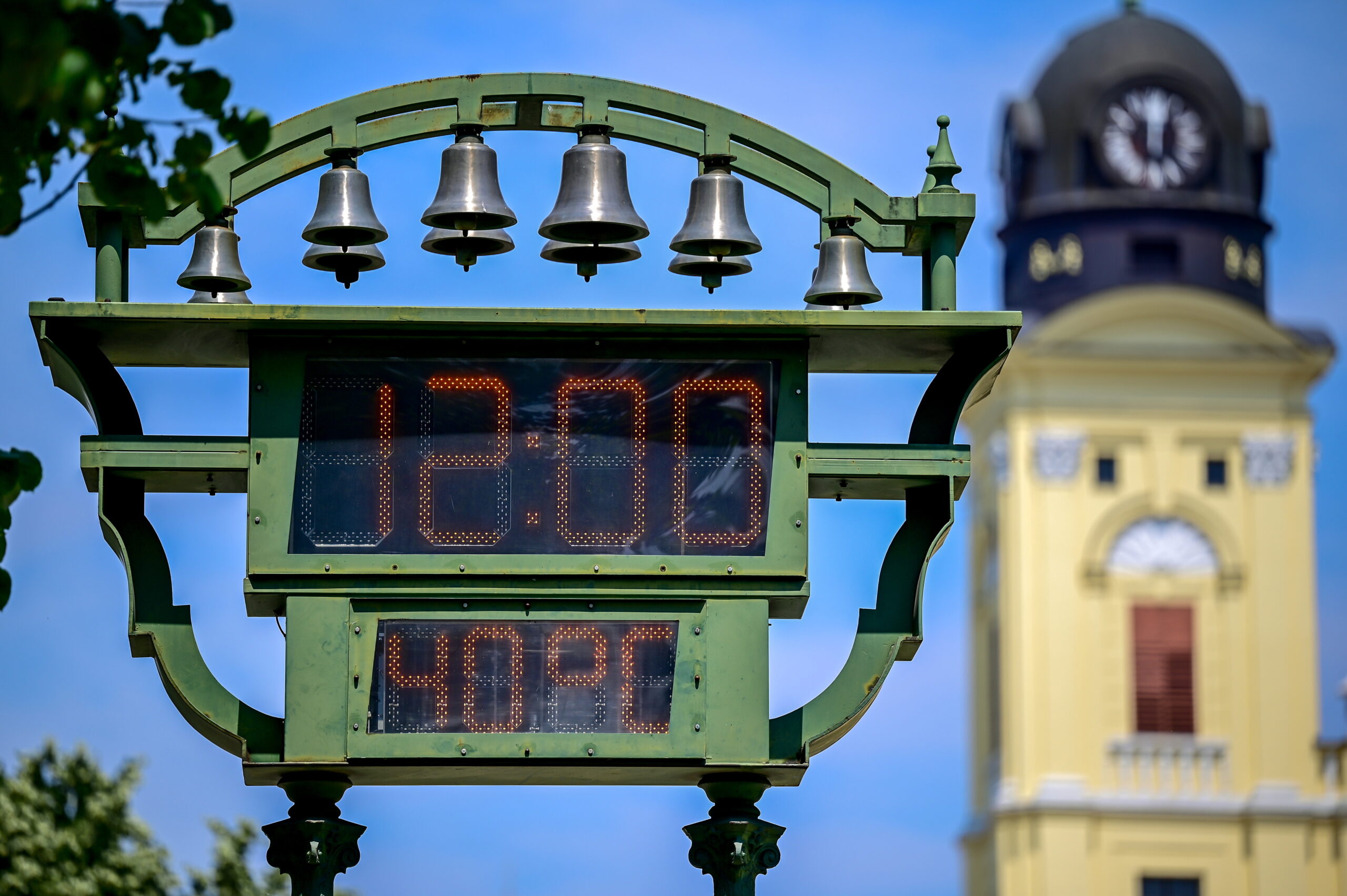
Photo: MTI/MTI Fotószerkesztőség/Máthé Zoltán
Using data from the Hungarian Central Statistical Office (KSH) and the National Health Insurance Fund Administration (NEAK), the researchers examined weekly figures between 2015 and 2025 for all 19 Hungarian counties and the capital Budapest. The climate data showed a clear pattern: southern and southeastern Hungary are the country’s heat hotspots. Over the past 11 years, these areas experienced an average of two to three consecutive weeks each summer with extreme heat exposure both during the day and at night.
The highest number of heatwave weeks was recorded in Csongrád-Csanád, Békés and Bács-Kiskun counties.
However, those who assume these regions also recorded the highest number of heat-related deaths would be mistaken.
The mortality data revealed a different—and somewhat surprising—picture:
- Tolna County recorded the highest excess mortality during heatwaves, at 35%.
- It was followed by Baranya County (28%) and Jász-Nagykun-Szolnok County (26%).
- In Budapest and Békés County, the figure was 24%.
- In Csongrád-Csanád County, statistically the hottest region of Hungary, excess mortality was significantly lower.
Researchers attribute this difference to better local adaptation. Csongrád-Csanád, for instance, has the highest proportion of air-conditioned homes in the country. The finding demonstrates that effective infrastructure can save lives.
The risks of inadequate adaptation became clear in Budapest in July 2024, when a two-week extreme heatwave pushed excess mortality in the capital 34% above the summer average.
The ELTE study shows that current heat warning systems are no longer sufficient. Simply advising people during extreme heat alerts to stay hydrated or avoid direct sunlight at midday is no longer enough.
Effectively reducing the health impacts of climate change requires a long-term, cross-sector strategy. The researchers’ weekly regional analyses provide a precise tool for identifying areas where healthcare and social systems need strengthening. According to the study, the future of heat protection will not be decided only in hospitals, but also through urban planning, social housing policies and long-term structural measures.
Related article
Police Use Water Cannons to Cool Crowds as Heatwave Sweeps the Country
Amid scorching temperatures, police turned water cannons into giant cooling showers at Budapest’s Heroes’ Square. Continue reading
Via masfelfok.hu, Featured image: MTI/Czeglédi Zsolt