Aiah P. M. Sourie Head, Outreach Unit, ACC
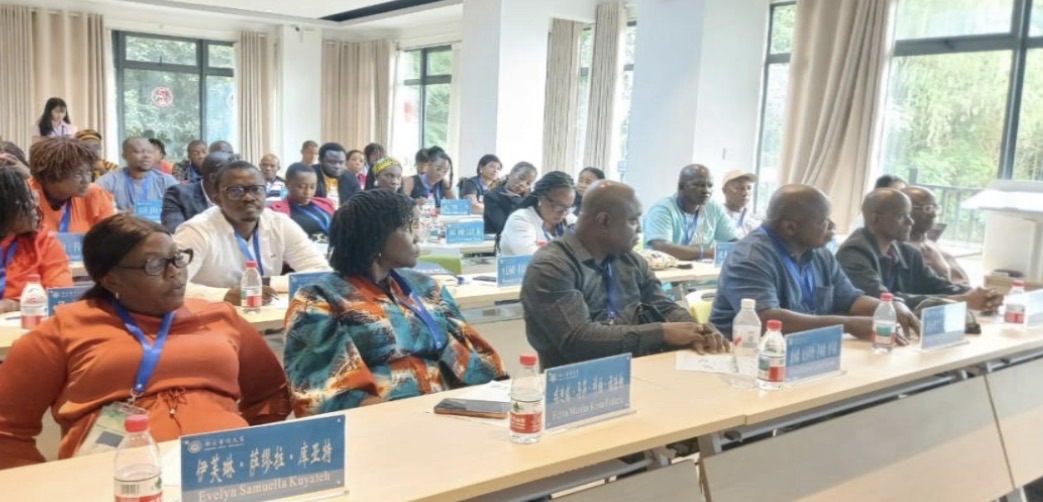
As part of the ongoing seminar on Identifying and Monitoring Corrupt Practices in China, a delegation of 35 staff of Sierra Leone’s Anti-Corruption Commission (ACC) has participated in a workshop on Corruption Identification and Supervisory Capacity Building at Nanjing Audit University (NAU) in Nanjing, China.
The interactive session held at the University’s Foreign Students’ Auditorium, focused on China’s anti-corruption supervisory framework and the evolution of its integrity and oversight systems.
Facilitating the session, Professor Chi Tong traced the origins of China’s anti-corruption supervisory system to the Qin Dynasty in the 3rd century BC, explaining how the country’s oversight framework has evolved into a comprehensive mechanism for promoting integrity and preventing corruption.
He noted that China’s anti-corruption system differs from many jurisdictions in that it does not rely on a standalone anti-corruption agency. Instead, it operates through an integrated supervisory framework anchored on three complementary pillars, Party oversight, administrative supervision, and judicial oversight, working in coordination under the National Supervisory Commission (NSC).
Professor Chi explained that the NSC serves as China’s highest supervisory body, coordinating anti-corruption efforts nationwide through corresponding supervisory structures at provincial and local levels.
According to him, the Commission for Discipline Inspection of the Communist Party of China, working alongside the NSC and other oversight institutions, plays a critical role in monitoring public officials, investigating misconduct, and ensuring accountability at all levels of government.
Emphasizing the importance of ethical leadership, Professor Chi quoted the Chinese proverb, “To forge iron, one must be strong oneself,” stressing that officials entrusted with supervisory responsibilities must themselves uphold the highest standards of integrity and discipline.
He further referenced President Xi Jinping’s admonition that “Those who enforce discipline must first abide by it themselves; those who hold others to account must first hold themselves to account,” noting that the principle underpins China’s supervisory regulations and reinforces public confidence in government institutions.
Professor Chi also underscored that although supervisory officials possess extensive powers to investigate corruption, including interviewing, searching, and detaining suspects, they remain bound by legal and institutional safeguards designed to protect the rights of citizens.
Highlighting China’s zero-tolerance approach to corruption, he stated that violations of Party regulations and supervisory laws are dealt with firmly, reflecting the country’s commitment to transparency, accountability, and effective public administration.
Responding on behalf of the ACC delegation, Deputy Commissioner Augustine Foday Ngobie expressed appreciation to the management of Nanjing Audit University and Professor Chi for the insightful presentation.
“You have broadened our understanding of China’s anti-corruption supervisory system. We are highly impressed and look forward to future collaboration between Nanjing Audit University and the Anti-Corruption Commission of Sierra Leone to deepen knowledge exchange and strengthen our shared commitment to combating corruption,” he said.
Earlier, the delegation toured the University’s Audit Museum, which chronicles the evolution of China’s auditing system from ancient to modern times and showcases its contribution to strengthening accountability and combating corruption.
Founded in 1983, Nanjing Audit University is China’s premier institution specializing in auditing, economics, and finance. Certified by the Institute of Internal Auditors (IIA) and the Association of Chartered Certified Accountants (ACCA), the University hosts approximately 20,000 students from more than 28 countries and has offered postgraduate programmes since 2021.