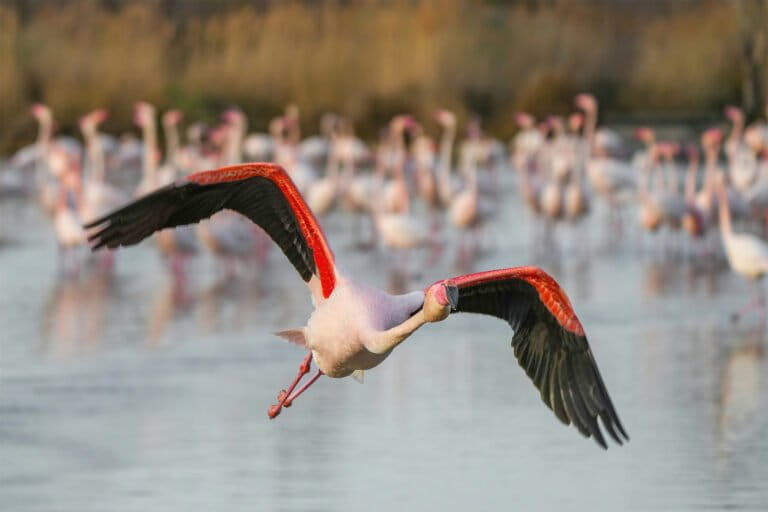
The smiles on the faces of Iman Ebrahimi and his colleagues in the photograph are revealing: After more than a month of war in Iran, a tenuous ceasefire in mid-April offered a brief window for the team to travel to one of Ebrahimi’s favorite field sites. Maharloo Lake is the “hottest spot for flamingo breeding in Iran,” he said excitedly on a video call during a rare period of stable internet early in the war. They saw “at least 5,000” greater flamingos (Phoenicopterus roseus) that day, he said, though there were probably more beyond the reach of their binoculars. “It was incredible.” A salt lake that tinges pink when summer heat shrinks its footprint, the lake was flush with water when they visited. “This is a very lovely place, but I’ve never seen Maharloo like this,” Ebrahimi said. The winter rains had been heavier than normal, to be sure, but he said he also suspects that agricultural and industrial activity, muted by the war, were drawing off less water from the lake — an unanticipated impact. Ebrahimi and his teammates from the NGO AvayeBoom Bird Conservation Society are doing their best to track the conflict’s effects on Iran’s environment. They’ve noticed, for example, shifts in bird aggregations, apparently moving away from areas that reverberate with airstrikes. But the war has also laid bare the damage caused by international sanctions imposed by the U.S., the EU and the U.N., along with other moves to cut Iran off from the rest of…This article was originally published on Mongabay