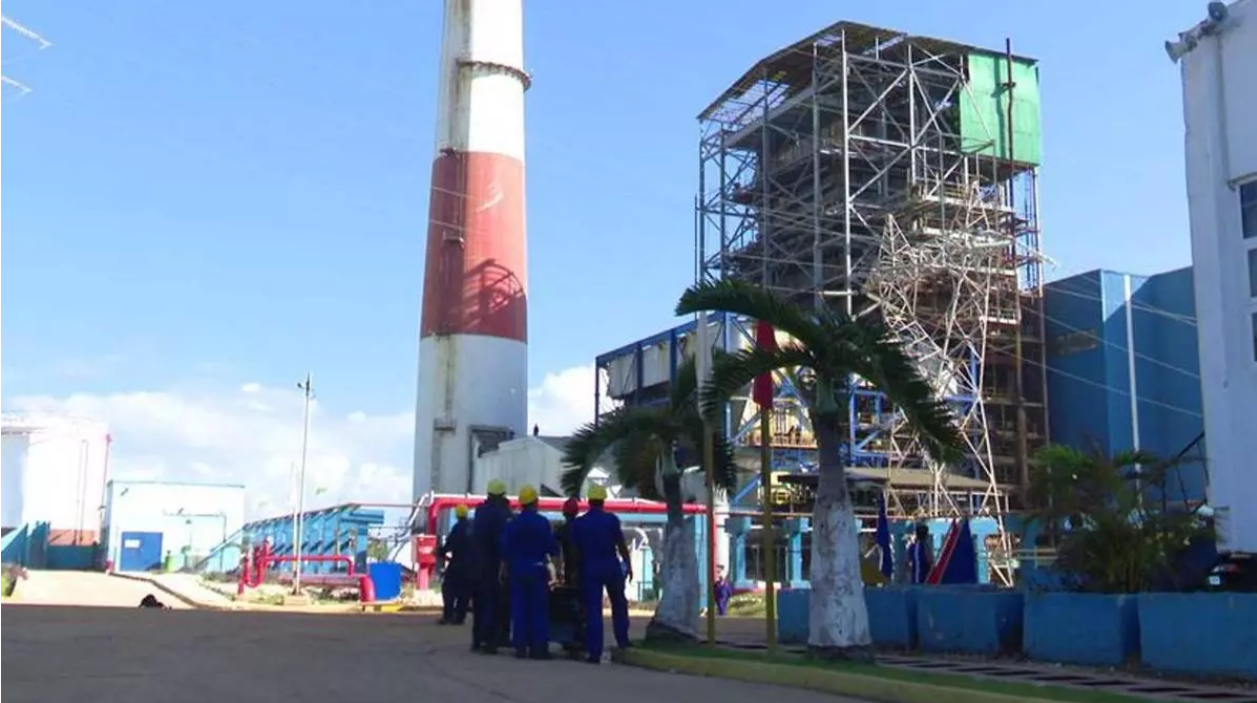
Cuba’s leading thermoelectric plant has broken down 17 times in 2026. Foto: Giron
The state-run Electric Company merely says that “the causes are under investigation.”
By Diario de Cuba
HAVANA TIMES – Cuba’s deteriorating electrical system suffered a total grid collapse on Monday morning, further deepening Cubans’ growing frustration, while the state-run Electric Company (UNE) limited itself to saying that “the causes are under investigation.”
Even before Monday’s complete collapse, the third of 2026, the situation was already critical. Following a partial system failure over the weekend, 11 generating units remained offline due to breakdowns or scheduled maintenance, and those still operating were unable to supply even one-third of the country’s peak electricity demand, according to the UNE. Outages of 15 to 30 hours had already become normal throughout the country.
As Cubans have grown accustomed to living without electricity, relying on charcoal or firewood for cooking and using energy storage systems for basic survival needs, public discontent has increased at the same pace as the blackouts. Pot-banging protests and peaceful demonstrations have become everyday occurrences across many parts of the country, just five days before the fifth anniversary of the historic July 11, 2021, protests.
Without providing any update on repairs to the Antonio Guiteras thermoelectric plant—the country’s largest generating unit, which went offline last Friday after suffering its 17th breakdown so far this year—UNE today announced the total collapse.
As public frustration spreads across Cuba’s streets, the regime continues to blame the crisis on pressure from the United States. However, the collapse of the electrical system has steadily worsened since 2021, and none of the solutions announced by the authorities since then has succeeded in reversing the decline.
During those years, while the thermoelectric plants accumulated breakdowns and deterioration—made worse by the use of Cuban crude oil with a high sulfur content and highly corrosive heavy metals—the regime continued to devote resources to building luxury hotels that today remain, for the most part, empty.
First published in Spanish Diario de Cuba and translated and posted in English by Havana Times.
Read more news here on Havana Times.