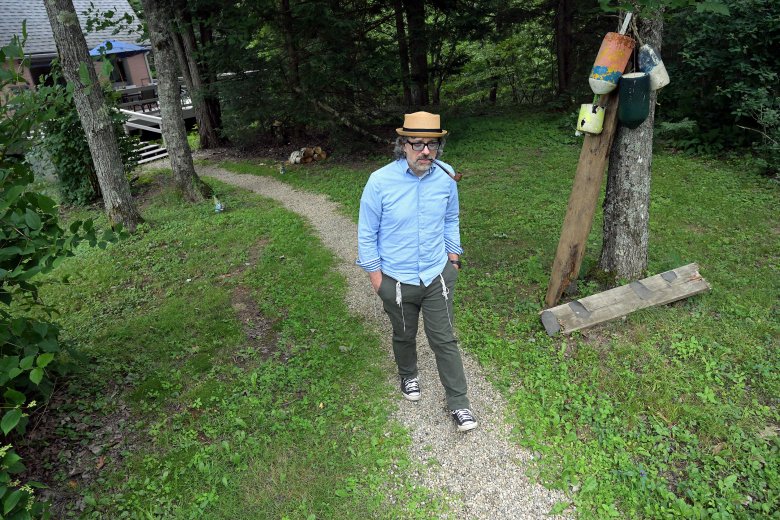
Rusty Taylor is executive director of the Alewife Harvesters of Maine, treasurer of the Maine Elver Fishermen’s Association and a resident of Mount Desert.
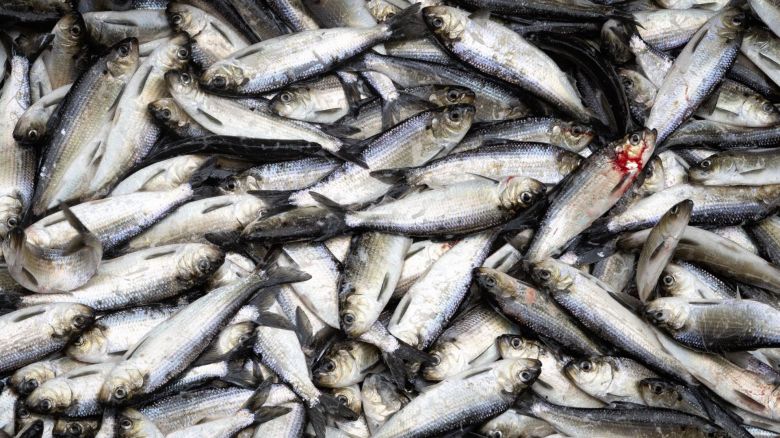
Long before America’s founding 250 years ago, Mainers relied on the annual return of river herring, mostly alewives, to feed their families and sustain coastal communities.
These small fish have always punched above their weight.
For generations, alewives were harvested from Maine’s rivers and streams, providing food, bait for fishermen and support for the broader ecosystem. They are one of the most important forage fish in the Atlantic, also feeding striped bass, tuna, cod, whales, ospreys and countless other species.
When alewives disappear, the effects ripple outward.
That is why in Maine we spent hundreds of millions of dollars over the years removing dams, improving water quality and building fish passage to bring these fish back. In many places, those efforts improved our alewife runs.
But there was a growing problem that could not be ignored. Many of those restored fish were being killed at sea before they made it home. Industrial midwater trawlers became the biggest threat to our restoration efforts.
These are the largest fishing vessels on the Atlantic Coast. They drag enormous nets through the water that are as tall as a five-story building and as wide as a football field. Their target is Atlantic herring and mackerel, but they catch everything in their path, including millions of river herring and shad.
A single tow can wipe out an entire river’s spawning run. That means all the taxpayer dollars spent restoring rivers and fish passage can be wasted in one afternoon offshore.
This is not an abstract ecological concern. It is a direct threat to livelihoods, traditions and the economic fabric of coastal New England.
River herring are an important part of our forage base. Forage fish are bait for lobstermen. When populations collapse, bait becomes harder to find and more expensive. Recreational and other commercial fishermen feel it too, as striped bass, bluefin tuna, cod and other prized species lose a key food source. Whale watching, charter fishing and tourism all depend on a healthy forage base.
When forage fish disappear, coastal economies suffer. Maine knows this better than most states.
For nearly two decades, our river herring have benefited from meaningful protection from industrial midwater trawlers. Since 2007, the Gulf of Maine has been closed to these vessels during the critical summer months, allowing river herring to migrate without being swept up in their massive nets. The result has been clear. Maine’s alewife runs have rebounded.
That is not a coincidence. It is proof that when you keep industrial trawlers away from migrating fish, the fish come back.
Unfortunately, our neighbors to the south have not had the same protections.
Massachusetts, Rhode Island, Connecticut, New York and New Jersey have seen their river herring and shad populations hit hard by industrial bycatch. Those states have also spent millions on restoration, only to watch their fish intercepted offshore before they can spawn.
That is why the Alewife Harvesters of Maine is speaking out.
We are the only organized river herring harvesters on the Atlantic Coast, and we know firsthand what works. Maine’s success shows there is a simple, practical solution: create time and area closures in bycatch hotspots to keep industrial midwater trawlers away from migrating river herring.
The science is clear: researchers know where and when river herring are most vulnerable offshore. What remains is the will to act.
This week, the New England Fishery Management Council needed to take action to meet its commitment to new time and area closures to midwater trawling by January 2027. But instead of acting on years of scientific data, public testimony and concern from fishermen, it kicked the can down the road, setting a new “target” to make its decision in April. This means no new protections will be in place until at least 2028. And the council’s executive director said it is up in the air whether they will ever finish.
That is unacceptable.
This is not complicated. Maine’s experience has already shown the path forward. When industrial trawlers are removed from migration routes, river herring rebound. We are even seeing early signs of that in southern New England now, where fish runs are improving because the midwater trawl fleet has been sidelined by its own overfishing.
The lesson is simple: less midwater trawling equals more fish.
Every season that passes means more river herring lost, more taxpayer restoration dollars wasted and more pressure on the fishermen and coastal communities that depend on healthy river herring runs.
This is not a radical demand. This is common-sense, science-based and long overdue.
It is time for fisheries managers to stop the foot-dragging and listen to what all the people negatively affected have been saying for years: keep the industrial midwater trawlers away from our fish.