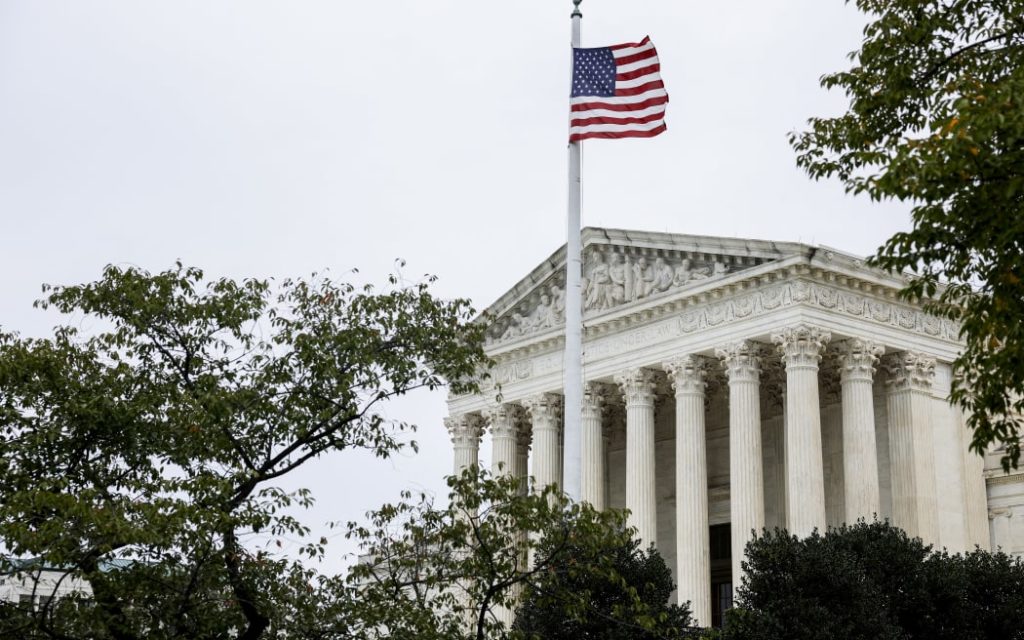
Right to Democracy says the decision by the U.S. Supreme Court that President Donald Trump’s attempt to deny citizenship to children born to parents who are temporary or unauthorized immigrants violates the Citizenship Clause of the Fourteenth Amendment, has important consequences for people born in U.S. territories.
Writing for the Court, Chief Justice John Roberts called citizenship “the right to have rights—to freely participate in our political community. The Framers of the Fourteenth Amendment extended that promise to every free-born person in this land. We keep that promise today.” In reaching this result, the Chief Justice explained that as a result of the Citizenship Clause of the Fourteenth Amendment, “[a] child born on American soil and subject to American law was made an American citizen.”
Neil Weare, co-founder of Right to Democracy said, “While today’s decision did not directly address the question of birthright citizenship in U.S. territories, the Court is clear that anyone born on U.S. soil and subject to U.S. law has a constitutional right to U.S. citizenship. The Court definitively ruled that the political branches of the federal government have no power to redefine the Citizenship Clause. This is significant for people born in U.S. territories, because the federal government continues to argue––contrary to the text and history of the Citizenship Clause––that it can turn citizenship on and off in U.S. territories.”
Weare added, “It is also noteworthy that Justice Jackson, in a concurring opinion joined by Justice Sotomayor, also called out the Insular Cases as an example of when the Supreme Court has ‘denied Americans’ the ‘promise’ of ‘securing equal citizenship.’”
Earlier this year, Right to Democracy, which works to advance democracy, equity, and self-determination in U.S. territories, filed an amicus brief on behalf of 21 current and former elected officials and judges from the U.S. Virgin Islands, Puerto Rico, Guam, the Northern Mariana Islands, and American Samoa who urged the Court not to repeat the same mistakes it has made in U.S. territories.
Co Director of Right to Democracy, Dr Adi Martinez-Roman said, “The Court’s broad ruling today is a recognition that, absent very narrow exceptions, the U.S. must recognize fundamental citizenship rights to all of the people who are born under their rule. The language of the Court is clear––that neither the President nor Congress has the power to unilaterally deny U.S. citizenship to someone born under the sovereignty and jurisdiction of the United States.
“Regardless of one’s views on political status, this re-emphasizes the important constitutional limits placed on federal power when it comes to the fundamental right of citizenship. Understanding what basic rights are recognized to people born under U.S. sovereignty is critical to the conversation of self-determination.”