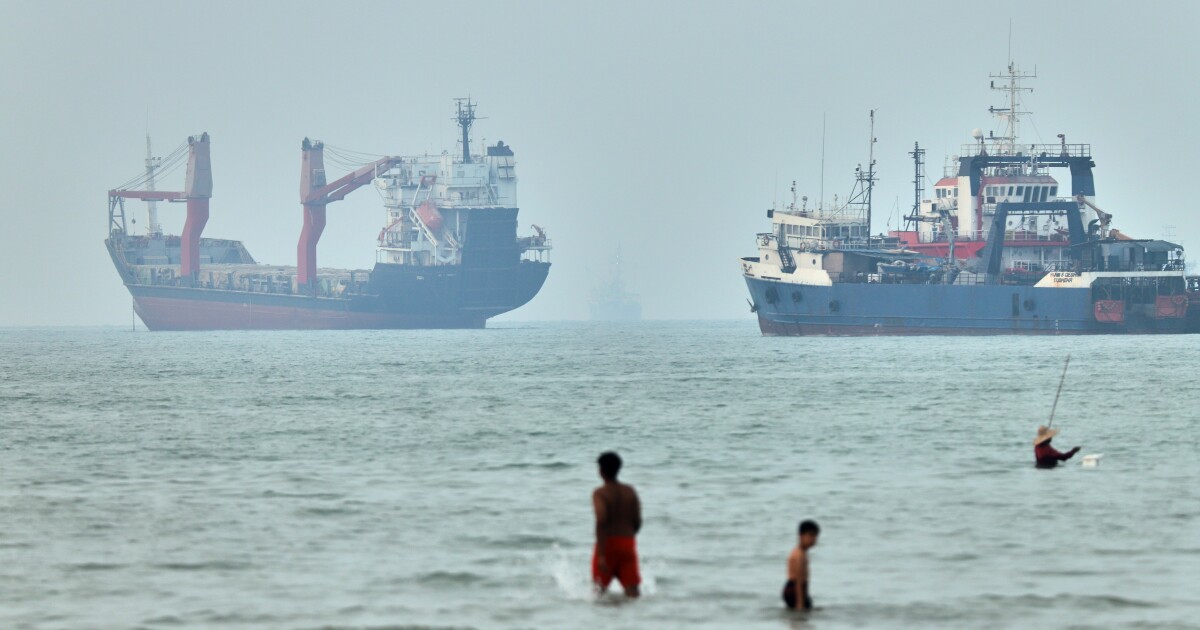
Iran’s joint military command warned Thursday that all oil tankers moving through the Strait of Hormuz must use its approved routes or face a “forceful response,” ratcheting up tensions again over a waterway crucial for international energy supplies.
The strait, the narrow mouth of the Persian Gulf, has emerged as one of the top issues in negotiations seeking a permanent end to the Iran war. The statement from the Khatam al-Anbiya military command, reported by Iranian state television, comes after both U.S. and Iranian diplomats met with mediators Wednesday in Qatar.
It wasn’t immediately clear what sparked the threat from Iran. However, the U.S. military’s Central Command had put out a statement about a meeting with officials from Mideast nations in Bahrain that said “leaders underscored their shared commitment to the free flow of commerce through” the strait.
RELATED STORY | A new round of US-Iran meetings begins in Qatar — but the envoys won’t be talking face to face
That appears to have been the phrase that angered Iran, which is preparing for the funeral that begins this weekend for the late Supreme Leader Ayatollah Ali Khamenei, who was killed in the war’s first moments in February.
“Any failure to comply, deviation from the designated route, or disregard for the navigation protocols of the Islamic Republic of Iran in the Strait of Hormuz will be met with an immediate and forceful response from the armed forces, endangering the security of the violating vessels,” the Iranian statement said.
It also said the continued presence of U.S. fighter jets over the strait “causes insecurity in this waterway and threatens regional security.”
“Any attempt by the United States to interfere in security matters or any disruptive action in the Strait of Hormuz will be considered a threat to Iran’s national sovereignty and will be met with a rapid and decisive reaction,” the Iranian warning added.
Iran and the United States agreed as part of an interim deal to allow ships to pass without paying charges for 60 days. But Tehran insisted it must control the routes of the vessels and later charge fees for passage, upending decades of practice in the waterway.
IN CASE YOU MISSED IT | Iran denounces US strikes as a sign of bad faith, with impact on peace talks unclear
In a report apparently aimed at bolstering Tehran’s claims to control the strait, Iranian state television said this week that a foreign ship got stuck in the waterway after ignoring instructions from Iran’s paramilitary Revolutionary Guard. However, the vessel’s shape, reported location and other details indicate the ship is tied to Iran and appears to have been stranded for months.
The U.S. and many Gulf Arab states say they won’t agree to Iran charging for passage through the strait. An effort by Oman and a United Nations agency to launch a new route near Oman’s shore sparked attacks across the Mideast last weekend, highlighting the tensions.
Despite the tensions, Wednesday’s talks saw “positive progress,” Pakistani Foreign Ministry spokesperson Tahir Andrabi said. He told journalists that Pakistan hoped the next round of talks would be scheduled as soon as possible after Khamenei’s funeral.