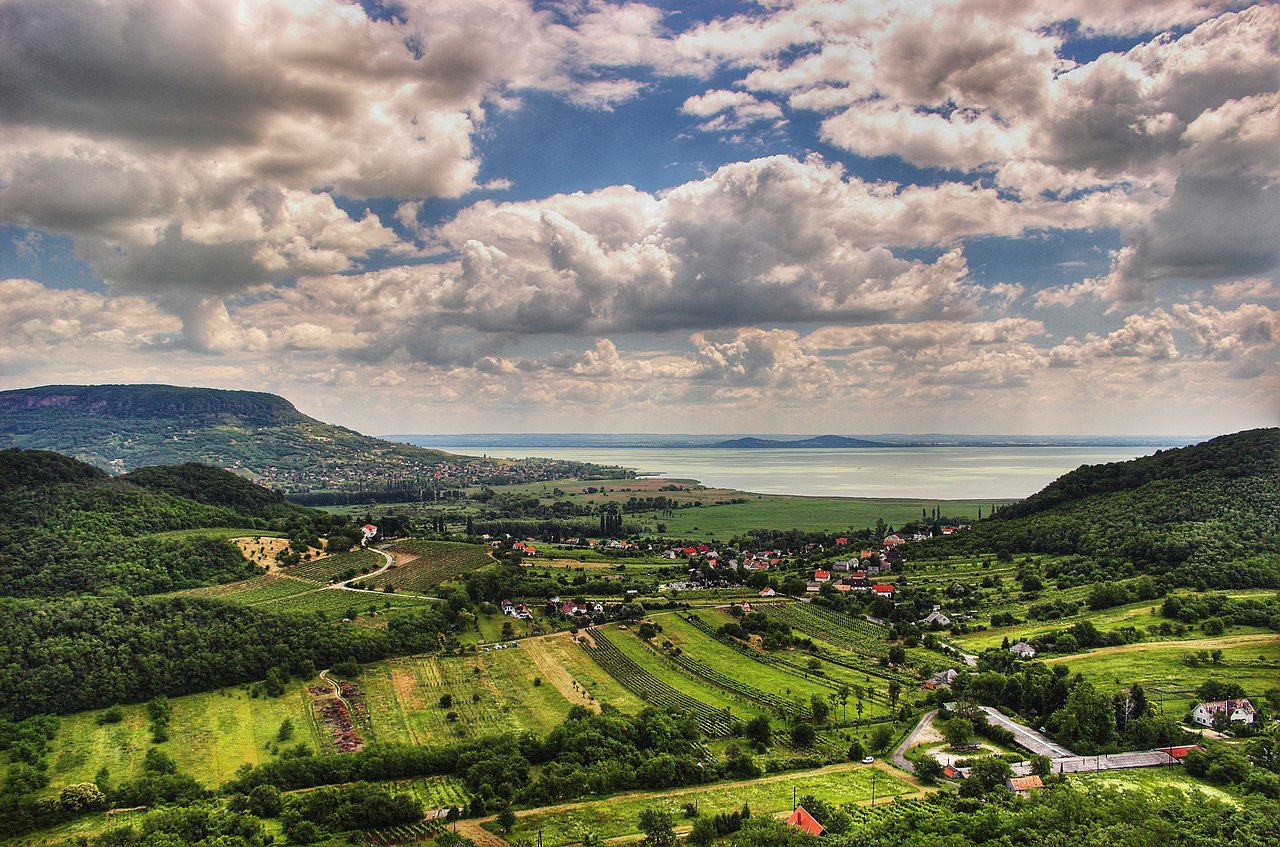
The Balaton is simultaneously under pressure from development along its shores, the destruction of reed beds, pollution from sunscreens, chemicals and pharmaceutical residues, large quantities of organic matter introduced through fishing, and the warming of its waters due to climate change — said Gábor Vasas, Director General of the Balatoni Limnológiai Kutatóintézet (Balaton Limnological Research Institute), on the Hungarian Academy of Sciences’ (MTA) podcast Biztos hang.
In a statement issued on Tuesday, the MTA emphasised that the fate of Lake Balaton is not a simple question of water levels. As the statement noted, Balaton coverage in the news frequently centres on a single figure: how many centimetres the lake’s water level stands at. According to Gábor Vasas, however, the conversation should not be about a single ideal water level, but rather about the fact that natural fluctuation in water level is also necessary for the lake’s natural functioning. Variation between 70 and 110 centimetres is not in itself a catastrophe, but can be part of the life of a shallow lake.
The problem arises rather when regulatory levels are treated in public discourse as the optimal water level. Many people fear low water levels, but persistently high water levels are not necessarily good for the Balaton either: from an ecological standpoint, these too can have harmful consequences. The lake’s wildlife, the reed beds, the shoreline zones and the aquatic vegetation are not adapted to a constant state, but to fluctuating water conditions.
According to Gábor Vasas, a more important question than the water level is the water balance: how much water enters the lake and how much leaves it through evaporation, runoff, or other means. This is particularly significant because, after 2000, years in which Lake Balaton’s water balance was negative became increasingly frequent and pronounced — more water disappearing from the system than arriving as replenishment.
In the Carpathian Basin, drought years are becoming more frequent due to climate change, and shallow lakes are especially sensitive to changes in temperature, precipitation, and evaporation. This is not true of Lake Balaton alone: Gábor Vasas also used the example of Lake Velence to emphasise that decisions should not be based on occasional measurements, but built on continuous, scientific monitoring.
In debates about the future of Lake Balaton, the fate of shoreline developments and reed beds is a particularly sensitive issue. According to Gábor Vasas, the logic that reeds cleared for a development project can be replaced elsewhere is mistaken. Reeds do not function like transplantable horticultural elements: they can only establish themselves where the natural conditions are in place. If those conditions are absent, relocation does not constitute genuine replacement in ecological terms.
Reed beds provide habitat, play a role in fish reproduction, dampen wave action, function as a filter, and form a transition between aquatic and terrestrial habitats. For this reason, further development of shoreline zones is not merely a matter of landscape aesthetics or nature conservation, but a question that affects the functional integrity of the lake.
Part of societal adaptation would also involve accepting greater water level fluctuations than at present. This could be aided, for example, by newer types of ‘lido-style’ beaches — reminiscent of sandy seashores and the ancient Lake Balaton — for which water level fluctuations and wave action are, of course, a natural part of their operation.
New types of algae bloom risks are also emerging. Lake Balaton’s earlier major algae bloom problems were primarily linked to external nutrient loads: the discharge of wastewater, agricultural runoff, and the influx of phosphorus and nitrogen severely degraded water quality. Later interventions, including improvements to sewage diversion and the restoration of Kis-Balaton, brought about a marked improvement.
However, climate change is bringing new types of risks. Today, the question is no longer solely how many nutrients enter the lake from external sources. The warming of the water and changes in thermal stratification can trigger processes in the sediment that lead to the internal release of nutrients. This means the lake can experience algae blooms even if external loads are successfully reduced. And as temperatures rise, new algae species are finding favourable habitats in locations where they previously could not survive.
A warning sign is that algae bloom phenomena have also appeared in the eastern basin, which was previously considered cleaner.
The burden placed on Lake Balaton is worth discussing not only in terms of major investments and water management decisions. Everyday use of the lake also matters: sunscreens, fragrances, pharmaceutical residues, and garden chemicals can all enter the system.
Fishing and the load from bait and feed materials are equally important issues. According to Gábor Vasas, Lake Balaton is not a ‘carp water’ in the natural sense: the carp population largely consists of however many fish have been stocked. He puts the annual quantity of bait and feed material at around 2,000 tonnes, and considers its composition to be particularly problematic, especially due to animal-derived, phosphorus-rich substances.
From a material balance perspective, it is worth considering whether a portion of the fish caught should be taken away and consumed rather than being released back, as the increasingly widespread practice of catch-and-release dictates.
Chemical mosquito control is also among the pressures on the lake, and according to Gábor Vasas, it should be abandoned wherever possible. Because it is non-selective, it can affect many other species, and in an aquatic environment it can be particularly problematic. A shift towards biological solutions is needed, even if these require further development.
Climate change is also increasing the risk of invasive species. Misguided fish stocking, thermal water outlets, the release of aquarium species, and warming waters can together facilitate the establishment of non-native species.
The future of Lake Balaton therefore depends on whether we are capable of thinking about it in a systemic way — and to do so, predictable research funding, long-term data series, and scientific findings integrated into decision-making are needed, according to the statement.
Artificial intelligence was used for the translation of parts of the original Hungarian text.