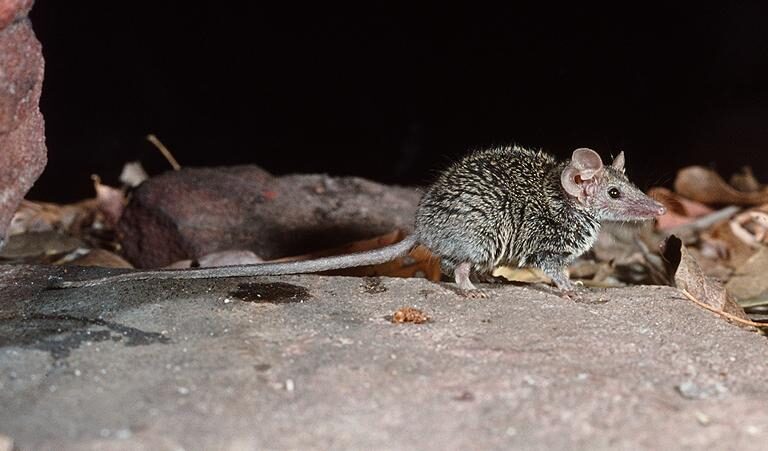
Researchers have confirmed a new-to-science species of marsupial in Australia’s Northern Territory. The tiny mouse-like carnivore has been named the Arnhem Plateau planigale (Planigale petrophila) after the area where it’s thought to live in; its scientific name translates to rock lover. Planigales are the world’s smallest marsupials, some weighing just a couple of grams. Only seven species were recognized until recently: six from Australia, and one from the island of New Guinea. Previous research has suggested that Planigale ingrami, one of the known Australian species, may actually consist of several different species. One such species, the cracking-clay Pilbara planigale (P. tealei) from Western Australia had earlier been misidentified as P. ingrami, but was formally described as a distinct species in 2023. In the latest study, researchers examined specimens historically labelled as P. ingrami held across museums in Australia and collected DNA from more than 220 such specimens. They showed that planigales long classified as P. ingrami represent four distinct species, including the previously recognized P. tealei. One of them is the Arnhem Plateau planigale, the largest of the four, with dark-gray fur and the longest tail. It’s currently known from just three specimens: two males and one female. All three were collected within 12 kilometers (7.5 miles) of each other on the plateau. “P. petrophila is apparently rare among Australian planigales because, so far, only three specimens have ever been found, and it is known only from a small area of the sandstone plateau and rocky slopes in Kakadu National…This article was originally published on Mongabay