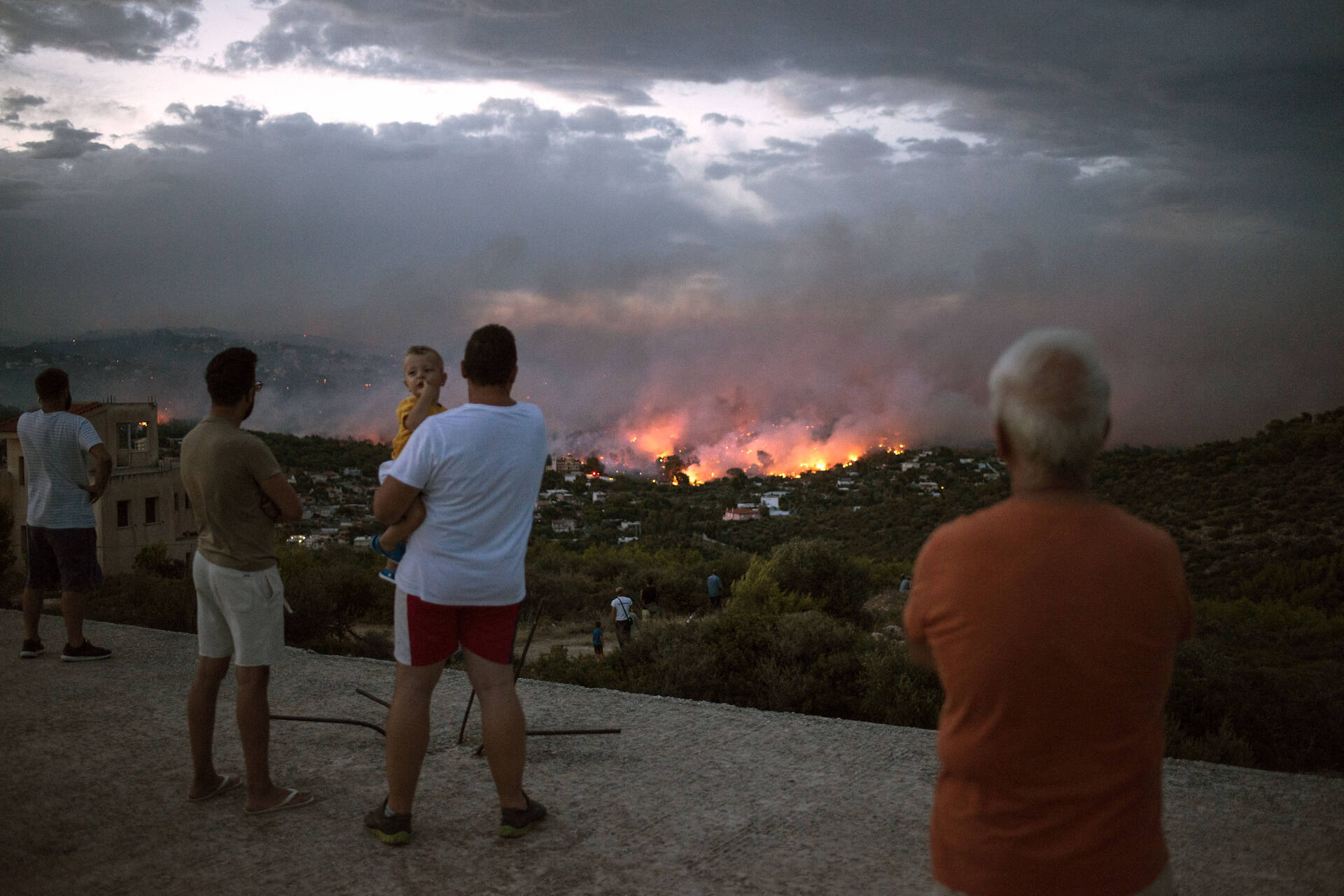
Memories of one of Greece’s deadliest wildfires are still fresh for those who lived through them and lost loved ones, as fears grow for another punishing summer.
In the living room of a house in Mati, some 40 kilometres northeast of the capital, Athens, the radiant face of Tania Gazeridou looks out from a photo frame placed on the mantelpiece.
“She was the love of my life,” said her husband, Yiorgos Kairis.
Gazeridou died of asphyxiation on July 23, 2018, in a violent fire that ripped through the seaside resort on the Aegean Sea in just a few hours.
A total of 104 people were killed, according to the official toll, as strong winds fanned the flames, swept down the hill and jumped the road to Athens, destroying everything in their path.
A series of failings led to the disaster, notably the late deployment of firefighters and a lack of coordination in the emergency response.
Four former officials were given prison sentences last year.
What happened in Mati still haunts Greece and has pushed the authorities to introduce a policy of systematic evacuation when fires break out.
The country is on the frontline of global warming and every year, deadly wildfires destroy land and property, despite an increase in personnel and equipment.
Last year, more than 47,500 hectares (117,375 acres) went up in smoke, according to the European Forest Fire Information Service (EFFIS).
The previous year, flames licked at the outskirts of Athens itself.
Alerts
Gazeridou died in her kitchen while her husband was out looking for help at the bottom of the hill.”One thing still haunts me: I promised her that I would come back and find her but I couldn’t manage it,” said Kairis.
“The fire has never gone out for us. We live… with the physical and psychological effects,” said Kalli Anagnostou.
She and her son, who was aged just five and a half at the time, both suffered 45 per cent burns.
“There are days when I can’t get up normally, days when I can’t walk. There’s also neurological effects and a high risk of skin cancer,” she added.
“For years, my son didn’t want to light candles on his birthday cake. As soon as he saw someone use a lighter, he started to cry.”
Both Anagnostou and Kairis blamed the Greek state for failures that day, not least for the lack of help as they tried desperately to escape the flames.
“If it had been taken as seriously as it should have been, it should never have threatened anyone and no life would have been lost,” she added.
The Greek authorities have since then put in place an alert system which sends emergency messages or evacuation orders via mobile phone.
But Kairis said he sees this as a way of shifting responsibility to the public.
Greece has also invested some 667 million euros from 2022 to 2026 in prevention.
Luck
This summer, more than 100 drones will be deployed, as well as four thermal imaging satellites which can detect the outbreak of fires and track their spread, the government has said.
Some 18,000 professional firefighters and volunteers are mobilised – up 15 per cent on 2022.
Early detection of fires is now the most important thing, said Theodore Giannaros, a senior researcher at the National Observatory of Athens.
But he said more work needs to be done to improve “integrated fire management”, particularly preventative measures such as “prescribed burning, which involves conducting controlled burns during the winter to reduce the amount of fuel available during the summer”.
Grazing is also important as it helps to limit the build-up of flammable vegetation.
In Mati, destroyed homes have been rebuilt and nature is healing.
But the pain remains for victims.
“There’s always a bit of you that’s somewhere else, in that fire, on that day,” said Kairis.
“It’s frightening to know… that it’s by chance whether you survive or die.”
Source: AFP