The Supreme Court on Thursday delivered a one-two punch to asylum rights and protections against deportation, handing the Trump administration powerful tools that could boost its mass deportation agenda.
In two cases, both decided 6-3 along the court’s ideological lines, the court sided with the administration against migrant advocacy groups.
In Mullin v. Doe, it allowed the administration to strip deportation protections against nearly 400,000 people — at least 363,000 Haitians and 7,000 Syrians — who have lived in the United States, sometimes for years or even decades, under a deportation protection called Temporary Protected Status. TPS applies in situations where a person’s home country is especially unsafe, for example, due to war or natural disaster.
And in Mullin v. Al Otro Lado, the court ruled that the government could prevent people from claiming asylum on the southern border by blocking them from setting foot on U.S. soil. The case concerned the so-called “metering” policy of past administrations, in which border guards prevented would-be asylum seekers from crossing into the United States at legal ports of entry, which would entitle them to file an asylum claim.
Put together, the court’s Thursday decisions offer weaponry for the administration on both fronts of its war against immigrants — at the border, and within the interior of the country — to take aim at the most vulnerable of all.
“When we take this [TPS decision] together with the asylum case, today’s decisions make clear that the Supreme Court majority is giving the administration tremendous leeway to gut humanitarian protections that Congress created and that have been stable in the U.S. for many, many, many years,” said Jennifer Gordon, a professor of law at Fordham Law School.
Erika Pinheiro, Al Otro Lado’s executive director, said her organization believed the court’s decision “violates international law, as well as the express intent of Congress, which enshrined the rights and obligations of the Refugee Convention into U.S. federal law over 40 years ago.
“This decision has destroyed the United States’ position as a global leader in promoting the rights of refugees and threatens to serve as a dangerous justification for other countries that unlawfully prevent refugees from crossing borders in search of safety,” Pinheiro added. “In a world of increasing conflict and climate disaster, this hardening of borders to keep out the most vulnerable is sure to result in many more lives lost.”
When former Department of Homeland Security Secretary Kristi Noem stripped 13 of 17 nations of TPS status last year, she offered little to no explanation for the decision, other than claims that the countries were safe to return to. The State Department, however, has labeled both Syria and Haiti with “Level 4: Do Not Travel” advisories due to consistently unsafe conditions and risks such as kidnapping, crime, terrorist activity, civil unrest and limited healthcare. Being returned there, as experts previously told HuffPost, would expose people to a huge threat of violence.
And though the metering policy for asylum seekers is not currently in effect, given the court’s decision Thursday, the administration could bring it back whenever they wanted — potentially sending people in need of asylum protections back to northern Mexico, where they’ve often faced kidnapping, rape and murder.
“We know dozens, hundreds of cases where people were assaulted, kidnapped, tortured, some were murdered, because they were waiting to seek asylum, and they wanted to try to do it in the way that U.S. law sets out,” Rebecca Cassler, one of the lawyers representing immigrants in Al Otro Lado, previously told HuffPost.
The humanitarian dangers are the latest step in the slow chipping away of migrant protections in a country that still proclaims “Give me your tired, your poor, Your huddled masses yearning to breathe free.” Along the southern border, Trump has pursued several avenues to effectively end asylum rights, including in a Day 1 emergency declaration that referred to migrants at the southern border as “an invasion” — an emergency declaration that an appeals court ruled against in April. But both the former President Joe Biden administration and the current Trump administration have limited asylum rights along the border with a different strategy: by suspending the processing of asylum claims if daily encounters by border guards reach certain levels.
And earlier in the week, an appeals court also blessed Trump’s vastly expanded use of a deportation tool known as “expedited removal.” Under that authority, and Trump’s expanded interpretation of it, immigration agents can arrest and deport people who’ve been in the United States for up to two years — rather than 14 days, the previous policy — even if they’re living in the interior of the country, rather than near the border, as was previously the rule. The appeals court’s majority also ruled that immigration agents didn’t need to inform people they arrest about the rule exempting them if they can prove continuous residency in the United States for at least two years — meaning even people who have the legal right to challenge their expedited deportation might not know that they can.
Gordon told HuffPost the 14th Amendment is clear about there being no law made or enforced that deprives a person of life, liberty, or property, or due process. Specifically, she noted, the amendment states that no one should “be denied any equal protection under the law.”
“That ’person’ includes citizens and noncitizens alike,” Gordon said.
She pointed out that the decision on TPS didn’t just attack immigrants or immigration but also undercut all of the time, effort and legislation that Congress has done to ensure international treaties or other protections secured for asylum seekers and immigrants in the U.S. are enforced.
“The inhumanity of that is something I think we all need to pause to take in. This is about our commitment to protect people who are suffering, to do our share in the world. Other countries also have these protections,” she said. “We are a very wealthy country, what just happened today was the Supreme Court endorsing a backing away of enormous proportions by the U.S. of its obligation to do its part to address the needs of refugees in the country and people who come to the border to seek protections.”
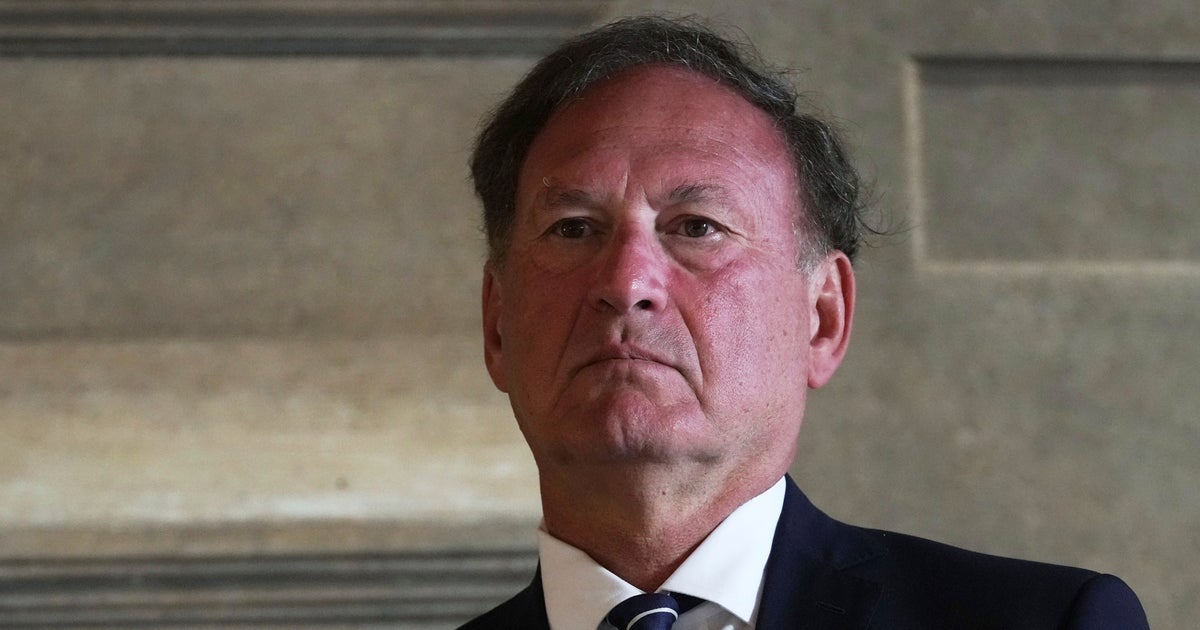
Experts also raised alarm bells about the court’s dismissal of race as a factor in the rolling back of asylum in the TPS case. In the majority opinion, Justice Samuel Alito flatly rejected claims that the Trump administration stripped Haitian and Syrian TPS holders of their protections because of racial animus, claims which cited racist statements from multiple members of the administration. (In a dissent from the liberal justices, Justice Elena Kagan made sure to quote the racist statements that Alito had omitted.)
Alito argued none of those remarks proved the decision to terminate TPS for the nations was racist, suggesting that it was simply unsavory rhetoric and saying “many Americans of all races” might acknowledge that countries like Haiti are “unquestionably difficult” places to live given rampant poverty and unrest.
“Political discourse by prominent public figures is increasingly couched in terms that would have scandalized the public just a short time ago,” Alito wrote.
But Kristen Clarke, general counsel for the NAACP, said Thursday that Alito’s reasoning “flies in the face of the 14th Amendment of the Constitution, which has been interpreted to prohibit legal discrimination based on race since the 19th century.
“At every turn, we see this administration undertaking policy motivated by a toxic combination of racism and xenophobia, intended to dehumanize, diminish, and erase Black people’s presence, our political power and our voice,” she said.
According to the Pew Research Center, there were 2.6 million asylum applications from unauthorized immigrants in 2025. The Migration Policy Institute noted last year that the majority of refugees coming to the United States in 2025 were from the Middle East and South Asia — about 34%. Latin America and the Caribbean account for 32% of refugees seeking to enter the U.S., with East Asia and Europe trailing at 10% and 2%, respectively. Most asylum seekers are fleeing nations that have been devastated by war, civil unrest, or persecution. As of March 2025, there were an estimated 1.3 million TPS holders across the nation, with the majority of nations represented being in Africa, South America, and the Middle East.
The high court majority’s outright rejection of racial animus claims is particularly galling, Gordon added, because it undermines the meaningful protections the Constitution lays out. Instead of the Constitution setting the legal standard, it’s now the conduct of the president that appears to set the standard.
“The Supreme Court is going to accept explicit racial slurs by the government because President Trump has degraded the level of our national discourse and so, what was once impermissible as a racial slur, is now just everyday things that people say,” Gordon said.