Whether near or far, fathers and grandfathers can have an indelible impact on our lives, careers and relationships. Historically, Armenian fathers have often been expected to be unwavering pillars of strength for their families. For some men, that expectation can make it difficult to be vulnerable, process trauma and build deeper relationships with their children. Today, a father’s capacity for unconditional love, pride in his heritage and willingness to be silly once in a while can leave a lasting impression on those around him.
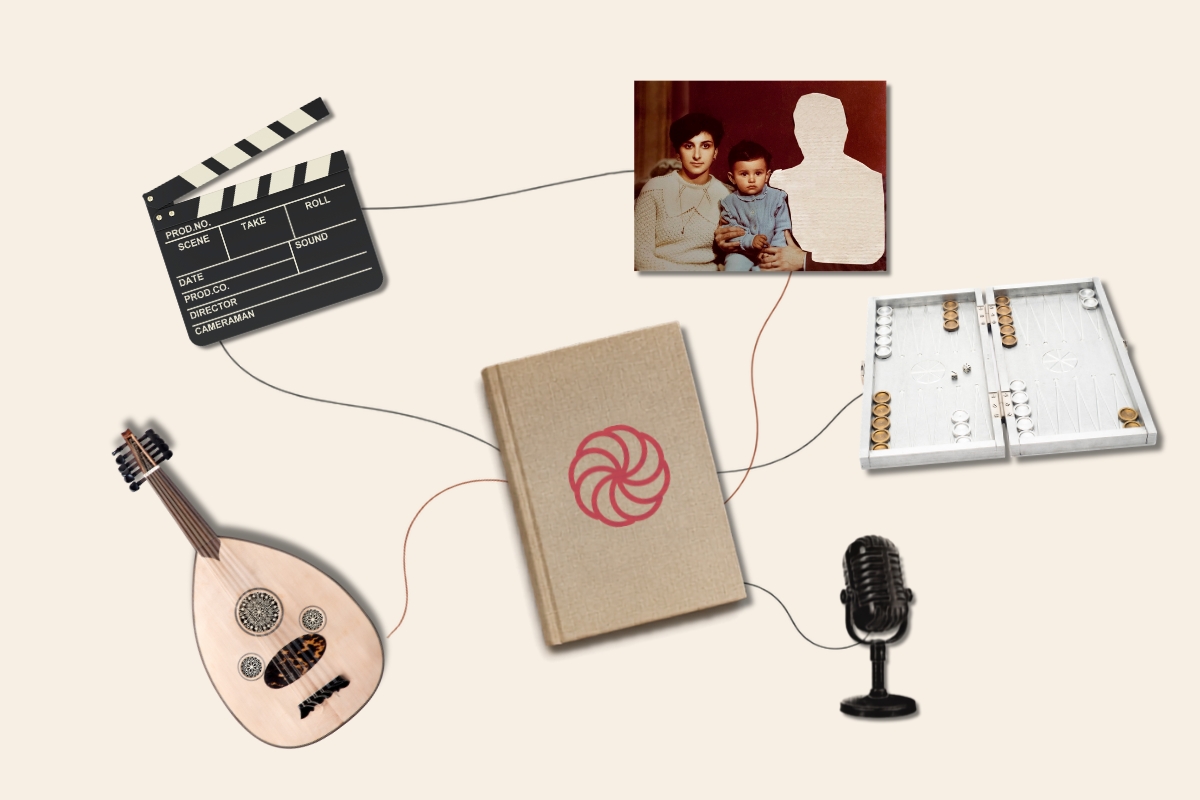
In honor of Father’s Day, I have curated a list of works across art forms – visual art, film, comedy and more – that honor the impact, celebrate the quirks, and explore the emotions of Armenian fathers and grandfathers.
Podcasts
Show art for “Country of Dust” podcast. (Show art by Nooneh Khoodaverdyan.)
“Daughter of the Crying Man” Episode of “Country of Dust” (2025)
Created by Nyree Abrahamian, Jeremy Dalmas and Gohar Khachatryan, “Country of Dust” is a narrative podcast that tells the stories of a changing Armenia.
The podcast has received critical acclaim, winning a 2024 Press Gazette Future of Media Award, with special attention paid to “The Last Tonir” episode.
In the episode “Daughter of the Crying Man,” Abrahamian recounts how a home video viewing in Toronto led to a trip to her father’s ancestral village of Musa Ler (Musa Dagh) and an emotional visit to the house her great-grandfather built. The story explores the impact of displacement, the meaning of belonging and her father’s relationship with his homeland.
The episode was later adapted into a video documentary that incorporates footage from the home video and the trip.
You can listen to “Daughter of the Crying Man” and all “Country of Dust” episodes on Apple Podcasts, Spotify, and YouTube. Follow “Country of Dust” on Instagram and Facebook.
Visual Art
“Antique Car,” a miniature sculpture by Abraham Megerdichian. (Image courtesy of Robert Megerdichian.)
“Abe’s Artwork” by Robert Megerdichian (2014-present)
For more than a decade, engineer and artist Robert Megerdichian has exhibited the art of his father Abraham in Massachusetts and beyond. Abraham Megerdichian was a machinist who used his skills to craft detailed miniature sculptures from scrap metal.
Robert is dedicated to earning his father recognition as the true artist he was. This mission has even led him, at 69 years old, to earn a master’s degree in nonprofit management to better understand the world of art museums and curation.
Artworks by both father and son are currently on display at Methuen Community Studios in Methuen, Massachusetts.
You can learn more about Abraham Megerdichian’s art and upcoming exhibitions on the “Abe’s Artwork” website.
“The Cut Out” by Diana Markosian, from her “Father” series. (Image courtesy of Diana Markosian.)
“Father” by Diana Markosian (2014-2024)
Diana Markosian is an internationally renowned multidisciplinary artist. As a child, her family immigrated to the U.S. without her father.
Through photos, documents and text, “Father” explores Markosian’s journey to find and reconnect with her father after so many years apart.
Markosian released the deeply personal work as a photobook. An exhibition is currently making its U.S. debut at the Armenian Museum of America in Watertown, Massachusetts.
You can purchase the “Father” photobook online. The exhibition will be on view through Sept. 13, 2026, at the Armenian Museum of America. Follow Markosian on Instagram.
Literature
“Loving Father, Bitter Son” by Asbed Pogarian (2025)
Author Asbed Pogarian is a writer and utility consultant originally from Addis Ababa, Ethiopia. In 2023, he was selected as an International Armenian Literary Alliance (IALA) mentee.
In “Loving Father, Bitter Son,” Pogarian highlights the Armenian community in Ethiopia, drawing on his own experience. The historical fiction follows an Armenian family as they navigate the Ethiopian Revolution in 1974 and later settle in California. At the center of the story is the father who stayed behind, touching on parental sacrifice, sibling bonds and cultural expectations.
You can purchase “Loving Father, Bitter Son” on Amazon.
“In the Name of the Father and the Son” by Vahe Berberian (1999)
“In the Name of the Father and the Son” is the second novel by famed comedian, writer and artist Vahe Berberian. Originally published in 1999 in Armenian, it was later translated into Turkish (2008), English (2015) and French (2021).
The novel is set in 1980s Hollywood, where an Armenian man and his father are at odds with each other and the changing world around them. A major theme in the story is tension: between father and son, Armenian values and American values, older and younger generations, and living and grieving.
You can purchase “In the Name of the Father and the Son” online. Follow Berberian on Instagram and Facebook.
“Shifting the Sun” by Diana Der Hovanessian (1994)
Diana Der Hovanessian was an award-winning poet, professor and former president of the New England Poetry Club, whose body of work also included translations of Armenian-language literature.
From an early age, Der Hovanessian’s family fostered a love of poetry, as her parents would recite poetry in English and Armenian around the house.
Her poem “Shifting the Sun” was first published in her 1994 book of poetry “Selected Poems,” but gained wider popularity after it was shared by the radio program “The Writer’s Almanac with Garrison Keillor” in 1997.
The poem compares how different cultures around the world comfort someone when their father dies, ending each stanza with the Armenian expression. It reflects on how Armenians view such loss as life-changing, thus shifting your sun forever.
You can read “Shifting the Sun” in English and Armenian, and purchase “Selected Poems” online.
Book cover of Asbed Pogarian’s “Loving Father, Bitter Son.” (Image courtesy of Asbed Pogarian.)
Book cover of Vahe Berberian’s “In the Name of the Father and the Son.” (Image courtesy of Vahe Berberian.)
Book cover of Diana Der Hovanessian’s “Selected Poems.” (Image courtesy of Sheep Meadow Press.)
Comedy
“Armenian Dad” meme by Fun with Michael. (Image courtesy of Fun with Michael.)
“Armenian Dad” character by Fun with Michael (2026-present)
Kindergartener Michael has taken the Armenian community by storm with his comedic skits, impressions and memes. Posting to social accounts managed by his parents, Michael creates relatable and satirical content about Armenian families.
His “Armenian Dad” character is a short-tempered man who demands respect and sometimes has trouble communicating. Michael pokes fun at the endearing quirks of Armenian dads, illustrating how specific behaviors can resonate universally.
Follow Fun with Michael on Instagram, TikTok, and YouTube.
“What Happens When a Grandpa Takes Over a Job Interview” by Hayk Manukyan (2010)
Still from Hayk Manukyan’s cartoon “What Happens When a Grandpa Takes Over a Job Interview.” (Image courtesy of Hayk Manukyan.)
Hayk Manukyan is the animator behind the iconic “Harut” cartoons and their contemporary offshoot “Abo and Karo.” Manukyan has used his talents to share the accents, folk tales and dances of Armenian culture since the early days of YouTube.
“What Happens When a Grandpa Takes Over a Job Interview” depicts Harut during a job interview interrupted by his grandpa. The short cartoon is both hilarious and painfully accurate for those who have had to translate conversations, documents or social customs for their immigrant parents or grandparents. Though frustrating to Harut, his grandpa’s well-meaning but unnecessary actions show just how much he cares.
You can watch “What Happens When a Grandpa Takes Over a Job Interview” and other Harut cartoons on YouTube. Follow Hayk Manukyan on YouTube, Instagram and TikTok.
Music
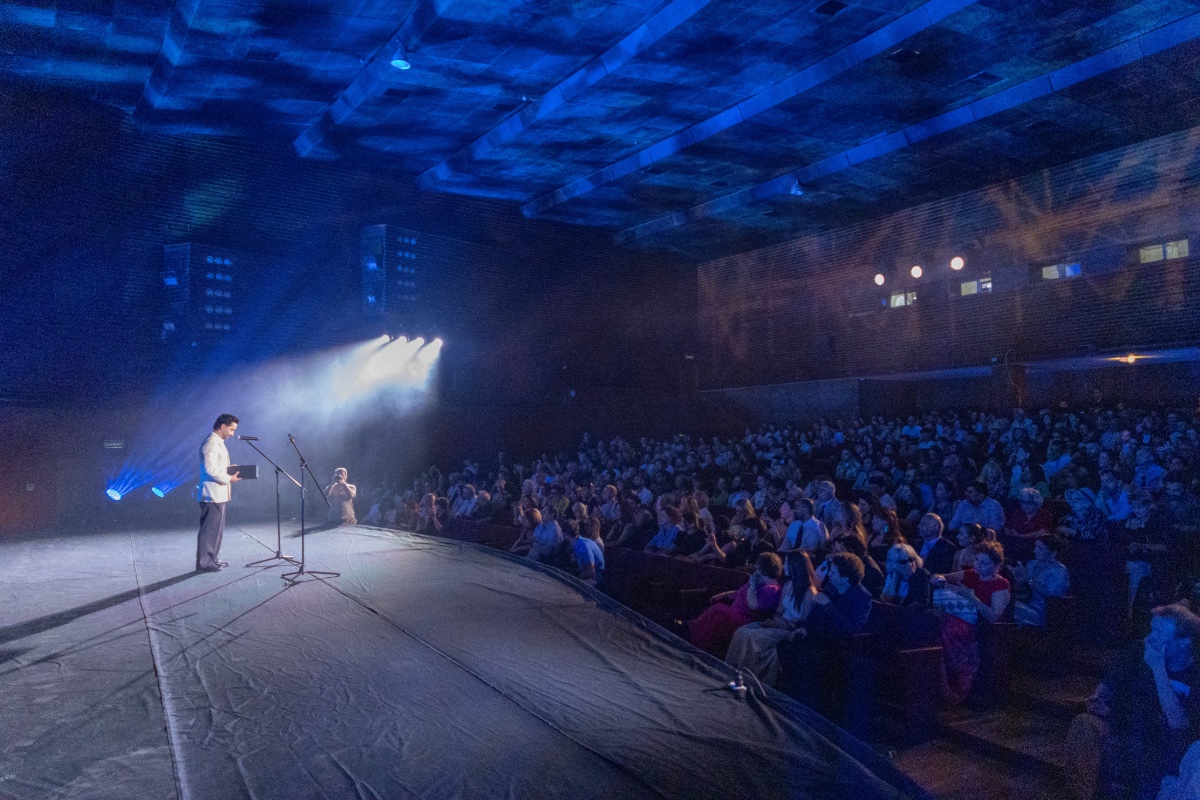
Stills from the music video for Arman Asatryan’s “Papa Jan,” featuring Asatryan and his father Tigran Asatryan. (Music video directed by Narbeh Khodaverdi. Images courtesy of Asatryan Music Inc.)
“Papa Jan” by Arman Asatryan (2021)
As the son of Tigran Asatryan and grandson of Aram Asatryan, music and family are intertwined for singer Arman Asatryan.
Dedicated to all fathers, his song “Papa Jan” expresses just how much his own father has impacted his life and career. He shares that Tigran has been a supportive guide and friend all his life. Revealing the personal nature of the song, the music video shows Asatryan singing to his father in an otherwise empty theater.
You can listen to “Papa Jan” on YouTube, Spotify, and Apple Music. Follow Asatryan on Instagram.
Album cover for Onnik Dinkjian’s “The Many Sides of Onnik.” (Image courtesy of Ara Dinkjian.)
“The Many Sides of Onnik” by Onnik Dinkjian (2009)
Onnik Dinkjian’s album “The Many Sides of Onnik” not only showcases his rich and warm voice, but also heavily features his son, Ara Dinkjian, on oud.
From high-energy kef songs to sentimental folk music, the album demonstrates their wide-ranging musical virtuosity.
Together and independently, Ara and Onnik have become hallmarks of Armenian music through the decades. Their musical story is also captured in the 2013 documentary “Garod,” which follows them on a trip to their ancestral homeland of Dikranagert/Diyarbakir.
You can listen to “The Many Sides of Onnik” on YouTube, Spotify and Apple Music. Follow Ara Dinkjian on Instagram.
Film
Movie poster for Sev Ohanian’s “My Big Fat Armenian Family.” (Image courtesy of Sev Ohanian.)
“My Big Fat Armenian Family” Directed by Sev Ohanian (2008)
Before writing “Searching,” partnering with Ryan Coogler, or becoming an Oscar-nominated producer, a young Sev Ohanian set out to make a movie with his friends.
“My Big Fat Armenian Family” is a heartfelt comedy that Ohanian wrote, directed and edited with virtually no budget, as he details in his TEDxLittle Armenia talk.
While the film is clearly about an Armenian family, the central conflict exists between the father, Robert and the rest of the family, as their conflicting wants and needs come to a head while on vacation.
The story resonated with so many within the Armenian community that it became a cult classic and inspired his illustrious career.
You can watch “My Big Fat Armenian Family” on YouTube. Follow Ohanian on Instagram and Facebook.