by J.C. Hallman, Oklahoma Watch
June 14, 2026
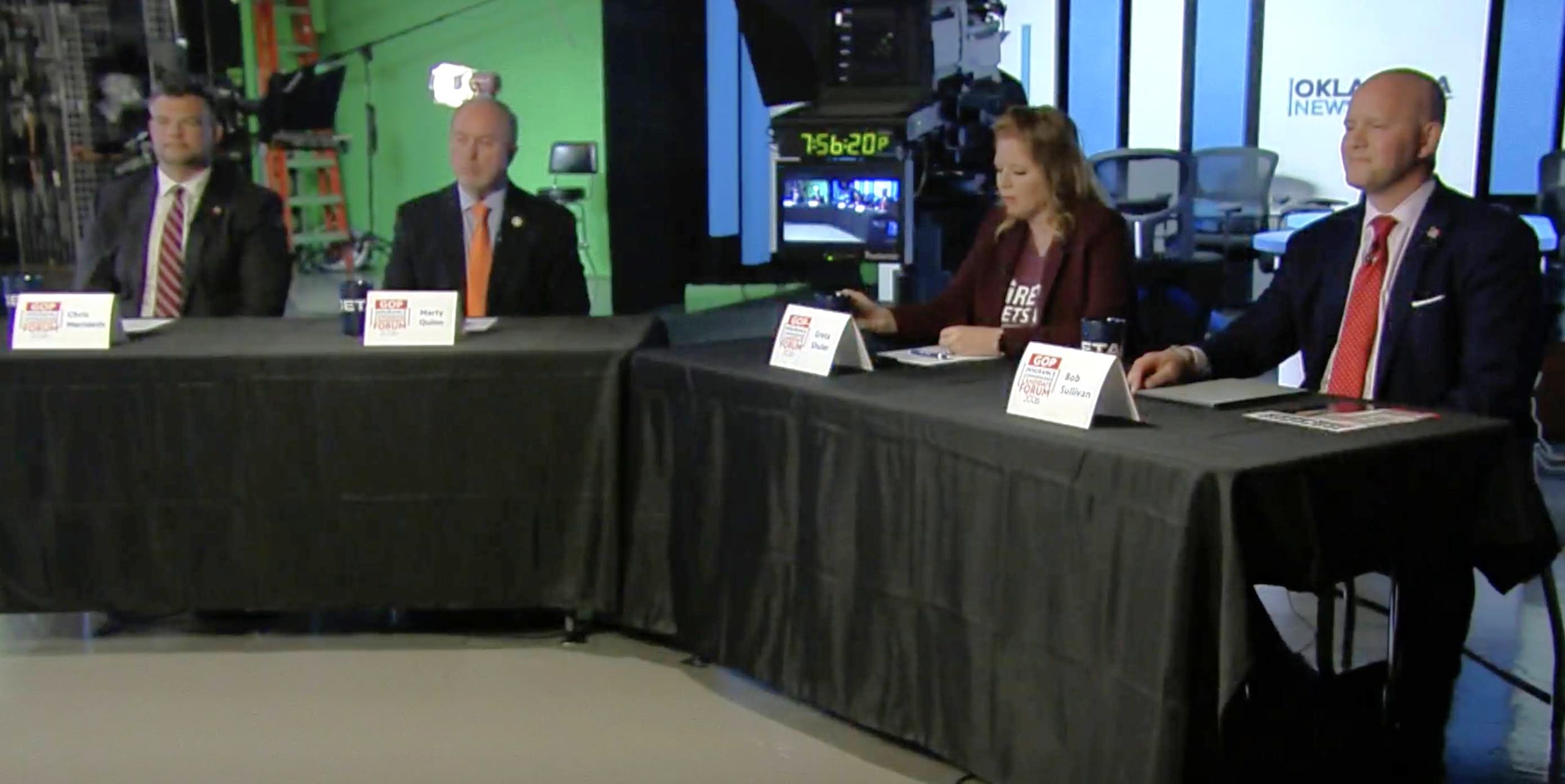
Four Republican candidates for insurance commissioner appearing Tuesday on an OETA forum fielded a question on whether insurance executives found to have acted in bad faith should be subjected to potential incarceration.
The answers provided distinctions between the candidates as they vie to lead a department that commands substantial authority over Oklahomans’ finances, but is widely regarded as inscrutable — which is to say, boring.
Councilperson Greta Shuler of Shawnee, an insurance sales professional who once lost her own home to an Oklahoma tornado, spoke of having found evidence of insurance fraud across the state and did not hesitate to assert that financial penalties for insurance company bad actors may not be enough.
“There’s a point at which monetary value is not painful enough,” Shuler said. “Depending on what type of criminal activity has taken place, people should be held accountable for their behavior. If money is not an object to them, fining them doesn’t do any good.”
Former legislator and chairman of the Senate Insurance Committee Marty Quinn, from Owasso, disagreed sharply and took issue with the tone and suggestion of the question.
“Jail time is not the answer for everything,” Quinn said. “I think jail time is just a way to get us on TV saying that we need to send people to jail.”
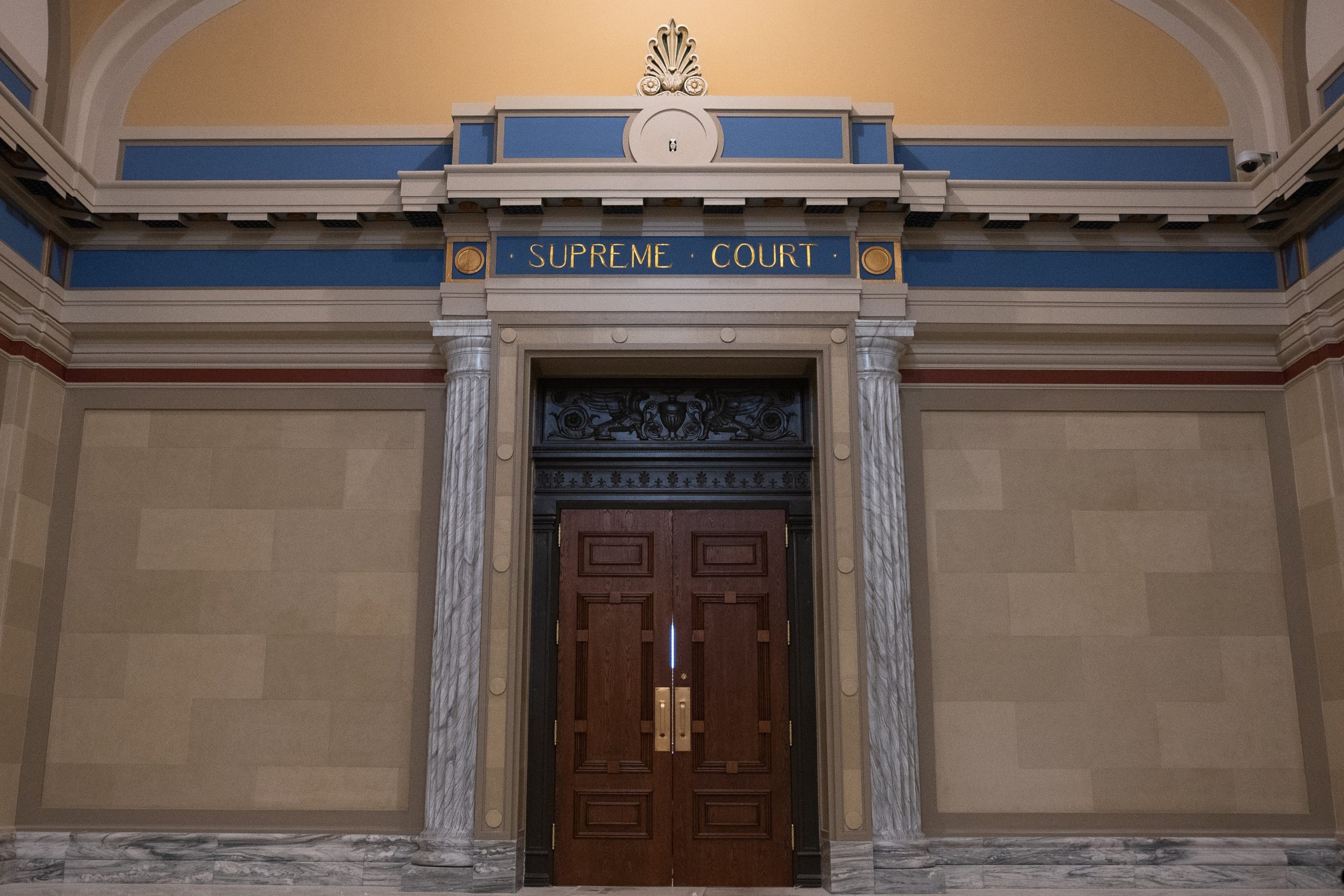
The Tuesday vote for commissioner comes as Oklahoma policyholders await a decision from the Oklahoma Supreme Court on whether Attorney General Gentner Drummond, himself a candidate for governor in Tuesday’s primaries, will be permitted to intervene in Hursh v. State Farm, the case at the center of Oklahoma’s ongoing State Farm saga.
Invoking RICO laws more typically associated with organized crime, Drummond has said that if the Supreme Court rejects his intervention, he will file another lawsuit. On April 27, Drummond refused to rule out the possibility of criminal prosecution.
“I think that the RICO statutes permit the attorney general to go civil and/or criminal,” Drummond said. “Clearly I see RICO in a civil vein, but if we go deeper in that process and it becomes evident that there’s criminal actions, then of course, we would take it in that direction.”
“Maybe We Have to Send Them to Jail”
The question posed Tuesday on jailing executives stemmed from a 2003 U.S. Supreme Court case known as State Farm v. Campbell, in which State Farm sought relief from a $145 million punitive damages jury award in a case from Utah.
State Farm won the case in a 6-3 decision, and today State Farm v. Campbell stands as an important precedent capping punitive damages at approximately ten times compensatory damages. Compensatory damages offer compensation for an individual’s loss and pain and suffering; punitive damages are intended as a further punishment to the entity that caused the loss, on the assumption that a greater financial penalty will result in modified behavior.
Notably, the three dissenting justices in State Farm v. Campbell included conservative firebrand Antonin Scalia and liberal icon Ruth Bader Ginsberg, both now deceased. The third dissenting justice was Clarence Thomas, who continues to serve on the Court.
During oral argument in the case, Justice Scalia suggested that fines or penalties assessed against a wealthy bad actor, such as State Farm, may never result in systemic change. Scalia offered an alternative.
“No amount of money will suffice; maybe we have to send them to jail,” Scalia said. “Whatever it takes to stop them. I mean, what if nothing will stop them but sending them to jail?”
On Tuesday, the candidates were asked whether they agreed with Scalia’s alternative.
“That Seems Pretty Common Sense to Me”
Candidate Bob Sullivan, an independent agent from Inola, couched his support of Scalia’s suggestion in light of a concern expressed by several candidates: large money judgments assessed against insurance companies may be levied back against consumers down the line.
Sullivan saw potential incarceration as a fair solution.
“That’s probably one of the fairest ways to solve an issue like this, where there is widespread abuse,” Sullivan said. “If you really hold their feet to the fire and you’re considering jail time, that’s cost-neutral to policyholders.”
Edmond-based candidate Chris Merideth, who touts claims organization leadership and is a registered lobbyist for Farmers Insurance, which has lost several multimillion-dollar bad-faith cases in Oklahoma, seconded the view that it is policyholders who ultimately pay for lawsuits. Merideth offered a solution similar to Sullivan’s.
“If a person has broken a criminal law in Oklahoma, [jail] should absolutely be an option,” Merideth said. “We need to look at things like licenses and doing business in the state, and potential criminal penalties if criminal law has been broken. That seems pretty common sense to me.”
Democrat Craig MacIntyre, the only candidate running with actuarial experience — recent changes to insurance law call for actuarial scrutiny of rate increases — was not at the Tuesday forum, but spoke with OETA the following day. MacIntyre criticized the result of State Farm v. Campbell.
“I think the decision to cap the damages was a mistake,” MacIntyre said. “I think punitive damages are by definition to punish, and you only punish if it hurts. There needs to be something else, so the idea of throwing egregious offenders in prison doesn’t bother me.”
MacIntyre expressed a preference for the auto violations system in Finland: penalties as a percentage of net worth.
“When penalties have no true negative impact, behaviors don’t change,” MacIntyre said.
Quinn, who repeatedly highlighted his legislative experience, repeated his view that Scalia’s suggestion that jail time for bad-faith insurers was a ploy for a television audience.
“I think there are a lot of other options that ought to be viewed rather than us getting on TV in a forum and acting like we’re in favor of sending people to jail,” Quinn said.
In addition, Quinn reiterated the belief that insureds pay the price for expensive litigation.
“The first check is written by the company, and the last check is written by everyone here,” Quinn said. “That system has not worked.”
Challenging Excessive Rates
The recent passage of House Bill 3781, which will take effect July 1, 2027, will make it possible for the next insurance commissioner to challenge excessive rates.
After Tuesday’s forum, Oklahoma Watch contacted all the candidates with a follow-up question, based on the belief that money judgments won by policyholders are levied against other policyholders.
The question addressed whether, now that the commissioner can challenge rates, a rate hike by an insurer that has been penalized with significant punitive damages is the kind of premium increase the commissioner will be empowered to stop.
Only Sullivan responded, with insistence that data presented by insurance companies for rate-making purposes should be limited to information related to claims.
“Absolutely,” Sullivan said. “[An insurer’s] expenses related to punitive damages, fines, and fees resulting from bad-faith judgments should not be borne by policyholders.”
This <a target=”_blank” href=”https://oklahomawatch.org/2026/06/14/candidates-weigh-hypothetical-jail-time-for-insurance-executives/”>article</a> first appeared on <a target=”_blank” href=”https://oklahomawatch.org”>Oklahoma Watch</a> and is republished here under a <a target=”_blank” href=”https://creativecommons.org/licenses/by-nd/4.0/”>Creative Commons Attribution-NoDerivatives 4.0 International License</a>.<img src=”https://i0.wp.com/oklahomawatch.org/wp-content/uploads/2019/10/okwatch-icon.png?fit=150%2C150&ssl=1″ style=”width:1em;height:1em;margin-left:10px;”>
<img id=”republication-tracker-tool-source” src=”https://oklahomawatch.org/?republication-pixel=true&post=760045&ga4=G-6G6K9FYSH8″ style=”width:1px;height:1px;”><script> PARSELY = { autotrack: false, onload: function() { PARSELY.beacon.trackPageView({ url: “https://oklahomawatch.org/2026/06/14/candidates-weigh-hypothetical-jail-time-for-insurance-executives/”, urlref: window.location.href }); } } </script> <script id=”parsely-cfg” src=”//cdn.parsely.com/keys/oklahomawatch.org/p.js”></script>