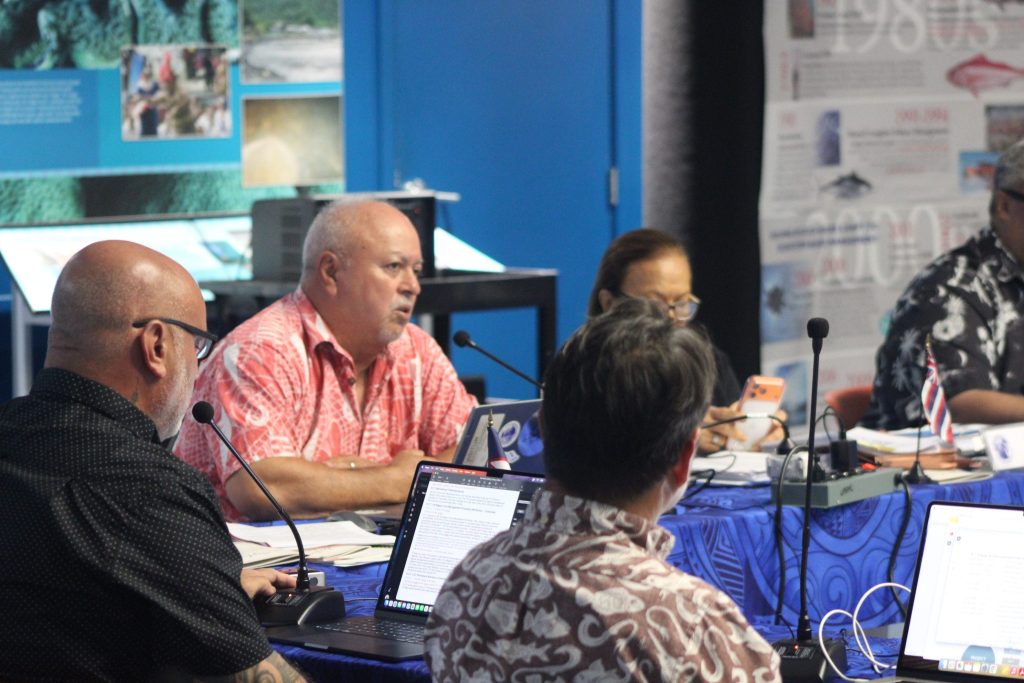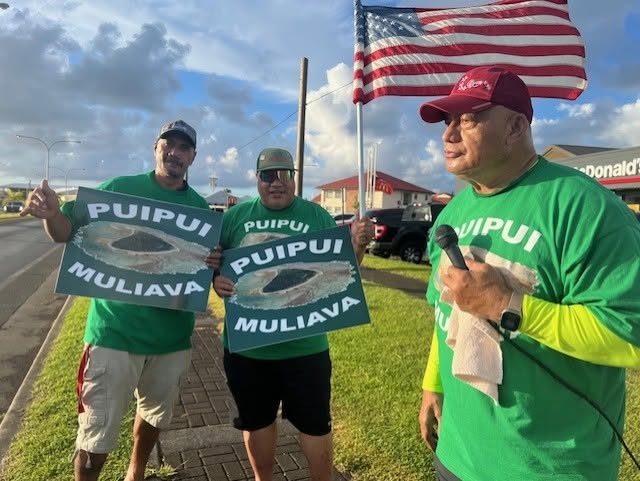
The Chairman of Puipui Measina, a local community group that advocates for the protection of American Samoa’s natural resources, culture and environment, Motusa Tuileama Nua, has expressed his disappointment with President Trump’s move to restore commercial fishing near Rose Atoll.
He said Puipui Measina is meeting soon to discuss what action to take in response to the President’s move and this may include legal action.
The proclamation that President Trump signed Thursday would allow the local long line fleet to fish commercially in waters between 12 and 50 nautical miles surrounding Rose Atoll, consistent with applicable fishery management plans and implementing regulations.
The order also restores commercial fishing in the Mariana Trench Marine National Monument; and the Papahānaumokuākea Marine National Monument. Only United States flagged vessels shall be allowed to fish commercially within the boundaries of these monuments, except that permits may be issued to foreign flagged vessels to transport fish harvested by United States fishermen.
Nothing in this proclamation alters existing restrictions applicable within 50 nautical miles of the center geographical positions of certain islands and reefs in the Northwestern Hawaiian Islands or within 12 nautical miles of Rose Atoll.
Motusa said Puipui Measina maintains its position that Muliava should be left alone and no commercial fishing should be allowed in its waters. He said without a Coast Guard presence, it would be very difficult to monitor who is fishing near the island. “We will continue to fight to protect Muliava”, Motusa declared and noted that there are several off island organizations who are against the overreach of the federal government on local resources that belong to the native people of the islands.
The Director of Marine and Wildlife Resources Nathan Ilaoa meanwhile says the president’s proclamation is “big news for American Samoa and we welcome it”.
“The marine national monuments in our region have restricted commercial fishing since they were established,” he said. “That has been a real constraint for our tuna longline fleet operating inside our Exclusive Economic Zone, and it has blocked US flagged purse seine vessels from fishing those waters, vessels that deliver tuna directly to our cannery here in Pago Pago”.
He emphasized the cannery is the foundation of our economy, the largest private employer in the territory. “As the largest purchaser of fuel and electricity and accounting for more than 99 percent of outgoing containers, the cannery effectively subsidizes an estimated 40% of fuel, electricity and shipping costs for every resident of American Samoa, said Ilaoa. “When fishing is impacted the impact doesn’t stop at the cannery it reaches into every household on this island”.