The recent remarks by John Mearsheimer, the prominent international relations theorist and professor of political science at the University of Chicago, about the consequences of the US-Israel confrontation with Iran, reflect a reality that is gradually being accepted even in Western circles. Mearsheimer has explicitly stated that the assassination of Martyr Major General Qasem Soleimani was a major mistake and that Iran may emerge from this conflict in a stronger economic and geopolitical position. These remarks are significant because their speaker is not an analyst close to Iran, but one of the most recognized theorists of the realist school in America; a figure who has criticized Washington’s foreign policy in the Middle East for years.
Over the past two decades, the main strategy of the United States and the Zionist regime towards Iran has been based on increasing pressure, sanctions, military threats, and ultimately weakening Tehran’s regional position. The prevailing assumption in Washington and Tel Aviv was that escalating pressures would eventually force the Islamic Republic of Iran to retreat. The assassination of Major General Soleimani can also be assessed within this framework; an action whose planners believed could cause the Axis of Resistance to collapse and severely reduce Iran’s regional influence.
But the passage of time showed how far this calculation was from the realities of the region. Major General Soleimani was not merely a military commander, but a symbol of a thought and a vast network of strategic relations in the region. The Americans assumed that by physically eliminating him they could destroy this structure, but the result was completely the opposite. The Axis of Resistance not only did not collapse, but in many fronts it became more cohesive and cooperation among its various actors increased.
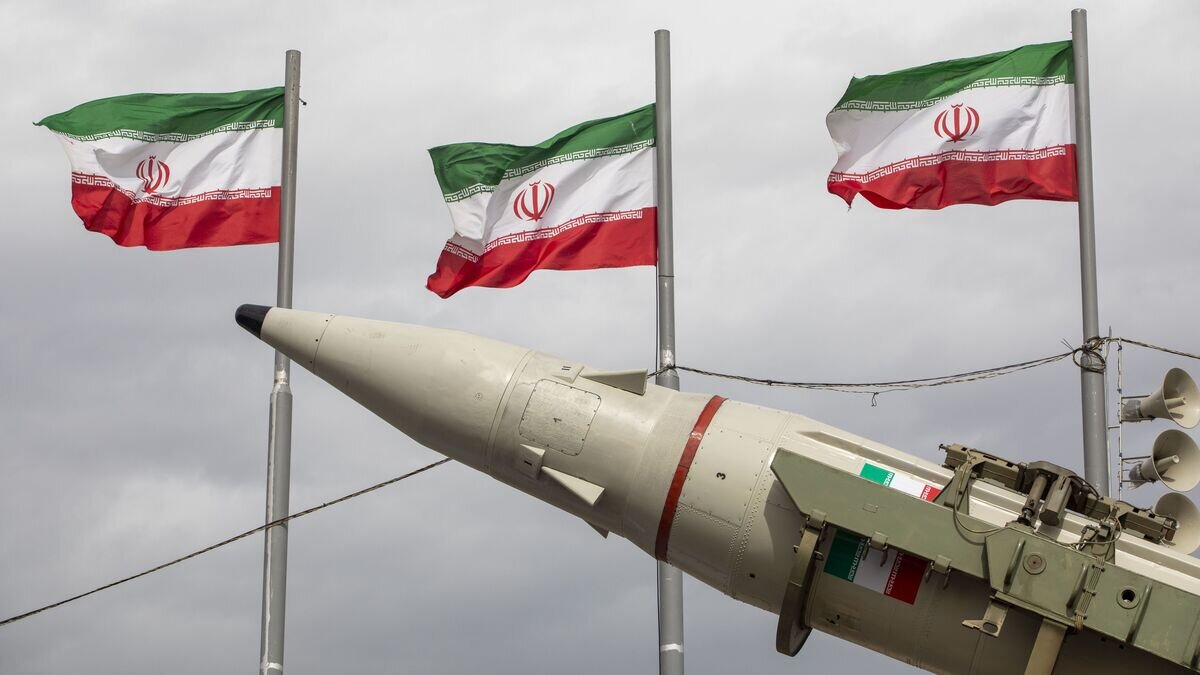
Today, even some Western media and research centers acknowledge that the maximum pressure policy not only did not lead to a change in Iran’s behavior, but pushed Tehran towards developing new tools of power. In recent years, Iran has been able to elevate its defense, missile, and drone capabilities to a level that has become one of the most important components of deterrence in the region. This has made any military action against Iran entail heavy and unpredictable costs.
From a geopolitical perspective, Iran today occupies a position that cannot be ignored. One of the most important points that Mearsheimer has emphasized is Iran’s role in the Strait of Hormuz. This strategic waterway remains one of the world’s most important energy transit arteries, and a significant portion of the world’s exported oil and gas passes through it. Any crisis in this area could affect global energy markets and pose challenges to the world’s major economies.
This reality has meant that Iran, even under sanctions, possesses a powerful geopolitical lever. Unlike many countries that are pushed to the sidelines under foreign pressure, Iran’s geographical location precludes its complete removal from regional and global equations. For this reason, world powers are compelled to take Tehran’s role into account in their calculations.
In addition to its geographical location, economic developments could also turn in Iran’s favor in the future. The experience of past years has shown that the maximum sanctions policy has failed to achieve its stated objectives. Iran’s political structure has not collapsed, nor have its strategic capabilities been destroyed. On the contrary, many countries around the world have gradually become skeptical about the effectiveness of these policies.
Today, the world is transitioning from a unipolar order towards a multipolar structure. Powers such as China, Russia, India, and a collection of emerging countries are playing an increasing role in the global economy. Under these circumstances, Iran’s capacity for cooperation with these actors has grown. Membership in new regional and international arrangements, expanding economic cooperation with the East, and efforts to reduce dependence on the Western-dominated financial system are part of a process that can mitigate the effects of sanctions.
Another miscalculation by the United States and Israel was their incorrect understanding of the concept of power in the region. They imagined that power is solely confined to military equipment and destructive capability. But recent developments have shown that political will, social mobilization capacity, domestic legitimacy, and the ability to create regional coalitions also play a decisive role in power equations.
Iran has repeatedly shown over the years that it is able to adapt to new conditions. From the imposed war to extensive economic sanctions and political pressures, Tehran has managed to create mechanisms for crisis management and maintaining stability. This very characteristic has meant that many of the projects designed to weaken Iran have not achieved the results expected by their designers.
In contrast, the United States and the Zionist regime are facing a set of growing challenges. The heavy costs of war, the erosion of deterrence power, growing domestic criticism, and declining international credibility are among the consequences that are more visible today than before. Even within Israel, media and security experts speak of strategic failure and a decrease in deterrence power.
The important point is that power in international relations is a relative concept. It is possible that all parties to a conflict incur costs, but the main question is which side has been able to achieve its strategic objectives. If the goal of the United States and Israel was to contain Iran, weaken its regional influence, and force Tehran to retreat, the available evidence shows that these objectives have not been achieved. Iran remains one of the main players in the region, has preserved its geopolitical influence, and has managed to develop its deterrence tools.
This is why Mearsheimer’s analysis gains particular importance. He looks at developments from the perspective of a realist theorist, and his conclusion is based on the realities of power on the ground, not political wishes. When such a figure speaks of the mistake of assassinating Major General Soleimani and the likelihood of Iran’s position being strengthened, he is in fact pointing to a fundamental reality; that the strategy of pressure and confrontation has not only not contained Iran, but in many cases has led to an increase in its capabilities and strategic standing.
In the end, it can be said that the most important lesson of recent years for America and Israel is that the equations of West Asia cannot be changed solely by military means. Iran is a country with extensive geopolitical, historical, and strategic capacities, and its removal from regional equations is impossible. Therefore, as Mearsheimer emphasizes, there is a very serious possibility that Iran will emerge from these confrontations not weaker, but with a more solid and influential position in the regional and international arenas.
MNA