The Hilala Zirin Women’s Cultural Movement opened a two-day arts festival today at the Mohamed Sheikho Center for Culture and Art, rallying public support for the Women’s Protection Units (YPJ) under the banner “YPJ Represents Us.” The event seeks to amplify calls for the all-female force to be formally recognized as a legitimate institution within Syria’s future constitutional framework.
The opening ceremony drew a broad cross-section of the community, including local residents, YPJ fighters, and representatives from women’s organizations and civic groups.
The festival began with a keynote address tracing the YPJ’s evolution from a grassroots defense force into a symbol of women’s empowerment in northern Syria. The speaker highlighted the unit’s decisive role in resisting ISIS—an organization that systematically targeted women—and emphasized how the YPJ has since become an engine for women’s self-reliance, political participation, and gender equality.
The address also framed the cultural initiative as a response to political actors who refuse to acknowledge the YPJ’s legitimacy, reiterating the community’s demand for the force’s constitutional recognition.
Cultural Performances and Artistic Testimony
The first day featured two theatrical productions by the Darsi Theater Troupe, a Hilala Zirin affiliate based in Hassakeh:
- Pêt û Ar (Spark and Fire)
• Tola Keziyan (Vengeance of the Braids)
Both plays examined the historical subjugation of women and their ongoing struggle for autonomy, portraying the rise of the YPJ as a turning point that enabled women to reclaim agency over their lives and futures.
Audience members voiced strong solidarity with the fighters, praising the YPJ for safeguarding the region and defending women’s rights. Many rejected political efforts to sideline the force, pledging continued support through cultural and civic engagement.
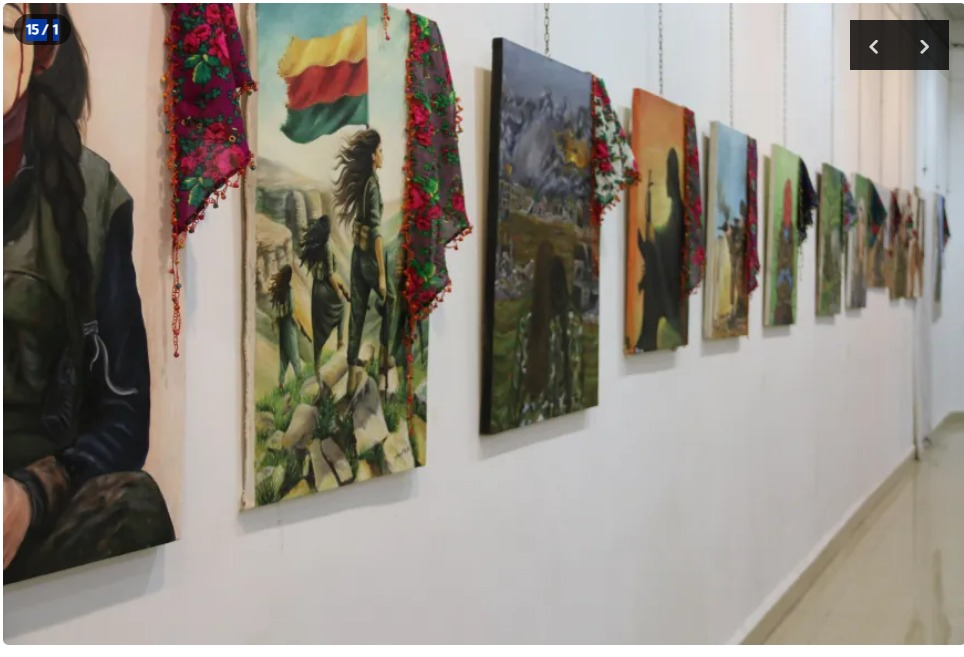
The day concluded with the opening of an art exhibition inaugurated jointly by mothers of fallen fighters and active YPJ members. The gallery showcases paintings depicting daily life within the units, as well as scenes from the frontlines.
This article was translated and edited by The Syrian Observer. The Syrian Observer has not verified the content of this story. Responsibility for the information and views set out in this article lies entirely with the author.