Your support helps us to tell the story
From reproductive rights to climate change to Big Tech, The Independent is on the ground when the story is developing. Whether it’s investigating the financials of Elon Musk’s pro-Trump PAC or producing our latest documentary, ‘The A Word’, which shines a light on the American women fighting for reproductive rights, we know how important it is to parse out the facts from the messaging.
At such a critical moment in US history, we need reporters on the ground. Your donation allows us to keep sending journalists to speak to both sides of the story.
The Independent is trusted by Americans across the entire political spectrum. And unlike many other quality news outlets, we choose not to lock Americans out of our reporting and analysis with paywalls. We believe quality journalism should be available to everyone, paid for by those who can afford it.
Your support makes all the difference.Read more
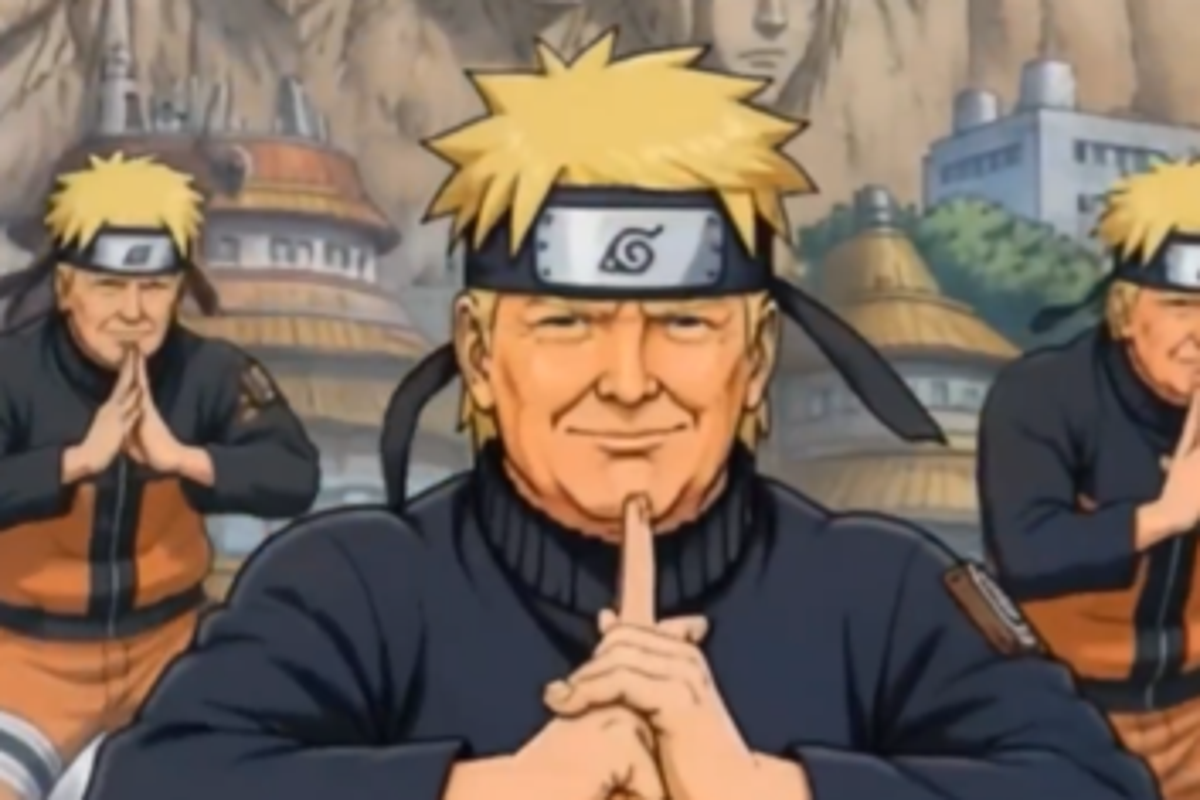
More than 23,000 people have signed a petition in Japan urging Donald Trump and the White House to stop using manga and anime imagery in political social media posts, after the US president shared a video depicting himself as Naruto Uzumaki, the hero of one of Japan’s best-known franchises.Although fans first launched the campaign in March, it gained fresh momentum this week after Trump posted a Naruto-themed video on Truth Social, leading organisers to reopen the petition and step up efforts to bring their concerns to rights holders and Japanese officials.
The petition, titled Protect Japanese Manga, had 23,524 signatures at the time of writing.
Trump shared the post in question on Tuesday, depicting himself as Naruto Uzumaki, the protagonist of Masashi Kishimoto’s Naruto series. First published in 1999, the story follows a young ninja shunned by his village because a powerful fox spirit is sealed inside him, as he struggles for acceptance and pursues his dream of becoming its leader.
The manga spawned a long-running anime adaptation that aired for more than 700 episodes across two series from 2002 to 2017, as well as multiple feature films, helping turn Naruto into one of Japan’s most internationally recognised entertainment franchises.
More than 23,000 people have signed a petition in Japan urging Donald Trump and the White House to stop using manga and anime imagery in political social media posts, after the US president shared a video depicting himself as Naruto Uzumaki (Donald Trump/Truth Social)
The image was part of an AI-generated music video for a song called Thank You, President Trump, sung by a Republican congressional candidate from New York named Anthony Constantino. The video goes on to show the president in a series of larger-than-life scenes: riding a camel and a lion, standing before the Leaning Tower of Pisa, and planting an American flag on the moon.
“We are fans who deeply cherish Japanese manga and anime works,” the petition read.
“For many years, these works have inspired audiences around the world by conveying values such as courage, friendship, and perseverance. Because of this, many fans feel concerned when images from these works appear to be used in political or military contexts that may differ from the intentions of the original creators or rights holders,” it continued.
Organisers said they spent months pressing Japanese authorities to take notice of their concerns, and received a response that told them “official action is possible if the rights holders wish to do so” after they approached several members of parliament in March.
The petition was also submitted to Japan’s cabinet office, which was then shared with the foreign ministry and agency for cultural affairs. The foreign ministry later raised the White House’s use of Yu-Gi-Oh! and Nintendo imagery with the US embassy in Japan.
The campaign’s organiser, Nana Suzuki, a 34-year-old anime and manga fan from Kanagawa prefecture, told the BBC: “Kazuki Takahashi, the creator of Yu-Gi-Oh!, passed away after attempting to rescue someone in the ocean. It deeply saddened me that his noble spirit, someone who tried to save others and the message of his work, was used in a military context, and that he is no longer alive to speak up himself.”
First published in 1996, Yu-Gi-Oh! follows a teenager who shares his body with an ancient spirit and takes on opponents through increasingly high-stakes games. The franchise later expanded into multiple anime series and films, while its trading card game has sold more than 35 billion cards worldwide, making it the world’s best-selling trading card game.
File photo; The campaign said using the creative works that aim to convey ‘courage, friendship, and perseverance’ in a ‘military context’ has caused concerns among anime and manga fans (AFP/Getty)
Suzuki said she wanted to create a space where people who shared those concerns could express them and demonstrate support for Japanese creators and their work.
After the White House used Yu-Gi-Oh! footage in March, the franchise’s official anime account said: “The original creators and anime staff were not involved in any way, and no permission was given for the use of the intellectual property in question.”
Pokémon Company International likewise distanced itself from imagery used in another White House post. “We were not involved in its creation or distribution. “Our mission is to bring the world together, and that mission is not affiliated with any political viewpoint or agenda,” spokesperson Sravanthi Dev told the BBC.
A spokesperson for Shueisha, the publisher of the original Naruto manga, told The Guardian that the copyright for the anime images used in Trump’s post belonged to the production committee responsible for the animated works and that they believed Kishimoto was not commenting on the matter.
The Independent has reached out to the White House for comment.