Author: Wol Mapal | Published: 14 hours ago
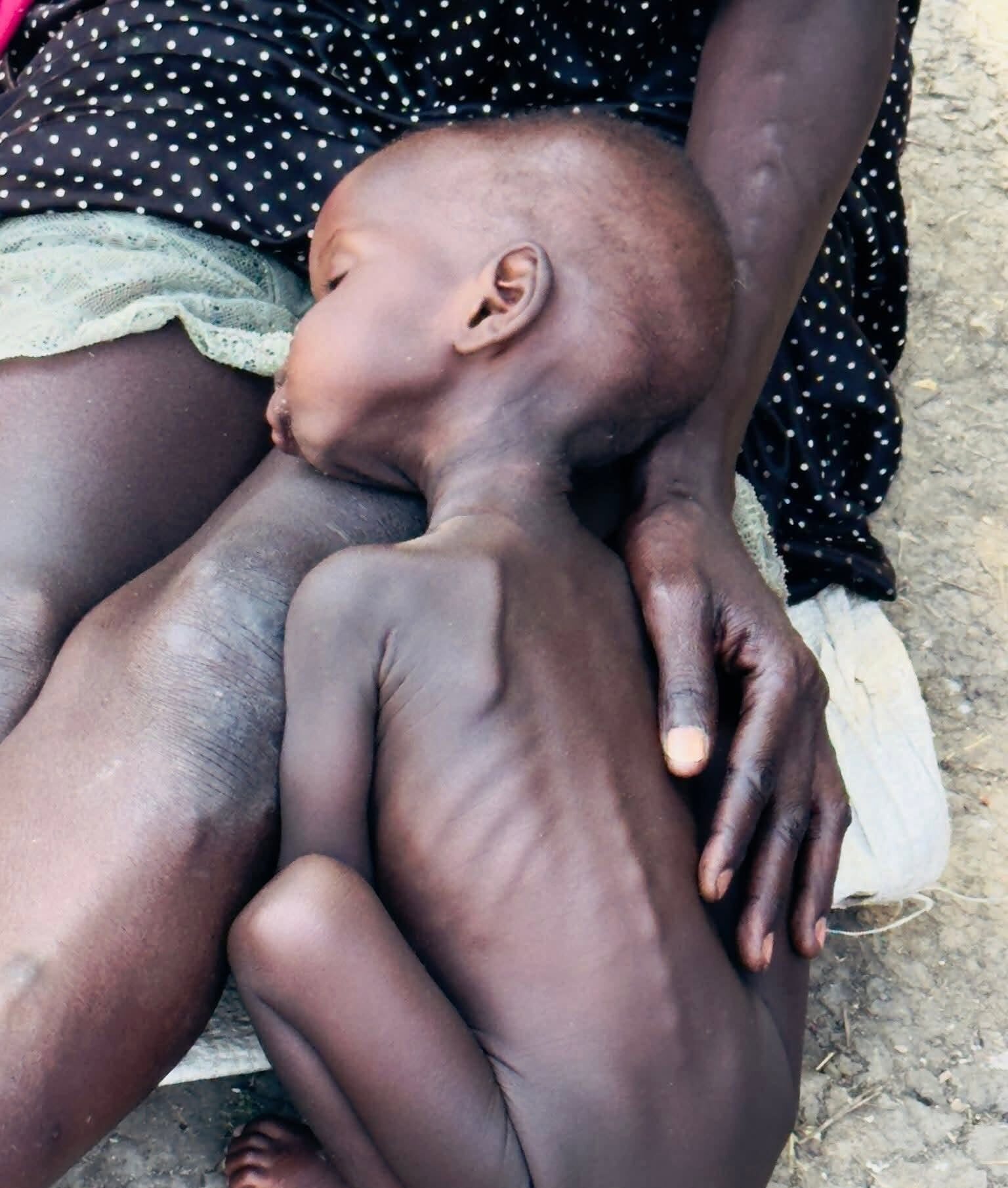
One of the malnourished children in Akobo County, Jonglei State.
Photo credit: Courtesy.
Children in parts of Jonglei State are surviving on leaves, water lilies, and wild plants as escalating violence, flooding, and food shortages push communities closer to famine, Save the Children has warned.
The aid agency says thousands of families, particularly in Akobo and Walgak, have been cut off from humanitarian assistance after months of insecurity forced aid organizations to suspend operations and relocate staff.
For many parents, finding food has become a daily struggle. Mothers are reportedly walking for hours through flooded swamps in search of anything edible, while some families are surviving on seeds meant for planting and water lilies collected from wetlands.
Save the Children says the worsening hunger crisis is taking a devastating toll on children, with many becoming severely malnourished and others dropping out of school as families struggle to cope.
“Some children are no longer attending school because they are too weak from hunger,” the organization said, adding that others are being pushed into child labour or early marriage as households search for ways to survive.
The crisis has worsened since violence escalated in March, forcing humanitarian agencies to halt services in several parts of Jonglei, including Akobo East, an area that hosts people displaced by conflict.
Save the Children had earlier suspended operations in Walgak after armed groups allegedly looted and vandalized its offices, destroyed a health facility, and stole vehicles.
According to the aid agency, the warning comes as the latest Integrated Food Security Phase Classification (IPC) analysis identified Akobo and Nyirol counties among four areas at risk of famine.
According to the IPC, more than 7.8 million people across South Sudan are experiencing acute food insecurity, while about 2.2 million children under the age of five require treatment for acute malnutrition.
Nearly 700,000 children are suffering from severe acute malnutrition, the deadliest form of hunger that requires urgent medical care.
At Bor State Hospital, where Save the Children supports nutrition programs, health workers say they are already seeing alarming numbers of severely malnourished children despite the rainy season only beginning.
Tabisa Ajer, a healthcare worker at the hospital, said more than 60 children are currently receiving treatment for severe acute malnutrition.
“Usually, we see such numbers later in the rainy season when malnutrition peaks, but this year the cases are already high. The worsening hunger crisis, flooding, and insecurity are driving the increase,” she said.
Ajer added that many children arriving at the facility are suffering from diarhoea and vomiting, while food production has been disrupted by insecurity.
Save the Children Country Director in South Sudan, Chris Nyamandi, said the crisis could still be prevented if greater efforts are made to address insecurity and support vulnerable communities.
Previous Post
S. Sudan ministry to build 500 water yards across South Sudan
Next Post
Family loses hope as search continues for abducted Lirya road children