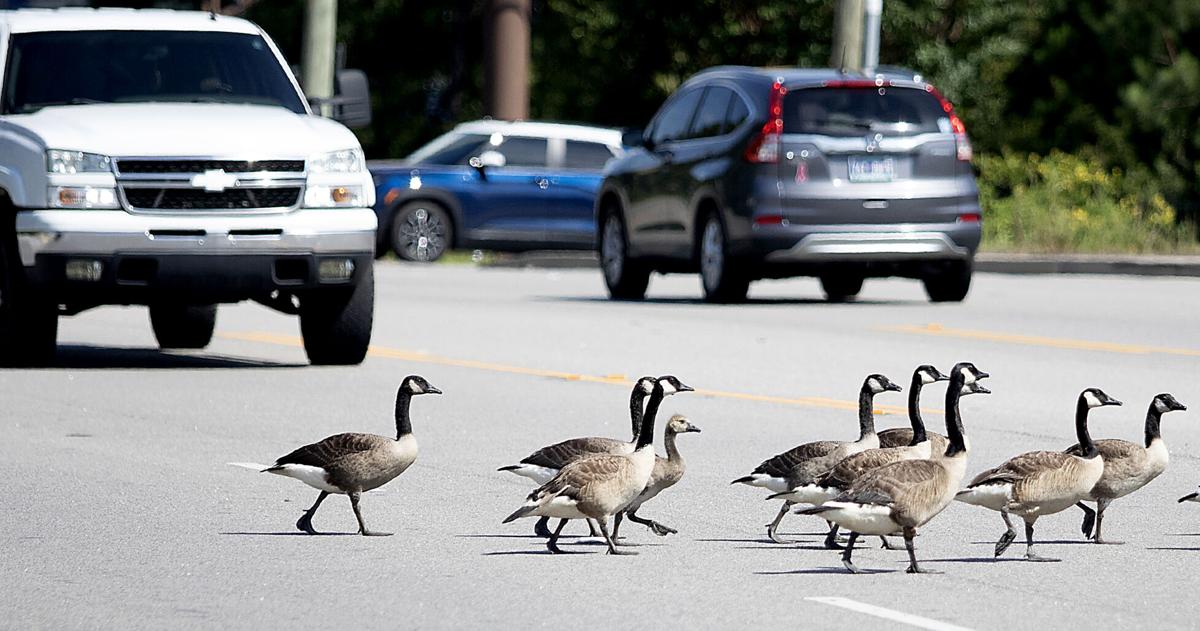
SURFSIDE BEACH, SC-Someone could actually go to jail for repeatedly feeding Canada geese and other wildlife in the town of Surfside Beach.
Monday night, the town council passed a revised animal and wildlife ordinance that brings the penalty for feeding wildlife from the civil side to the criminal side and with that comes potential fines, community service or jail time.
The first reading of the ordinance passed 5-1 with council member Harry Kohlmann voting against saying he could just not see someone going to jail for feeding geese or other animals.
Council member John Hiatt who spearheaded the ordinance said he did not want the ordinance to be just about geese.
“I started getting feedback about more than just geese,” he said.
The new Section 3.52 of the town’s ordinance says, “Wildlife means any non-domesticated animals that may live in natural environments within Town limits, including but not limited to foxes; rabbits; squirrels; coyotes; opossums; raccoons; skunks; seagulls; pigeons; and waterfowl (including ducks, geese, and swans).”
Despite that disclaimer, most of the conversation centered around feeding geese.
The revised animal ordinance says no person shall feed wildlife or create a situation to cause wildlife to congregate in the town. Anyone cited for this will be guilty of a misdemeanor and subject to a fine of up to $500 or be assigned community service or incarcerated for up to 30 days in jail.
The ordinance exempts bird feeders in residents’ yards.
Much of the attention in recent years has involved town resident Maria Pesce who has made it her mission to feed and protect Canada geese in town. Others in town claim that Pesce’s efforts are keeping the geese in town and causing problems with their waste.
Pesce recently filed a federal lawsuit against the town over the matter.
The goose controversy has garnered national attention including that of HBO who recently sent a film crew into town for two weeks for the documentary series “Neighbors” to highlight the feud.
Police chief Bill Mickle says the revised ordinance moves the feeding of the animals from a set civil penalty to a criminal one meaning anyone receiving a citation has to plead their case before the town judge like any other citation.
“The judge doesn’t have to give jail time,” Mickle said. He added this gives the judge more discretion, especially if it involves a repeat offender.
Mayor Robert Krouse said he wasn’t concerned that a tourist “who throws out some bread is going to jail. We’re not targeting anyone. This applies to scofflaws.”
Krouse read a litany of other town offenses that carries the same punishment language.
Hiatt added the revised ordinance mirrors that of Horry County.
Kohlmann said someone coming into town and feeding birds should not have to face the prospect of going to jail for it.
He said for repeat offenders, the judge needs to make sure he fines them as a deterrence.
“If the judge isn’t fining them, then maybe he should get another job,” Kohlmann said.
At the previous council meeting, the council chambers were packed with vocal proponents of both sides of the issue passionately stating their case. Monday night, the ordinance passed with no public comments.
The ordinance must pass second reading to become law.