BY MFANUFIKILE KHATHWANE
NGABEZWENI– His Majesty King Mswati III has issued a strong call for Eswatini to intensify agricultural production and pursue full food sovereignty, warning that the nation must move decisively towards self-sufficiency in food production.
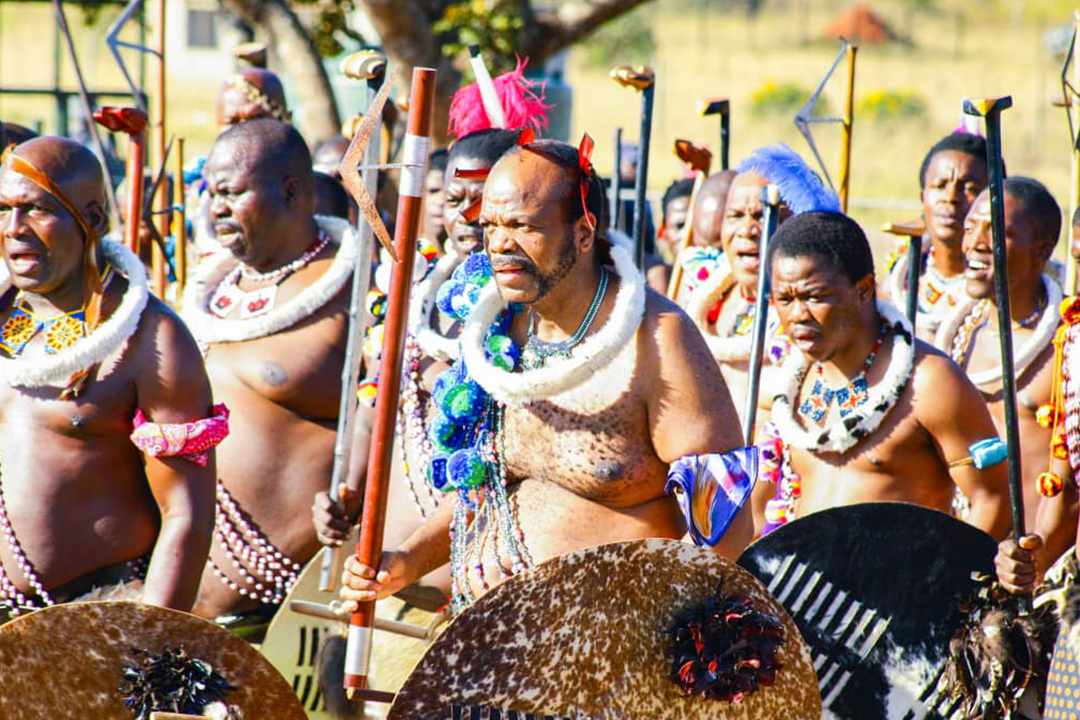
The King made the remarks at Ngabezweni Royal Residence on June 6, 2026, during the Kucitfwa Kwelibutfo (dispersal) ceremony following the completion of harvesting of the royal fields, which began in early May.
“IMPROVED ENERGY AND DISCIPLINE IN ROYAL FIELDS”
Addressing the warriors, the King expressed satisfaction with the performance displayed during the harvesting season, noting that each year the regiments continue to demonstrate increased energy, commitment and discipline.
He said the impressive output from the royal fields was a result of collective effort and dedication, adding that although Imfabantfu had grown larger, the warriors’ determination ensured the harvest was completed timeously.
The King said the level of work demonstrated was commendable and reflected true responsibility and strength among the regiments.
ABUNDANT HARVEST DESCRIBED AS HIGHLY COMMENDABLE
His Majesty highlighted that the harvested crops from the fields (etsafeni) were of high quality and quantity, noting that the storage cribs were full and overflowing.
He said the results of the harvest were highly appreciated, describing the output as a reflection of serious commitment to agricultural duty and national service.
The King added that the harvest demonstrated what can be achieved through unity, discipline and consistency in agricultural work.
AGRICULTURE AND FOOD STORAGE FOR THE FUTURE
The King emphasized the importance of harvesting as a critical stage in food security, explaining that crops are collected not only for immediate consumption but also for storage and future use.
He said stored food ensures sustainability, allowing communities to have access to food throughout the year, even before the next planting season.
His Majesty further noted that harvested crops also serve as seeds for the next ploughing season, reinforcing the importance of continuous agricultural cycles.
RAINS, RESILIENCE AND DIVINE BLESSINGS
The King noted that days before the dispersal ceremony, the country had received rainfall, describing it as a sign of blessing from above.
He said the rains reflected divine favour and reinforced the importance of continued agricultural activity.
He also acknowledged the cold conditions experienced during harvesting, praising the warriors for their resilience and determination, which ensured that work continued without interruption.
STRONG PUSH TOWARDS FOOD SOVEREIGNTY
His Majesty stressed that Eswatini must strengthen efforts to achieve food sovereignty, ensuring the country produces enough food not only for domestic consumption but also to support vulnerable communities.
He said a food-secure nation is one that can share with others in need and eliminate hunger across communities.
The King emphasized that food production should not only sustain households but also strengthen national stability, economic growth and social welfare.
He added that Eswatini must continue to pursue a national programme of producing its own food, strengthening local agriculture so that the country becomes self-reliant.
CALL FOR EXPANDED AGRICULTURAL PRODUCTION
The King encouraged Emaswati to apply the same energy demonstrated in the royal fields to their homesteads, urging them to ensure that farming remains active and productive at household level.
He stressed that increasing agricultural output would ensure that the country moves closer to full food self-sufficiency.
His Majesty said a nation that produces sufficient food is one that creates stability, reduces dependency and builds long-term resilience.
NATIONAL FOOD PRODUCTION DEFICITS HIGHLIGHT CHALLENGE
According to national agricultural and food security data, Eswatini requires approximately 140 000 to 142 000 metric tonnes of maize annually, while local production averages only about 75 000 to 77 000 metric tonnes. This results in a shortfall of over 65 000 metric tonnes, which is covered through imports.
In bean production, national demand stands at approximately 7 000 to 7 400 metric tonnes per year, while local production remains at about 1 000 to 1 200 metric tonnes, leaving a deficit of roughly 6 000 metric tonnes.
In the dairy sector, Eswatini requires around 84 million litres annually, but local production averages only about 20 million litres, leaving a deficit of over 64 million litres and resulting in heavy reliance on imports.
VISION OF A SELF-SUFFICIENT NATION
The King expressed confidence that Eswatini can achieve full food self-sufficiency if the commitment shown in the royal fields is replicated nationwide.
He said the country is on the right path if it continues to prioritize agriculture, discipline and consistent production at all levels.
His Majesty concluded by wishing the warriors safe journeys back to their homes, encouraging them to continue working hard in their fields so that Eswatini becomes a nation capable of feeding itself sustainably.
#KingMswatiIII #EswatiniFoodSovereignty #NgabezweniRoyalResidence #KucitfwaKwelibutfo #RoyalHarvest #FoodSecurityEswatini #AgricultureEswatini #EmaSwatiUnity #NationalDevelopment
Post Views: 77