Keep our news free from ads and paywalls by making a donation to support our work!
Notes from Poland is run by a small editorial team and is published by an independent, non-profit foundation that is funded through donations from our readers. We cannot do what we do without your support.
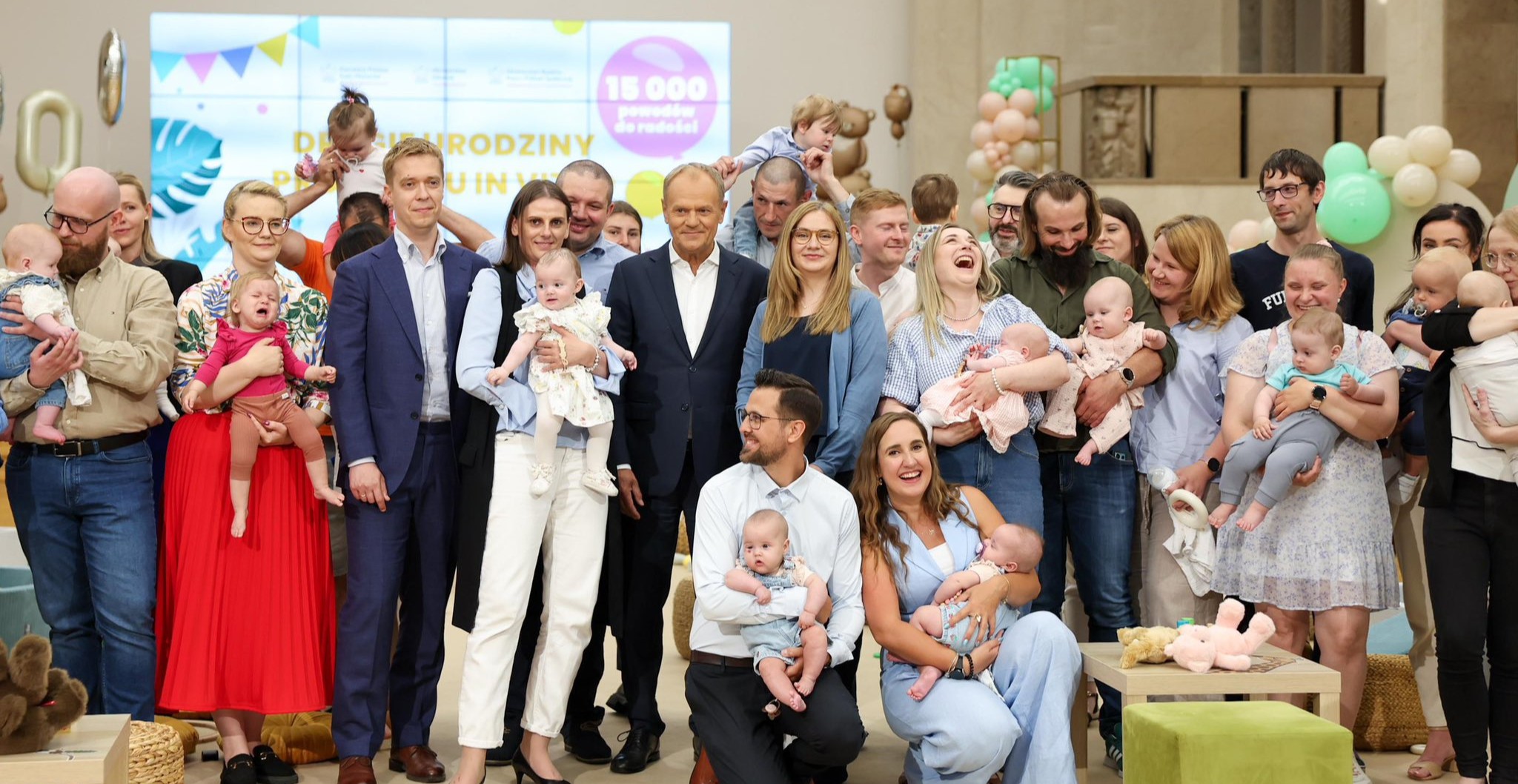
Over 15,000 children have been born as a result of state funding for in vitro fertilisation (IVF) treatment since it was restored by the government two years ago. Previously, IVF funding had been cut off by the former national-conservative Law and Justice (PiS) administration.
“At a time when we are dealing with a demographic crisis in Poland and around the world, it is a great thing that we have 15,000 more treasures,” said Prime Minister Donald Tusk at an event to mark the second anniversary of the resumption of funding, held on Children’s Day, a popular annual celebration in Poland.
Tusk congratulated the new parents benefiting from the scheme, while also warning that further efforts were needed from both citizens and the government to raise the overall number of children born in Poland, a country with one of the lowest fertility rates in the world.
15 000 dzieci urodzonych dzięki rządowemu programowi in vitro. To najpiękniejszy Dzień Dziecka i największa motywacja do pracy. Szczęścia, maluchy! pic.twitter.com/uMJhoFllBY
— Donald Tusk (@donaldtusk) June 1, 2026
In 2015, the former PiS government ended national state funding for IVF. It claimed there were insufficient funds available, though as a party with close ties to the Catholic church, it also had religious reasons for opposing the procedure.
After Tusk’s more liberal coalition won power at elections in 2023, one of its first actions was to push through a bill restoring IVF funding. In December of that year, PiS-aligned President Andrzej Duda signed it into law, despite an appeal from the church, which called IVF “experimentation on man”.
Subsequently, on 1 June 2024, the new funding went into force. Under the programme, scheduled to run until the end of 2028, married or cohabiting couples meeting certain conditions are entitled to testing and all aspects of the IVF procedure, including up to six fertilisation cycles.
In January 2026, the health ministry revealed that the 10,000th baby had been born under the programme, which the government spent 600 million zloty (€142 million) on in 2025. That figure is set to increase to 700 million zloty this year.
The boost in births through IVF has, however, failed to reverse Poland’s worsening demographic situation.
In 2025, a total of 238,000 babies were born (14,000 fewer than a year earlier) while 406,000 deaths were recorded, making it the 13th year in a row in which Poland has recorded more deaths than births.
Poland’s fertility rate – meaning the average number of children that are born to a woman over her lifetime – fell to a new low of 1.07 in 2025, which is one of the lowest figures anywhere in the world.
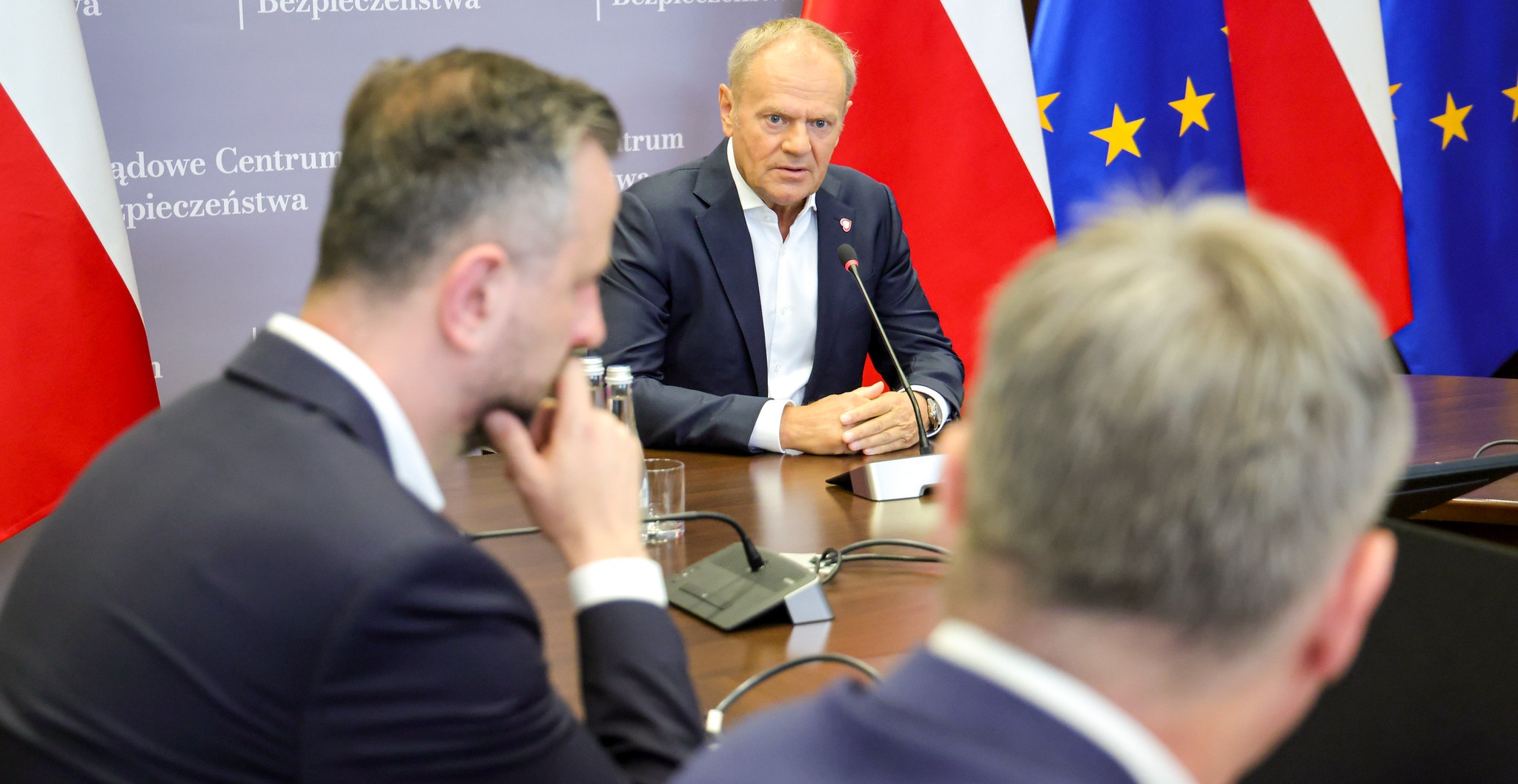
Speaking today, Tusk emphasised “how important it is that all of us – the state, institutions and people – mobilise all our strength to ensure that as many children as possible are in Poland – that they are safe, that parents have a sense of financial security”.
Poland’s fertility rate, already one of the lowest in the world, fell to a new record low of 1.07 in 2025, deepening concerns over the country’s shrinking and ageing population https://t.co/OMGC1MpA5l
— Notes from Poland 🇵🇱 (@notesfrompoland) May 28, 2026
Marta Górna of the Nasz Bocian (Our Stork) association, which supports people experiencing fertility, told Rynek Zdrowia, a healthcare news site, that the resumption of IVF funding is having a positive impact.
“The programme is genuinely changing access to treatment in Poland – that is beyond dispute, and it brings us joy every day.”
However, she also cited a study carried out by Nasz Bocian based on 767 patients and 37 of the 58 centres involved, which found that many faced barriers due to insufficient funding as well as hidden costs – with almost 50% paying for the theoretically free qualification tests.
“Our research shows that the ‘free programme’ is not free for many couples – because the system of preliminary diagnosis and treatment prior to IVF is uncoordinated and chargeable, because eligibility tests are sometimes charged for, contrary to the rules, and because medication costs thousands of zloty,” Górna said.
Poland has risen 22 places in a ranking of fertility treatment policies in European countries.
The change took place after the new, more liberal government restored state funding for IVF treatment, which had been cut by its conservative predecessor https://t.co/w6OtRVsifF
— Notes from Poland 🇵🇱 (@notesfrompoland) December 10, 2024
Notes from Poland is run by a small editorial team and published by an independent, non-profit foundation that is funded through donations from our readers. We cannot do what we do without your support.
Main image credit: Ministerstwo Zdrowia (under CC BY-SA 4.0)
Ben Koschalka is a translator, lecturer, and senior editor at Notes from Poland. Originally from Britain, he has lived in Kraków since 2005.