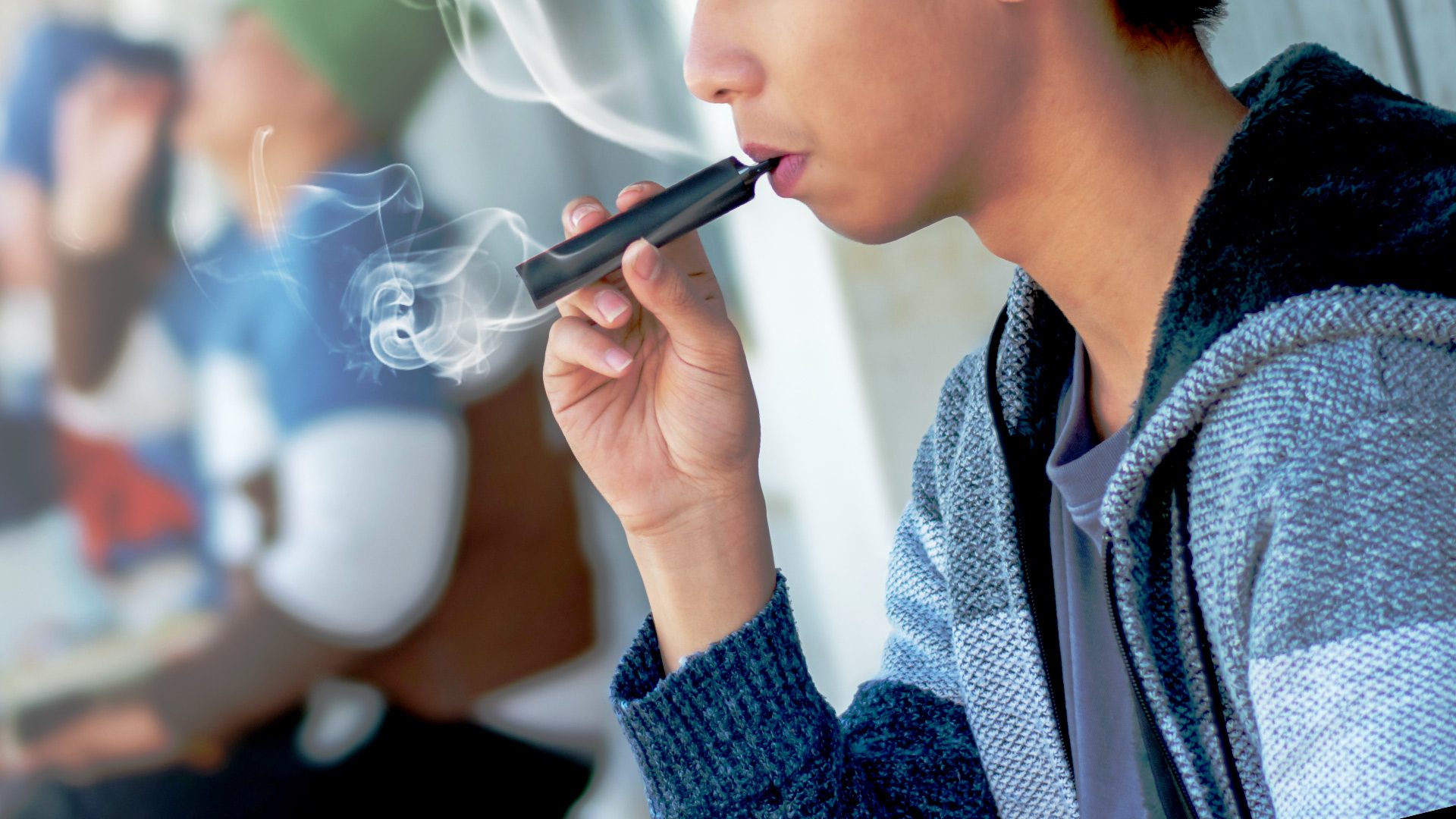
ALBAY, Philippines – On May 31, World No Tobacco Day, local and regional groups called for a ban on vapes and other tobacco products packaged as “safer” alternatives to cigarettes, amid the prevalence of their use among youth and young adults in the Philippines.
“National government agencies should support enforcement by allocating funds for tobacco control and smoking cessation services, enforce a comprehensive ban on tobacco advertising and promotions, develop behavioral change campaigns, and create a healthy environment for the youth,” said Ralph Degollacion, project manager of HealthJustice, a local group aiming to bridge law and health in the Philippines.
In a survey conducted by the Johns Hopkins Institute for Global Tobacco Control in 2023, it was found that over 1.21 million Filipino youth who tried smoking at a very young age — typically between 13 and 15 — transitioned to using vapes, while at least 1.63 million Filipino adults were also vape users.
“Smoking prevalence among the youth can be attributed mainly to the exponential growth in the use of vapes and heated tobacco products. Several independent scientific studies have confirmed that vaping is a gateway to smoking cigarettes or even dual use,” Degollacion told Rappler in an email.
The Global State of Tobacco Harm Reduction (GSTHR), which maps the global use of nicotine products, local regulatory response, and potential public health impact, also reported that an estimated 1.7 million users of vapes and 16.4 million cigarette smokers in the Philippines, based on data from its 2024 report.
This is a huge jump from a decade ago, when only an estimated 537,000 vape users were reported in 2015.
Cigarette users also increased from 14 million users in 2021.
In 2019, the Global Youth Tobacco Survey (GYTS), a globally recognized system for monitoring tobacco use and tracking control indicators, reported that there were at least 10% of children aged 13 to 15 years old in the Philippines who smoked with cigarettes, while 14.1% used e-cigarettes such as vapes.
The GYTS and GSTHR have yet to update their data on tobacco use prevalence in the Philippines.
This has prompted many groups, like TobaccOFF Now, a youth-led movement advocating for urgent interventions against tobacco addiction, along with their nearly 200 partners, to demand “immediate and decisive” action on key tobacco policies to address the problem.
“We are urgently calling for an immediate ban on vapes and e-cigarettes because these harmful products serve as the starting point for our young people,” the group said.
Echoing this sentiment, HealthJustice also pointed out: “Minors can still access products easily…the Philippines should immediately ban vapes and other nicotine delivery products, just as eight other ASEAN nations did.”
TobaccOFF Now and HealthJustice are urging the government to compel tobacco companies to eliminate all flavors, packaging designs, and advertisements from their products that target the youth.
The Southeast Asia Tobacco Control Alliance (SEATCA), a non-government alliance helping ASEAN nations implement the World Health Organization (WHO) Framework Convention on Tobacco Control, said the problem arising alongside the popularity of vape use is how they are packaged and distributed as “safer alternatives” to cigarettes.
“Harm reduction is about keeping people safe and not replacing one harm with another harm,” SEATCA executive director Ulysses Dorotheo said in a statement for World No Tobacco Day 2026.
Dorotheo pointed out that “if tobacco companies genuinely wanted a ‘smoke-free future,’ they would have stopped making and selling cigarettes yesterday.
“Instead, we are seeing the industry co-opting public health language to market its newer toxic and addictive products as ‘solutions’ to the cigarette problem that it continues to sustain,” he added.
FALSE ALTERNATIVE. Research findings confirmed that most ingredients in e-cigarettes carry long-term health risks comparable to traditional smoking, challenging the notion that vaping is a safer alternative to cigarettes. Graphics by David Castuciano/Rappler.
Public health risks
Former Department of Health (DOH) secretary Esperanza Cabral said that the growing prevalence of smoking and vaping poses a severe public health risk. According to her, both habits cause various respiratory health issues, which according to the WHO, consistently rank among the leading causes of death among Filipinos.
“While traditional tobacco smoke damages lungs through the inhalation of tar, carbon monoxide, and thousands of toxic chemicals produced by combustion, vaping introduces a unique, distinct set of physiological threats,” Cabral told Rappler in a message.
Based on the WHO’s data, there are at least 64,525 recorded deaths linked to respiratory complications in the Philippines in 2025 alone. Experts warn that the continued use of tobacco and e-cigarettes significantly increases the risk of developing these fatal respiratory illnesses.
Cabral noted that beyond unmasking these deceptive narratives, the government must take a proactive approach in the fight against tobacco addiction. She proposed raising the legal age for tobacco access from 21 to 25 and increasing taxes to drive up the prices of single-use e-cigarettes (READ: DOH, health experts push for total vape ban to protect youth).
Proactive solution
A January 2026 study by the SEATCA links this prevalence of tobacco products use to the booming market sales for recreational nicotine products, where the Philippines ranked second and continues to trail only Indonesia in the region.
SEATCA reported that in 2024 alone, the country sold 90 billion traditional cigarette sticks, 1.3 billion vape devices, and 3.2 billion other heated tobacco products (HTPs).
While there are existing laws that regulate tobacco products, the government still does not have the authority to compel manufacturers to disclose the contents and emissions of their products. Moveover, the legal access age for these products remains relatively low at 18 years old, falling short of the 25-year threshold suggested by health advocacy groups.
The Campaign for Tobacco-Free Kids, an international organization that provides technical assistance on tobacco control laws to governments and civil society groups, pointed out: “The law does not require that manufacturers and importers disclose to government authorities information on the contents and emissions of their products… There are also no restrictions on internet sales or the sale of single cigarettes. The sale of tobacco products is prohibited to persons under the age of 21.” – Rappler.com