In Charleston, history is never far away. Walk down almost any cobblestone street and you’ll find a plaque, a preserved house, or a landmark tied to the founding of the nation. Kids can learn about the American Revolution without ever leaving the city.
But this summer, as the country celebrates the 250th anniversary of the Declaration of Independence, take in the history offered at home, then head out on a road trip to explore exciting historical sites across South Carolina.
According to the Battlefield Trust, more Revolutionary War battles and skirmishes were fought in South Carolina than in any other colony. Many of those sites — fields where Continental soldiers and militia clashed with British forces — are still preserved today. And the good news for parents is that several of the most important battlefields and historic sites are within a few hours’ drive of Charleston. You can also download the handy Liberty Trail App to get everything from in-depth information and audio recordings about the battles (great for the car ride and walking the trails) to interactive maps.
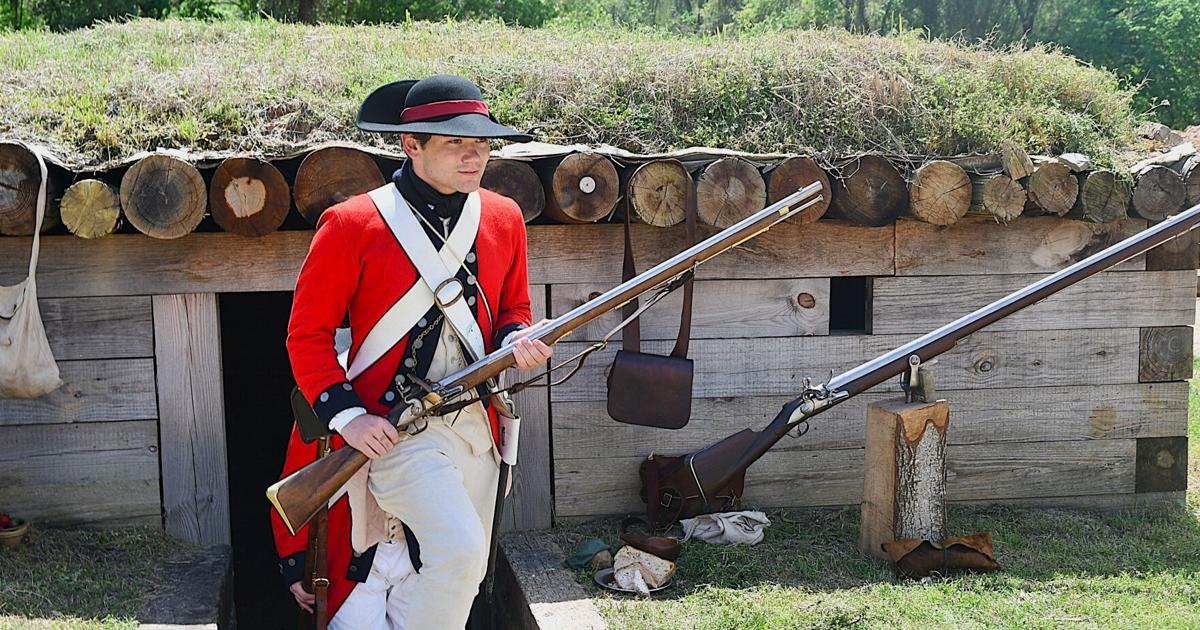
The Historic Camden Revolutionary War Site has costumed interpreters demonstrating everyday life in the late 1700s, everything from blacksmithing to colonial cooking and pottery.
Historic Camden/Provided
A three-day road trip can take families from the ruins of an early colonial town to the fields where pivotal Revolutionary War battles helped turn the tide of the war. Along the way, kids can stand inside forts, watch muskets fire during living-history demonstrations, explore visitor centers filled with artifacts, and run across the same landscapes where soldiers once fought for independence.
So, what are you waiting for? Get packing — and don’t forget a sense of curiosity, a good pair of walking shoes, and a little imagination. Because this road trip is about to transport your family back nearly 250 years, to the very places where America’s fight for independence unfolded.
For the most up-to-date events anywhere in South Carolina, check southcarolina250.com/events.
Day One: Colonial Roots and the Battle That Changed the War
Stop 1: Colonial Dorchester State Historic Site
The ruins of an old bell tower can be seen at the Colonial Dorchester State Historic Site.
Discover South Carolina/Provided
Start your journey just outside Charleston at this site of what was once a thriving colonial village along the Ashley River. Founded in 1697 as a trading town, Dorchester flourished for nearly a century before being abandoned during the Revolutionary War, during which it was a fortified post for the Americans, where the garrison was briefly commanded by Francis Marion, the “Swamp Fox.” Today, the site preserves the archaeological remains of the colonial village and covers more than 300 acres.
The most striking landmark is the towering brick bell tower of St. George’s Anglican Church, which rises above the surrounding woods. Nearby you’ll find the remains of a “tabby” fort — built from oyster shells and lime — that once helped defend the settlement. Now run by the South Carolina State Parks, this summer, expect living history/garrison-style weekends, archaeology interpretation days, and ranger-led programs. Check online for times and more information.
What kids will love:
- Walking trails with interpretive signs that explain what the town looked like in the 1700s.
- The ruins of the church tower and colonial fort.
- Occasional living-history programs where interpreters demonstrate colonial cooking, artillery, or soldier life.
For details: southcarolinaparks.com/colonial-dorchester
After exploring Dorchester, the next stop is Berkeley County.
Visit Fort Fair Lawn in Berkeley County.
Courtesy of American Battlefield Trust
Stop 2: Fort Fair Lawn
Located in Berkeley County, Fort Fair Lawn is one of the few remaining — and best preserved — British earthwork fortifications in North America. Once a strategic outpost protecting Charles Town, the British fortified the area to maintain control, repurposing nearby buildings for military use. The Fair Lawn Plantation (also known as Colleton Mansion) became a hospital and supply hub, while Fort Fair Lawn was constructed along the Cooper River. In 1781, it was attacked and taken over by Patriot Lieutenant Colonel Hezekiah Maham and Colonel Isaac Shelby.
What kids will love:
- Exploring the remains of a real Revolutionary War–era fort.
- Hiking the nature walks that include the adjacent Old Santee Canal Park.
- Explore the exhibits in the nearby museum, including their new interactive kiosk celebrating the County’s role in the American Revolution.
For details: To visit, check event listings through the Berkeley County Museum, (berkeleymuseum.org) which also serves as a helpful starting point for access and parking, and also at lordberkeley.org/events. For updated listings of events, also check berkeley250.org or visit battlefields.org/visit/battlefields/fort-fair-lawn.
Overnight Stop: Camden
After Berkley, continue north about two hours to Camden — one of the most important Revolutionary War locations in the state. Spend the night here so you can start fresh in the morning.
Family-friendly options include small inns, historic bed-and-breakfasts, and several chain hotels nearby.
For kids, Historic Camden is one of the best places in the state to see the Revolutionary War come to life.
Historic Camden/Provided
Day Two: Where the War Turned
Stop 3: Historic Camden Revolutionary War Site
Camden is one of the most immersive Revolutionary War destinations in the state. This large historic park preserves parts of the colonial town along with the battlefield from the disastrous American defeat at the Battle of Camden in 1780.
Inside the park, costumed interpreters demonstrate everyday life in the late 1700s — everything from blacksmithing to colonial cooking and pottery.
Throughout the year, the site hosts large reenactments and living-history weekends that include cavalry, artillery demonstrations, and military camps.
For kids, Camden is one of the best places in the state to see the Revolutionary War come to life.
What kids will love:
- Tour reconstructed buildings such as the Kershaw-Cornwallis House and a model blacksmith shed.
- Watch living-history demonstrations of musket firing or soldier drills.
- Check out the Camden Archives and Museum for their colonial collection of artifacts.
For details: www.historiccamden.org
Learn about the Battle of Cowpens, fought in January 1781, at Cowpens National Battlefield.
Courtesy of National Parks Service
Stop 4: Cowpens National Battlefield
After lunch in Camden, drive about two hours northwest to the Upstate to visit one of the most famous Revolutionary War battlefields in the country.
The Battle of Cowpens, fought in January 1781, was a turning point in the Southern Campaign. American commander Daniel Morgan used a clever three-line battle formation to defeat British forces under Banastre Tarleton in a spectacular fashion.
Today the National Park Service preserves the battlefield as a large open field surrounded by forest. Living-history programs and events throughout the year often include musket firing, camp life demonstrations, and storytelling from park rangers.
What kids will love:
- The battlefield walking loop where the troop lines are clearly marked.
- Interactive exhibits and activities for kids in the visitor center including two films.
- Ranger talks that explain Morgan’s brilliant strategy.
For details: www.nps.gov/cowp/planyourvisit/index.htm
Overnight Stop: Spartanburg
Spend the night somewhere nearby to break up the drive. Spartanburg has several family-friendly hotels and good dining options.
Living history programs are held throughout the year at Musgrove Mill State Historic Site.
Discover South Carolina/Provided
Day Three: Militia Victories and a Siege
Stop 5: Musgrove Mill State Historic Site
This quiet site preserves the location of the Battle of Musgrove Mill, fought in August 1780.
At a time when Patriot forces were struggling across the South, a group of American militia fighters from Georgia, South Carolina, and Tennessee surprised and defeated a Loyalist force here. The victory provided a much-needed morale boost after earlier setbacks and a major turning point in the war.
Today Musgrove Mill is a peaceful park with excellent interpretive trails, Horseshoe Falls, a fishing pond, and the Enoree River. There will be an Anniversary Battlefield Hike on the morning of Aug. 19 and a Commemoration on Aug. 22, from 10 a.m. – 2 p.m.
What kids will love:
- Ranger guided battlefield hikes (June 6 and August 1), Blackstock battlefield hikes (June 13 and August 8) and living history programs held throughout the year.
- Visit the visitor center exhibits that explain the battle.
- Climb the observation tower for a panoramic view of the battlefield.
For details: southcarolinaparks.com/musgrove-mill
Colonial woodworking can be seen at Ninety Six National Historic Site, located near the town of Ninety Six in eastern Greenwood County.
Courtesy of National Parks Service
Stop 6: Ninety Six National Historic Site
Finish the trip at one of the most fascinating Revolutionary War sites in the South.
Despite the unusual name, Ninety Six was once a major frontier trading town. During the Revolution it was the site of the first first land battle south of New England in 1775 and then became a British stronghold, protected by a massive star-shaped earthen fort.
In 1781, Patriot forces led by General Nathanael Greene laid siege to the fort for nearly a month before British reinforcements forced them to withdraw.
The town also provides many examples of women actively participating in the struggle for independence, such as Grace and Nancy Martin, who served as spies and couriers for General Greene.
Today the National Park Service preserves the fort and battlefield. Because the fort’s earthworks are still visible, it’s one of the easiest places for kids to visualize what Revolutionary War combat actually looked like.
What kids will love:
- Walking through the reconstructed earthen Star Fort.
- A self-guided battlefield tour and miles of battlefield trails.
- Visiting the reconstructed colonial village site and ranger programs.
For details: www.nps.gov/nisi/index.htm
Musgrove Mill State Historic Site preserves the location of the Battle of Musgrove Mill, fought in August 1780.
Discover South Carolina/Provided
Helpful Tips for Parents
Pack for the outdoors. Most Revolutionary War sites are large parks with walking trails. Bring water, sunscreen, bug spray, and comfortable shoes.
Check event calendars. Many parks host musket demonstrations, ranger talks, or large reenactments during the summer and especially during anniversary weekends.
Bring a notebook. Encourage kids to sketch forts, write down questions, or record what they learn.
Turn it into a scavenger hunt. Challenge children to find cannons, forts, monuments, and battlefield markers.
Visit Drayton Hall and learn about the connections to the Revolutionary War in South Carolina.
Shutterstock
Don’t miss these 7 American Revolution spots in Charleston
Staying in town and want to instill the history bug in your young Patriots? Here are some bite-size revolutionary nuggets to chew on close to home! For additional and up-to-date events, be sure to visit sc250charleston.org.
Heyward-Washington House
Revolutionary connection: This is one of Charleston’s most personal Revolutionary War stories — you’re literally walking through the home of Thomas Heyward Jr., a signer of the Declaration of Independence, who was captured when the British took Charleston in 1780 and imprisoned in the Old Exchange Building. The house even features a special Revolutionary War-focused tour created for the 250th commemoration.
Kids will love: The working 1740s kitchen building — it feels like stepping into a real colonial cooking show.
charlestonmuseum.org/historic-houses/heyward-washington-house
Printed in Charleston by Huguenot descendant Peter Timothy in 1776, it brought the news of independence to South Carolina. On loan from the Gilder Lehrman Institute of American History and in partnership with the Huguenot Society of South Carolina, The Charleston Museum will have on display an original copy of the Declaration of Independence, from May 30 – Aug. 30, 2026.
Courtesy of The Gilder Lehrman Institute of American History
The Charleston Museum
Revolutionary connection: America’s first museum helps kids connect the dots — explaining how Charleston became a center of Revolutionary activity, trade, and conflict. The new exhibit “Ringleaders of Rebellion: Charleston in Revolt, 1775-1783” covers Charleston and the Lowcountry’s role in the American Revolution, and features objects from the museum’s collections along with unique pieces from other institutions. Also on display this summer: an original copy of the Declaration of Independence!
Kids will love: Hands-on exhibits and artifacts that make it feel like a treasure hunt through history.
charlestonmuseum.org
Middleton Place
Revolutionary connection: At Middleton Place, visitors can experience the birthplace, home, and landscape associated with a signer of the Declaration of Independence, Arthur Middleton. Open since April, “Conversations of Freedom: The American Revolution at Middleton Place” features remarkable 18th-century textiles worn by Henry and Arthur Middleton, alongside a rare silk edition of the Declaration of Independence, and centers on the human experience of the Revolutionary period.
Kids will love: The live animals and outdoor spaces — it feels more like a nature adventure than a history lesson.
middletonplace.org
Drayton Hall
Revolutionary connection: One of the only plantation houses to survive the Revolutionary War intact, it was even used by British troops as their field headquarters during the 1780 campaign, causing the family to flee for their safety.
Kids will love: It’s preserved (not restored), so kids feel like they’re exploring a real-life time capsule.
draytonhall.org
Powder Magazine
Revolutionary connection: The oldest public building in South Carolina, this was where gunpowder — essential to defend the city during the Revolutionary War — was stored and protected.
Kids will love: Learning how people stored explosive powder safely — it’s basically colonial science meets danger.
powdermagazinemuseum.org
“The unsuccessful attack on the Fort on Sullivan’s Island the 28th June 1776” by Henry Gray.
Courtesy of The Charleston Museum
Old Exchange and Provost Dungeon
Revolutionary connection: A central Revolutionary site where leaders met, the Declaration was read, and prisoners were held by the British who converted the bottom floor of the Exchange into a military prison known as the Provost or “dungeon” for American prisoners of war, British soldiers, private citizens, and enslaved people.
Kids will love: The dungeon tour — dark, a little spooky, and full of real prisoner stories.
oldexchange.org
Fort Moultrie
Revolutionary connection: Site of the Battle of Sullivan’s Island (1776) — a huge early Patriot victory where palmetto-log walls of the fort absorbed British cannon fire. Remembered each year by Carolina Day on June 27.